 Bird Album
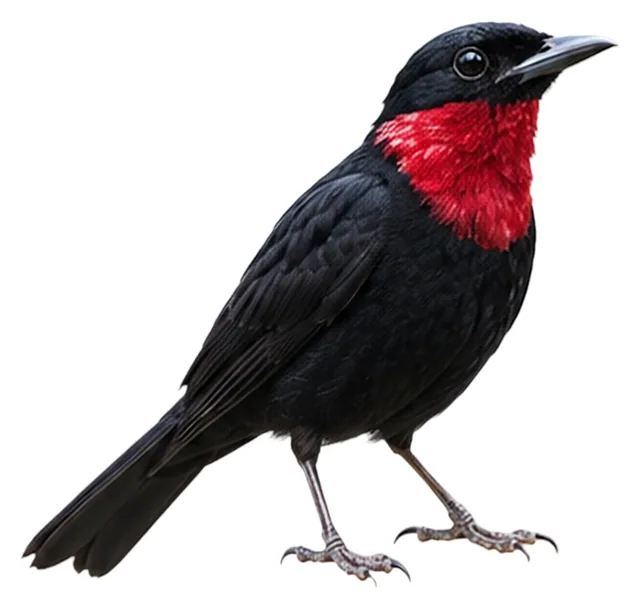
Purple-throated Fruitcrow
Querula purpurata (Müller, PLS, 1776)
25–30 cmLength107 gWeight
The purple-throated fruitcrow (Querula purpurata) is a species of bird in the family Cotingidae, the cotingas.
Busiest months: January–March · Most records: Panama, Ecuador, Colombia
Where and when it's recorded

Purple-throated Fruitcrow has been recorded at 193 of the 8,171 birding hotspots we track, in 12 countries and regions.
Records by month Northern Hemisphere
Where it's recorded most
- Pipeline Road (Camino del Oleoducto)Panama3,030 records
- Pipeline Road – Parque Nacional SoberaníaPanama2,393 records
- Panama Rainforest Discovery CenterPanama2,303 records
More places
- Estación Biológica La Selva-OTSCosta Rica1,899 records
- RN San Cipriano-EscalereteColombia1,437 records
- Rio Silanche Bird SanctuaryEcuador1,410 records
- Pipeline RoadPanama1,254 records
- Camino a El SaltoPanama658 records
- Sani LodgeEcuador629 records
- Atta Lodge / Iwokrama Canopy WalkwayGuyana587 records
Countries and regions with the most records
eBird records via GBIF up to 2024-12-31. A record means someone listed it; more records partly mean more birders, not more birds.
About
The purple-throated fruitcrow (Querula purpurata) is a species of bird in the family Cotingidae, the cotingas. It is found in Costa Rica, Panama, Nicaragua, and in every mainland South American country except Argentina, Chile, Paraguay, and Uruguay.
Excerpt from Wikipedia, CC BY-SA 4.0 · authors · Read more on Wikipedia
Questions
How big is the Purple-throated Fruitcrow?
The Purple-throated Fruitcrow is about 25–30 cm long and weighs around 107 g.
Where does the Purple-throated Fruitcrow live?
Its breeding range: Middle America, South America: southern Nicaragua through Amazonia. It is most often recorded in Panama, Ecuador and Colombia.
When is the best time to see the Purple-throated Fruitcrow?
At the hotspots we track, it is recorded most in January, February and March (Northern Hemisphere).
Is the Purple-throated Fruitcrow endangered?
The IUCN Red List classifies the Purple-throated Fruitcrow as Least Concern.
What does the Purple-throated Fruitcrow eat?
Main food: Fruit.
What family is the Purple-throated Fruitcrow in?
It belongs to the family Cotingas (Cotingidae), order Passerines (Passeriformes).
At a glance
- Length
- 25–30 cm
- Weight
- 107 g
- Habitat
- Forest
- Diet
- Fruit
- Lifestyle
- Perches in trees
- Migration
- Resident (barely migrates)
- Conservation
- Least Concern
More measurements
- Wing
- 178 mm
- Tail
- 118 mm
- Bill
- 29 mm
- Tarsus
- 24 mm
Averages from the AVONET dataset; length from field guides where available.
Range
Middle America, South America: southern Nicaragua through Amazonia
Breeding range, IOC World Bird List 15.2
Classification
- Order
- Passerines Passeriformes
- Family
- Cotingas Cotingidae
- Genus
- Querula
More from the family Cotingas
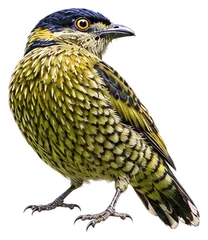 Scaled FruiteaterAmpelioides tschudii
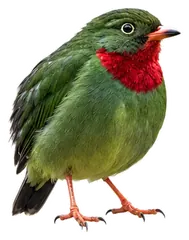 Fiery-throated FruiteaterPipreola chlorolepidota
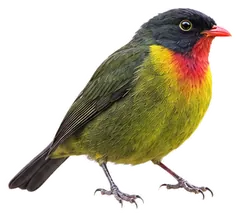 Scarlet-breasted FruiteaterPipreola frontalis
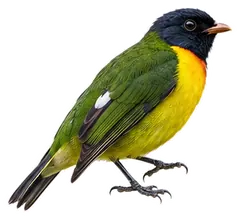 Handsome FruiteaterPipreola formosa
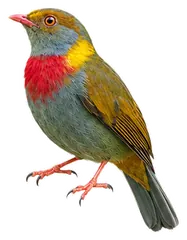 Red-banded FruiteaterPipreola whitelyi
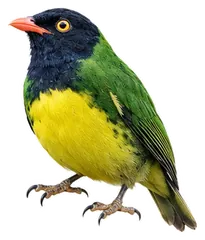 Black-chested FruiteaterPipreola lubomirskii
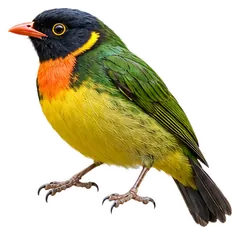 Orange-breasted FruiteaterPipreola jucunda
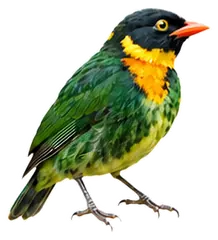 Masked FruiteaterPipreola pulchra
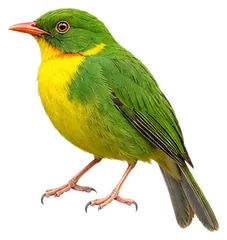 Golden-breasted FruiteaterPipreola aureopectus
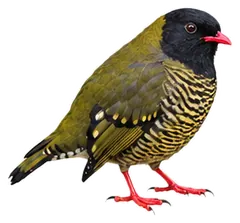 Barred FruiteaterPipreola arcuata
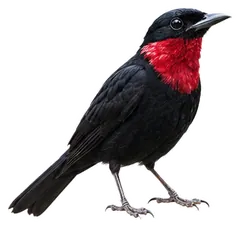
Download illustration
Free to use with credit: “Illustration: Bird Album (birdalbum.com)”. Drawn by AI from a reference photo by Chien Lee. ↗
Heard it but can't see it? Mingji identifies birds by sound and photo, on your phone.
In other languages
- EnglishPurple-throated Fruitcrow
- 简体中文紫喉果伞鸟
- 繁體中文紫喉果鴉
- 日本語マエカケカザリドリ
- DeutschPurpurbrustkotinga
- FrançaisCoracine noire
- EspañolCotinga quérula
- Portuguêsanambé-una
- ItalianoCorvo beccafrutta golaviola
- NederlandsPurperkeelvruchtenkraai
- РусскийПурпурногорлый плодоед
- Svenskapurpurstrupig fruktkråka
- DanskPurpurstrubet Frugtkrage
- Polskikruczyniec purpurowy