 Bird Album
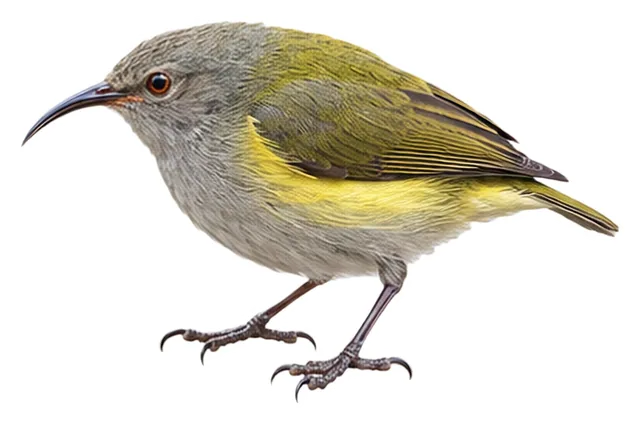
Pygmy Longbill
Oedistoma pygmaeum Salvadori, 1876
5.8 gWeight
The pygmy longbill or pygmy honeyeater (Oedistoma pygmaeum) is a species of bird in the family Melanocharitidae.
Busiest months: July · Most records: Papua New Guinea, Indonesia
Where and when it's recorded
Busiest months: July · Most records: Papua New Guinea, Indonesia

Pygmy Longbill has been recorded at 29 of the 8,276 birding hotspots we track, in 2 countries and regions.
Records by month Southern Hemisphere
Where it's recorded most
- Varirata National ParkPapua New Guinea102 records
- West Waigeo birding roadIndonesia67 records
- West Waigeo forest - Red and Wilson's BOP sites areaIndonesia28 records
More places
- Sera (formerly Crater Mountain) Biological Research StationPapua New Guinea22 records
- Arfak Mtns – MaybriIndonesia22 records
- MalagufukIndonesia21 records
- Tabubil AreaPapua New Guinea20 records
- Minggre Birdwatching HomestayIndonesia12 records
- Dablin Creek RoadPapua New Guinea10 records
- Tabubil-Kiunga Rd – Km 17Papua New Guinea10 records
Countries and regions with the most records
eBird records via GBIF up to 2024-12-31. A record means someone listed it; more records partly mean more birders, not more birds.
About
The pygmy longbill or pygmy honeyeater (Oedistoma pygmaeum) is a species of bird in the family Melanocharitidae. It is one of the two species in the genus Oedistoma, which also includes the spectacled longbill. It is found in New Guinea and adjacent islands.
Excerpt from Wikipedia, CC BY-SA 4.0 · authors · Read more on Wikipedia
Questions
How big is the Pygmy Longbill?
The Pygmy Longbill weighs around 5.8 g.
Where does the Pygmy Longbill live?
Its breeding range: Australasia: New Guinea and some satellites. It is most often recorded in Papua New Guinea and Indonesia.
When is the best time to see the Pygmy Longbill?
At the hotspots we track, it is recorded most in July (Southern Hemisphere).
Is the Pygmy Longbill endangered?
The IUCN Red List classifies the Pygmy Longbill as Least Concern.
What does the Pygmy Longbill eat?
Main food: Omnivore.
What family is the Pygmy Longbill in?
It belongs to the family Berrypeckers, Longbills (Melanocharitidae), order Passerines (Passeriformes).
At a glance
- Weight
- 5.8 g
- Habitat
- Forest
- Diet
- Omnivore
- Lifestyle
- Perches in trees
- Migration
- Resident (barely migrates)
- Conservation
- Least Concern
More measurements
- Wing
- 46 mm
- Tail
- 24 mm
- Bill
- 12 mm
- Tarsus
- 13 mm
Averages from the AVONET dataset; length from field guides where available.
Range
Australasia: New Guinea and some satellites
Breeding range, IOC World Bird List 15.2
Classification
- Order
- Passerines Passeriformes
- Family
- Berrypeckers, Longbills Melanocharitidae
- Genus
- Oedistoma
Other birds in the genus Oedistoma
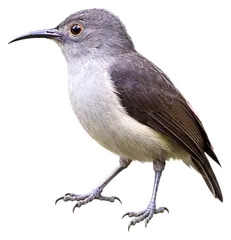 Spectacled LongbillOedistoma iliolophus
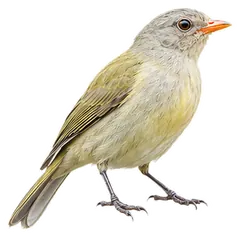 Obscure BerrypeckerMelanocharis arfakiana
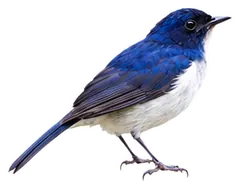 Mid-mountain BerrypeckerMelanocharis longicauda
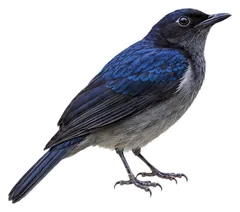 Black BerrypeckerMelanocharis nigra
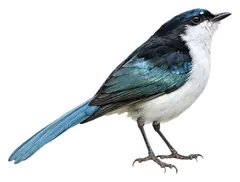 Fan-tailed BerrypeckerMelanocharis versteri
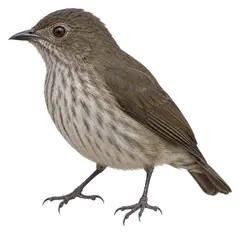 Streaked BerrypeckerMelanocharis striativentris
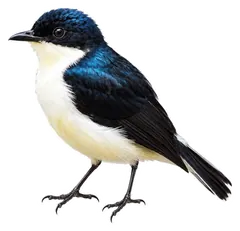 Satin BerrypeckerMelanocharis citreola
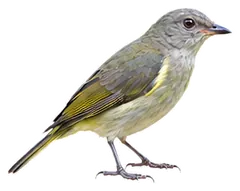 Thick-billed BerrypeckerMelanocharis crassirostris
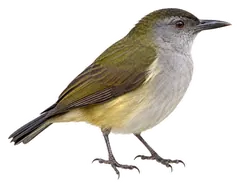 Spotted BerrypeckerMelanocharis piperata
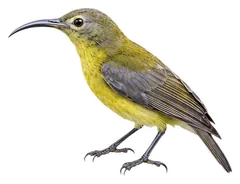 Yellow-bellied LongbillToxorhamphus novaeguineae
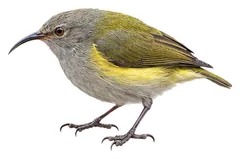
Download illustration
Free to use with credit: “Illustration: Bird Album (birdalbum.com)”. Drawn by AI from a reference photo by Chien Lee. ↗
Heard it but can't see it? Mingji identifies birds by sound and photo, on your phone.