 Bird Album
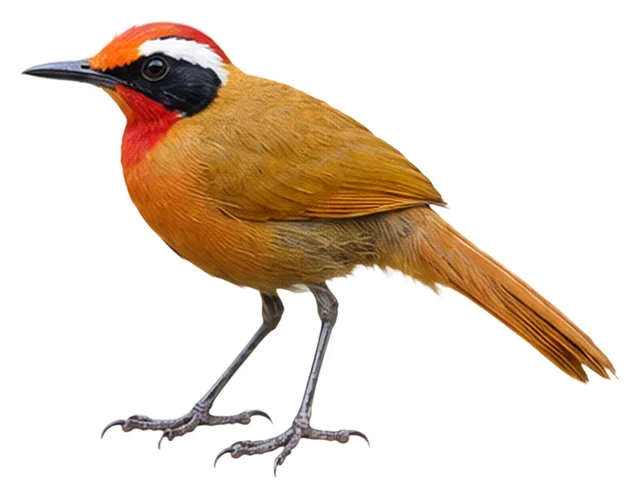
Rail-babbler
Eupetes macrocerus Temminck, 1831
30 cmLength69 gWeight
The rail-babbler or Malaysian rail-babbler (Eupetes macrocerus) is a brown and pied rail-like ground-living bird.
Busiest months: July–August · Most records: Malaysia, Thailand, Indonesia
Where and when it's recorded
Busiest months: July–August · Most records: Malaysia, Thailand, Indonesia

Rail-babbler has been recorded at 40 of the 8,276 birding hotspots we track, in 3 countries and regions.
Records by month Northern Hemisphere
Where it's recorded most
- Gunung Panti Recreational Forest – Panti Bird Sanctuary and North AreaMalaysia646 records
- Taman Negara NP Kuala TahanMalaysia105 records
- Paya MagaMalaysia85 records
More places
- Hutan Simpan LenggorMalaysia84 records
- Bukit TinggiMalaysia59 records
- Ba'kelalan – Bario RoadMalaysia46 records
- Taman Negara NP – Kuala Trenggan to Kumbang hideMalaysia45 records
- Bukit Tinggi – Japanese GardenMalaysia39 records
- Tengku Hassanal Wildlife Reserve – Access RoadMalaysia35 records
- Taman Negara NPMalaysia35 records
Countries and regions with the most records
eBird records via GBIF up to 2024-12-31. A record means someone listed it; more records partly mean more birders, not more birds.
About
The rail-babbler or Malaysian rail-babbler (Eupetes macrocerus) is a brown and pied rail-like ground-living bird. It is the only species in the genus Eupetes and family Eupetidae. It lives on the floor of primary forests in the Malay Peninsula and Sumatra (the nominate subspecies macrocerus), as well as Borneo (ssp. borneensis).
Excerpt from Wikipedia, CC BY-SA 4.0 · authors · Read more on Wikipedia
Questions
How big is the Rail-babbler?
The Rail-babbler is about 30 cm long and weighs around 69 g.
Where does the Rail-babbler live?
Its breeding range: Oriental: Malay Peninsula, Sumatra and Borneo. It is most often recorded in Malaysia, Thailand and Indonesia.
When is the best time to see the Rail-babbler?
At the hotspots we track, it is recorded most in July and August (Northern Hemisphere).
Is the Rail-babbler endangered?
The IUCN Red List classifies the Rail-babbler as Near Threatened.
What does the Rail-babbler eat?
Main food: Insects & other invertebrates.
What family is the Rail-babbler in?
It belongs to the family Rail-babbler (Eupetidae), order Passerines (Passeriformes).
At a glance
- Length
- 30 cm
- Weight
- 69 g
- Habitat
- Forest
- Diet
- Insects & other invertebrates
- Lifestyle
- Active on the ground
- Migration
- Resident (barely migrates)
- Conservation
- Near Threatened
More measurements
- Wing
- 98 mm
- Tail
- 115 mm
- Bill
- 29 mm
- Tarsus
- 44 mm
Averages from the AVONET dataset; length from field guides where available.
Range
Oriental: Malay Peninsula, Sumatra and Borneo
Breeding range, IOC World Bird List 15.2
Classification
- Order
- Passerines Passeriformes
- Family
- Rail-babbler Eupetidae
- Genus
- Eupetes
Download illustration
Free to use with credit: “Illustration: Bird Album (birdalbum.com)”. Drawn by AI from a reference photo by Chen Gim Choon. ↗
Heard it but can't see it? Mingji identifies birds by sound and photo, on your phone.