 Bird Album
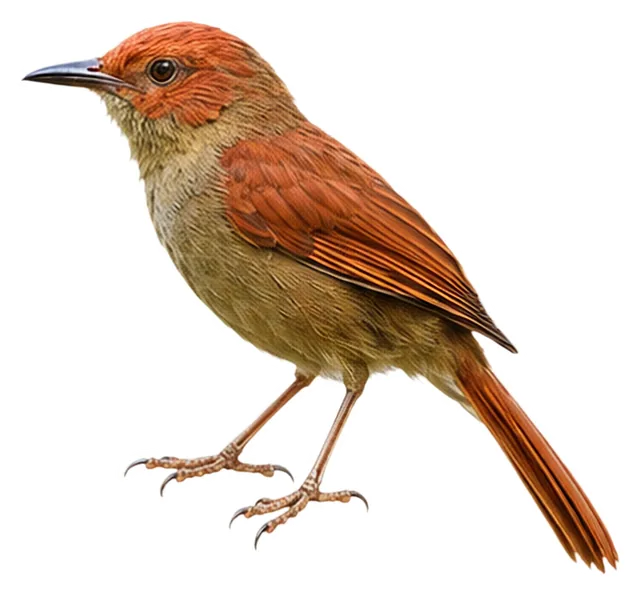
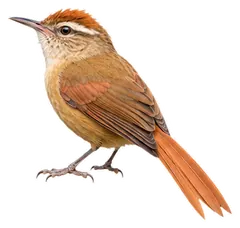
Red-faced Spinetail
Cranioleuca erythrops (Sclater, PL, 1860)
17 gWeight
The red-faced spinetail (Cranioleuca erythrops) is a species of bird in the Furnariinae subfamily of the ovenbird family Furnariidae.
Busiest months: January–February · Most records: Colombia, Ecuador, Costa Rica
Where and when it's recorded
Busiest months: January–February · Most records: Colombia, Ecuador, Costa Rica

Red-faced Spinetail has been recorded at 150 of the 8,276 birding hotspots we track, in 4 countries and regions.
Records by month Northern Hemisphere
Where it's recorded most
- Alto Anchicayá - El DescansoColombia2,168 records
- Reserva Biológica Bosque Nuboso MonteverdeCosta Rica2,113 records
- Reserva Mashpi-AmagusaEcuador1,684 records
More places
- Mindo – Vía a las cascadasEcuador1,529 records
- Refugio Paz de las AvesEcuador1,424 records
- Las Tangaras ProAves ReserveColombia1,416 records
- Milpe Bird SanctuaryEcuador1,309 records
- PN Tapanti – Sector TapantiCosta Rica1,189 records
- Wilson Botanical GardenCosta Rica1,087 records
- La Florida - Bosque de Las AvesColombia1,016 records
Countries and regions with the most records
eBird records via GBIF up to 2024-12-31. A record means someone listed it; more records partly mean more birders, not more birds.
About
The red-faced spinetail (Cranioleuca erythrops) is a species of bird in the Furnariinae subfamily of the ovenbird family Furnariidae. It is found in Colombia, Costa Rica, Ecuador, and Panama.
Excerpt from Wikipedia, CC BY-SA 4.0 · authors · Read more on Wikipedia
Questions
How big is the Red-faced Spinetail?
The Red-faced Spinetail weighs around 17 g.
Where does the Red-faced Spinetail live?
Its breeding range: Middle America, South America: Costa Rica to western Ecuador. It is most often recorded in Colombia, Ecuador and Costa Rica.
When is the best time to see the Red-faced Spinetail?
At the hotspots we track, it is recorded most in January and February (Northern Hemisphere).
Is the Red-faced Spinetail endangered?
The IUCN Red List classifies the Red-faced Spinetail as Least Concern.
What does the Red-faced Spinetail eat?
Main food: Insects & other invertebrates.
What family is the Red-faced Spinetail in?
It belongs to the family Ovenbirds (Furnariidae), order Passerines (Passeriformes).
At a glance
- Weight
- 17 g
- Habitat
- Forest
- Diet
- Insects & other invertebrates
- Lifestyle
- Perches in trees
- Migration
- Resident (barely migrates)
- Conservation
- Least Concern
More measurements
- Wing
- 65 mm
- Tail
- 71 mm
- Bill
- 15 mm
- Tarsus
- 19 mm
Averages from the AVONET dataset; length from field guides where available.
Range
Middle America, South America: Costa Rica to western Ecuador
Breeding range, IOC World Bird List 15.2
Classification
- Order
- Passerines Passeriformes
- Family
- Ovenbirds Furnariidae
- Genus
- Cranioleuca
Other birds in the genus Cranioleuca
 Russet-mantled SofttailCranioleuca berlepschi
 Vilcabamba SpinetailCranioleuca weskei
 Marcapata SpinetailCranioleuca marcapatae
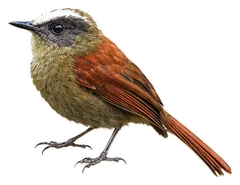 Light-crowned SpinetailCranioleuca albiceps
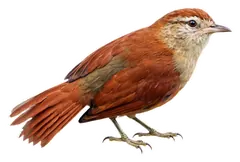 Rusty-backed SpinetailCranioleuca vulpina
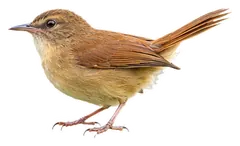 Coiba SpinetailCranioleuca dissita
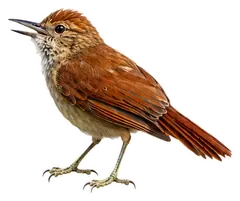 Parker's SpinetailCranioleuca vulpecula
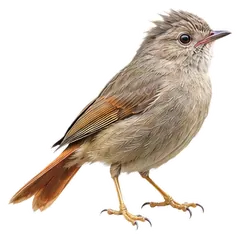 Crested SpinetailCranioleuca subcristata
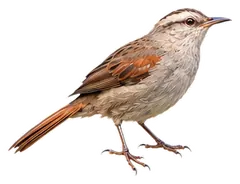 Stripe-crowned SpinetailCranioleuca pyrrhophia
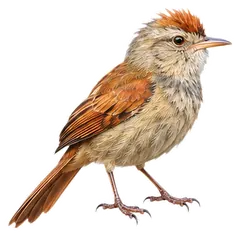 Bolivian SpinetailCranioleuca henricae
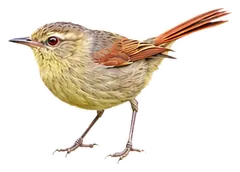 Olive SpinetailCranioleuca obsoleta
 Pallid SpinetailCranioleuca pallida
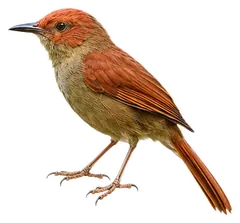
Download illustration
Free to use with credit: “Illustration: Bird Album (birdalbum.com)”. Drawn by AI from a reference photo by Dave Wendelken. ↗
Heard it but can't see it? Mingji identifies birds by sound and photo, on your phone.
In other languages
- EnglishRed-faced Spinetail
- 简体中文红脸针尾雀
- 繁體中文紅臉針尾雀
- 日本語アカガオカマドドリ
- DeutschRotgesicht-Baumschlüpfer
- FrançaisSynallaxe à face rouge
- EspañolCurutié carirrojo
- Portuguêsarredio-rubicundo
- ItalianoCodaspino facciarossa
- NederlandsRoodwangstekelstaart
- РусскийКраснолицая курутия
- Svenskarosthuvad taggstjärt
- DanskRødmasket Spidshale
- Polskimoczarnik rdzawolicy