 Bird Album
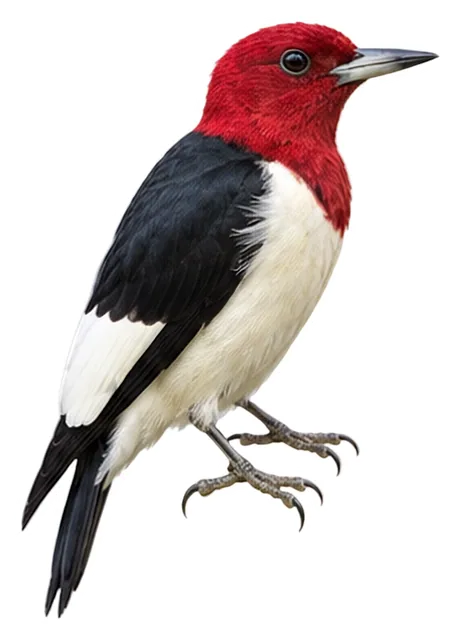
Red-headed Woodpecker
Melanerpes erythrocephalus (Linnaeus, 1758)
72 gWeight
The red-headed woodpecker (Melanerpes erythrocephalus) is a mid-sized woodpecker found in temperate North America.
Busiest months: May · Most records: United States, Canada
Where and when it's recorded
Busiest months: May · Most records: United States, Canada

Red-headed Woodpecker has been recorded at 394 of the 8,276 birding hotspots we track, in 2 countries and regions.
Records by month Northern Hemisphere
Where it's recorded most
- Point Pelee National ParkCanada7,870 records
- Magee Marsh – BoardwalkUnited States5,949 records
- HUNTLEY MEADOWS PARKUnited States4,780 records
More places
- Conestee Nature PreserveUnited States4,738 records
- Caw Caw Interpretive CenterUnited States4,734 records
- Hagerman NWRUnited States4,635 records
- Eagle Bluffs CAUnited States3,083 records
- Mason Farm Biological ReserveUnited States3,064 records
- Hughes Hollow - McKee Beshers WMAUnited States2,959 records
- Sheldon Marsh State Nature PreserveUnited States2,939 records
Countries and regions with the most records
eBird records via GBIF up to 2024-12-31. A record means someone listed it; more records partly mean more birders, not more birds.
About
The red-headed woodpecker (Melanerpes erythrocephalus) is a mid-sized woodpecker found in temperate North America. Its breeding habitat is open country across southern Canada and the east-central United States. It is rated as least concern on the International Union for Conservation of Nature (IUCN)'s Red List of Endangered species, having been down-listed from near threatened in 2018.
Excerpt from Wikipedia, CC BY-SA 4.0 · authors · Read more on Wikipedia
Questions
How big is the Red-headed Woodpecker?
The Red-headed Woodpecker weighs around 72 g.
Where does the Red-headed Woodpecker live?
Its breeding range: North America: south-central, southeastern Canada to southeastern USA. It is most often recorded in United States and Canada.
When is the best time to see the Red-headed Woodpecker?
At the hotspots we track, it is recorded most in May (Northern Hemisphere).
Is the Red-headed Woodpecker endangered?
The IUCN Red List classifies the Red-headed Woodpecker as Least Concern.
What does the Red-headed Woodpecker eat?
Main food: Insects & other invertebrates.
What family is the Red-headed Woodpecker in?
It belongs to the family Woodpeckers (Picidae), order Piciformes.
At a glance
- Weight
- 72 g
- Habitat
- Forest
- Diet
- Insects & other invertebrates
- Lifestyle
- Perches in trees
- Migration
- Resident (barely migrates)
- Conservation
- Least Concern
More measurements
- Wing
- 140 mm
- Tail
- 83 mm
- Bill
- 27 mm
- Tarsus
- 21 mm
Averages from the AVONET dataset; length from field guides where available.
Range
North America: south-central, southeastern Canada to southeastern USA
Breeding range, IOC World Bird List 15.2
Classification
- Order
- Piciformes
- Family
- Woodpeckers Picidae
- Genus
- Melanerpes
Other birds in the genus Melanerpes
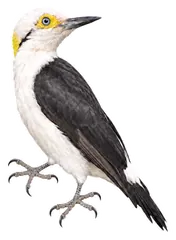 White WoodpeckerMelanerpes candidus
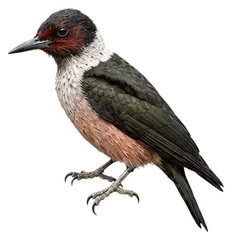 Lewis's WoodpeckerMelanerpes lewis
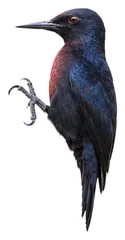 Guadeloupe WoodpeckerMelanerpes herminieri
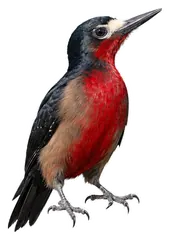 Puerto Rican WoodpeckerMelanerpes portoricensis
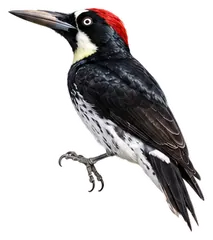 Acorn WoodpeckerMelanerpes formicivorus
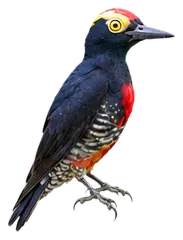 Yellow-tufted WoodpeckerMelanerpes cruentatus
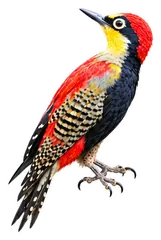 Yellow-fronted WoodpeckerMelanerpes flavifrons
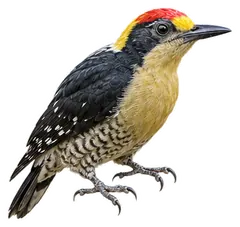 Golden-naped WoodpeckerMelanerpes chrysauchen
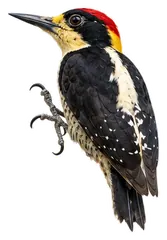 Beautiful WoodpeckerMelanerpes pulcher
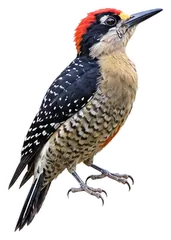 Black-cheeked WoodpeckerMelanerpes pucherani
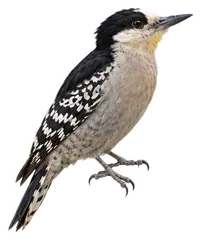 White-fronted WoodpeckerMelanerpes cactorum
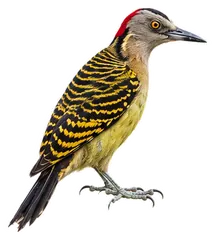 Hispaniolan WoodpeckerMelanerpes striatus
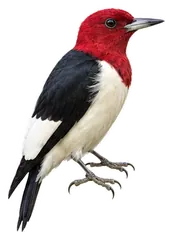
Download illustration
Free to use with credit: “Illustration: Bird Album (birdalbum.com)”. Drawn by AI from a reference photo by Pierrette. ↗
Heard it but can't see it? Mingji identifies birds by sound and photo, on your phone.
In other languages
- EnglishRed-headed Woodpecker
- 简体中文红头啄木鸟
- 繁體中文紅頭啄木
- 日本語ズアカキツツキ
- DeutschRotkopfspecht
- FrançaisPic à tête rouge
- EspañolCarpintero cabecirrojo
- Portuguêspica-pau-de-cabeça-vermelha
- ItalianoPicchio testarossa
- NederlandsRoodkopspecht
- РусскийКрасноголовый дятел
- Svenskarödhuvad hackspett
- DanskRødhovedet Spætte
- Polskidzięciur krasnogłowy