 Bird Album
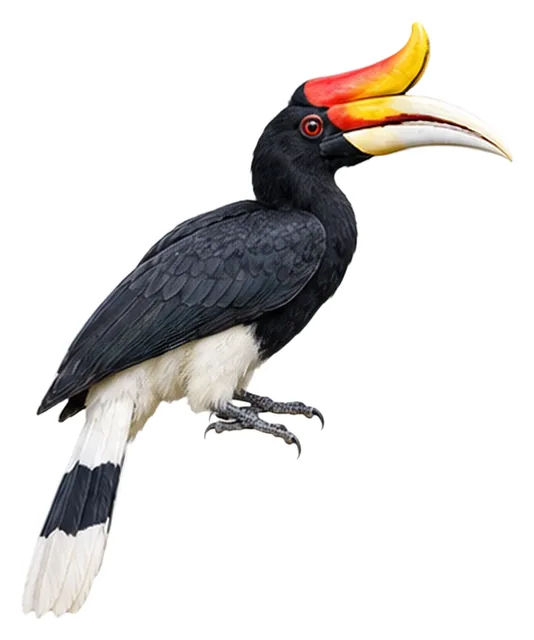
Rhinoceros Hornbill
Buceros rhinoceros Linnaeus, 1758
2.4 kgWeight
The rhinoceros hornbill (Buceros rhinoceros) is a large species of forest hornbill.
Busiest months: July · Most records: Malaysia, Thailand, Indonesia
Where and when it's recorded

Rhinoceros Hornbill has been recorded at 92 of the 8,171 birding hotspots we track, in 5 countries and regions.
Records by month Northern Hemisphere
Where it's recorded most
- Danum Valley Borneo Rainforest LodgeMalaysia1,648 records
- Sepilok – Rainforest Discovery CenterMalaysia1,409 records
- Danum Valley Field CentreMalaysia935 records
More places
- Kinabatangan River – SukauMalaysia611 records
- Tabin Wildlife ReserveMalaysia581 records
- Hala – Bala Wildlife Sanctuary – BalaThailand394 records
- Taman Negara NP Kuala TahanMalaysia366 records
- Taman Negara NP – Sungai RelauMalaysia364 records
- Deramakot Forest ReserveMalaysia301 records
- Gunung Panti Recreational Forest – Panti Bird Sanctuary and North AreaMalaysia295 records
Countries and regions with the most records
eBird records via GBIF up to 2024-12-31. A record means someone listed it; more records partly mean more birders, not more birds.
About
The rhinoceros hornbill (Buceros rhinoceros) is a large species of forest hornbill. In captivity, it can live for up to 35 years. It is found in lowland and montane, tropical and subtropical climates and in mountain rain forests up to 1,400 metres in the Malay Peninsula from southern Thailand; and the islands of Singapore, Borneo, Sumatra and Java.
Excerpt from Wikipedia, CC BY-SA 4.0 · authors · Read more on Wikipedia
Questions
How big is the Rhinoceros Hornbill?
The Rhinoceros Hornbill weighs around 2.4 kg.
Where does the Rhinoceros Hornbill live?
Its breeding range: Oriental: Malay Peninsula and Greater Sundas. It is most often recorded in Malaysia, Thailand and Indonesia.
When is the best time to see the Rhinoceros Hornbill?
At the hotspots we track, it is recorded most in July (Northern Hemisphere).
Is the Rhinoceros Hornbill endangered?
The IUCN Red List classifies the Rhinoceros Hornbill as Vulnerable.
What does the Rhinoceros Hornbill eat?
Main food: Fruit.
What family is the Rhinoceros Hornbill in?
It belongs to the family Hornbills (Bucerotidae), order Bucerotiformes.
At a glance
- Weight
- 2.4 kg
- Habitat
- Forest
- Diet
- Fruit
- Lifestyle
- Perches in trees
- Migration
- Resident (barely migrates)
- Conservation
- Vulnerable
More measurements
- Wing
- 458 mm
- Tail
- 366 mm
- Bill
- 245 mm
- Tarsus
- 70 mm
Averages from the AVONET dataset; length from field guides where available.
Range
Oriental: Malay Peninsula and Greater Sundas
Breeding range, IOC World Bird List 15.2
Classification
- Order
- Bucerotiformes
- Family
- Hornbills Bucerotidae
- Genus
- Buceros
Other birds in the genus Buceros
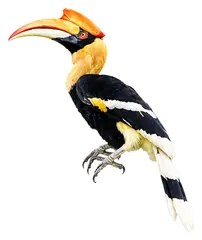 Great HornbillBuceros bicornis
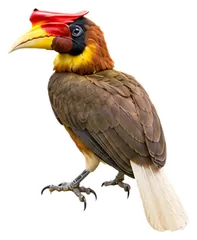 Rufous HornbillBuceros hydrocorax
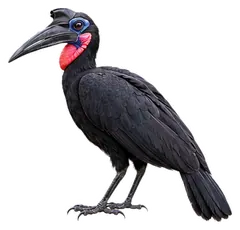 Abyssinian Ground HornbillBucorvus abyssinicus
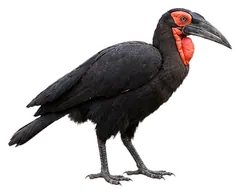 Southern Ground HornbillBucorvus leadbeateri
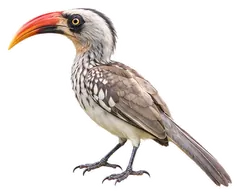 Tanzanian Red-billed HornbillTockus ruahae
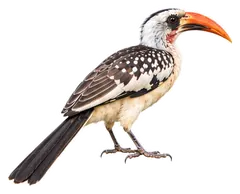 Western Red-billed HornbillTockus kempi
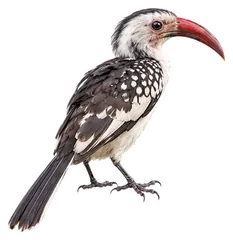 Damara Red-billed HornbillTockus damarensis
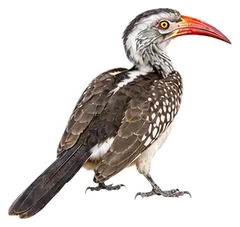 Southern Red-billed HornbillTockus rufirostris
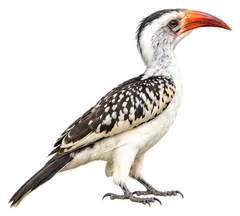 Northern Red-billed HornbillTockus erythrorhynchus
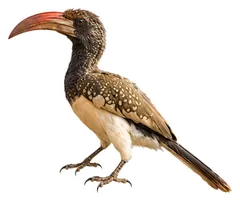 Monteiro's HornbillTockus monteiri
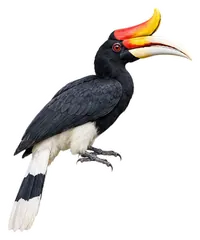
Download illustration
Free to use with credit: “Illustration: Bird Album (birdalbum.com)”. Drawn by AI from reference photos. ↗
Heard it but can't see it? Mingji identifies birds by sound and photo, on your phone.
In other languages
- EnglishRhinoceros Hornbill
- 简体中文马来犀鸟
- 繁體中文馬來犀鳥
- 日本語サイチョウ
- DeutschRhinozeroshornvogel
- FrançaisCalao rhinocéros
- EspañolCálao rinoceronte
- Portuguêscalau-rinoceronte
- ItalianoBucero rinoceronte
- NederlandsGewone Neushoornvogel
- РусскийМалайский гомрай
- Svenskanoshörningsnäshornsfågel
- DanskNæsehornsfugl
- Polskidzioborożec żałobny