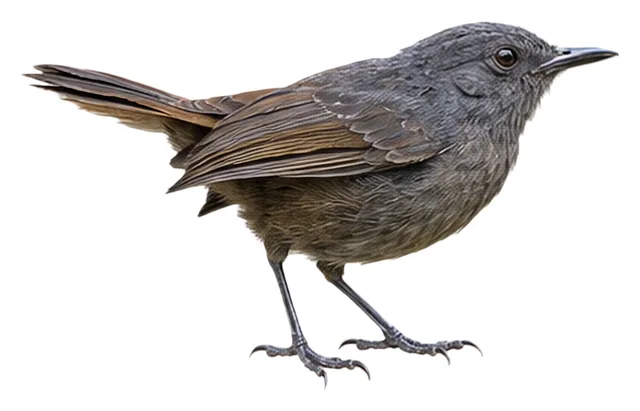
Rio de Janeiro Antbird
Cercomacra brasiliana Hellmayr, 1905
13–14 cmLength12 gWeight
The Rio de Janeiro antbird (Cercomacra brasiliana) is a Near Threatened species of bird in subfamily Thamnophilinae of family Thamnophilidae, the "typical antbirds".
Busiest months: November · Most records: Brazil
Where and when it's recorded
Busiest months: November · Most records: Brazil

Rio de Janeiro Antbird has been recorded at 5 of the 8,276 birding hotspots we track, in 1 country or region.
Records by month Southern Hemisphere
Where it's recorded most
- PN de Boa Nova – Mata do CharmeBrazil357 records
- Reserva Kaetés - PCSABrazil1 record
- RPPN Serra BonitaBrazil1 record
More places
- Jardim Botânico do Rio de JaneiroBrazil1 record
- PN de Itatiaia – Hotel do YpêBrazil1 record
Countries and regions with the most records
eBird records via GBIF up to 2024-12-31. A record means someone listed it; more records partly mean more birders, not more birds.
About
The Rio de Janeiro antbird (Cercomacra brasiliana) is a Near Threatened species of bird in subfamily Thamnophilinae of family Thamnophilidae, the "typical antbirds". It is endemic to Brazil.
Excerpt from Wikipedia, CC BY-SA 4.0 · authors · Read more on Wikipedia
Questions
How big is the Rio de Janeiro Antbird?
The Rio de Janeiro Antbird is about 13–14 cm long and weighs around 12 g.
Where does the Rio de Janeiro Antbird live?
Its breeding range: South America: southeastern Brazil. It is most often recorded in Brazil.
When is the best time to see the Rio de Janeiro Antbird?
At the hotspots we track, it is recorded most in November (Southern Hemisphere).
Is the Rio de Janeiro Antbird endangered?
The IUCN Red List classifies the Rio de Janeiro Antbird as Least Concern.
What does the Rio de Janeiro Antbird eat?
Main food: Insects & other invertebrates.
What family is the Rio de Janeiro Antbird in?
It belongs to the family Antbirds (Thamnophilidae), order Passerines (Passeriformes).
At a glance
- Length
- 13–14 cm
- Weight
- 12 g
- Habitat
- Woodland
- Diet
- Insects & other invertebrates
- Lifestyle
- Perches in trees
- Migration
- Resident (barely migrates)
- Conservation
- Least Concern
More measurements
- Wing
- 60 mm
- Tail
- 71 mm
- Bill
- 16 mm
- Tarsus
- 20 mm
Averages from the AVONET dataset; length from field guides where available.
Range
South America: southeastern Brazil
Breeding range, IOC World Bird List 15.2
Classification
- Order
- Passerines Passeriformes
- Family
- Antbirds Thamnophilidae
- Genus
- Cercomacra
Other birds in the genus Cercomacra
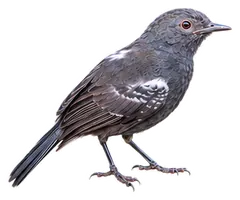 Manu AntbirdCercomacra manu
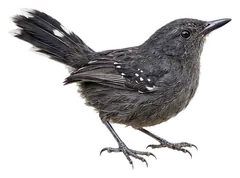 Grey AntbirdCercomacra cinerascens
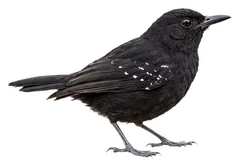 Mato Grosso AntbirdCercomacra melanaria
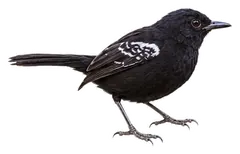 Bananal AntbirdCercomacra ferdinandi
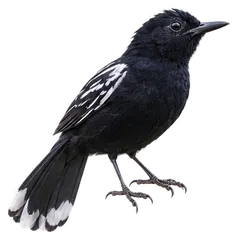 Jet AntbirdCercomacra nigricans
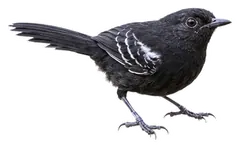 Rio Branco AntbirdCercomacra carbonaria
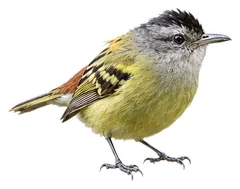 Rufous-rumped AntwrenEuchrepomis callinota
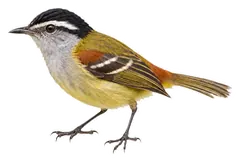 Chestnut-shouldered AntwrenEuchrepomis humeralis
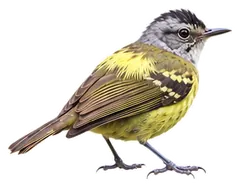 Yellow-rumped AntwrenEuchrepomis sharpei
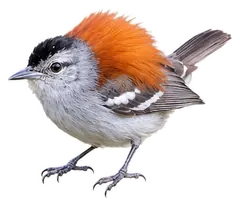 Ash-winged AntwrenEuchrepomis spodioptila
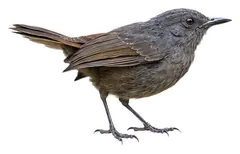
Download illustration
Free to use with credit: “Illustration: Bird Album (birdalbum.com)”. Drawn by AI from a reference photo by (c) Roberto De Oliveira Silva, some rights reserved (CC BY-NC). ↗
Heard it but can't see it? Mingji identifies birds by sound and photo, on your phone.
In other languages
- EnglishRio de Janeiro Antbird
- 简体中文里约蚁鸟
- 繁體中文里約蟻鳥
- 日本語ウスハイイロアリドリ
- DeutschRio-de-Janeiro-Ameisenfänger
- FrançaisGrisin du Brésil
- EspañolHormiguero brasileño
- Portuguêschororó-cinzento
- ItalianoFormichiere di Rio de Janeiro
- NederlandsWigstaartmiervogel
- РусскийБразильская муравьянка
- Svenskariodejaneiromyrfågel
- DanskRio de Janeiro-myrefugl
- Polskimrówkowodzik brazylijski