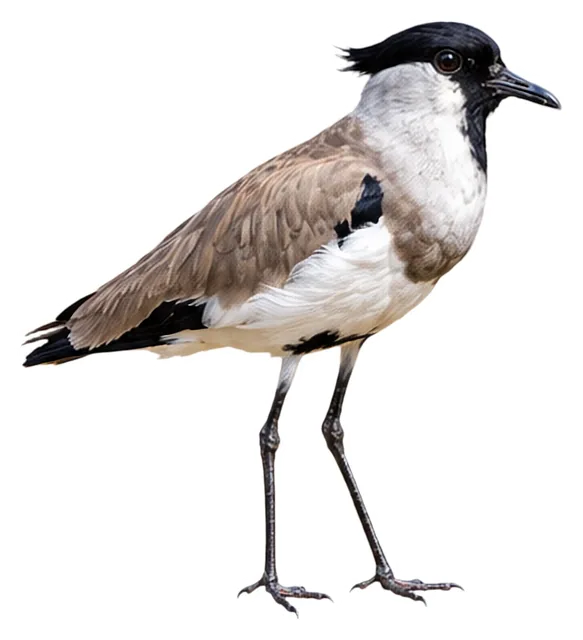
River Lapwing
Vanellus duvaucelii (Lesson, RP, 1826)
≈31 cmLength143 gWeight
It has a black crest, face and central throat, with a single black belly patch on the white underparts.
Busiest months: January–March · Most records: India, Nepal, Bhutan
How to identify
Field marks
- Black crest, crown, face and center of throat
- Grayish-white sides of neck and nape
- Gray-brown breast-band; white belly with a black patch
- Brown back, white rump and black tail
Male, female and young
Sexes have similar plumage, with the male slightly larger; juveniles have brown tips to the black head feathers and a sandier brown back.
Voice
Sharp “tip-tip” or “did-did-did” calls.
Where and when it's recorded
Busiest months: January–March · Most records: India, Nepal, Bhutan

River Lapwing has been recorded at 168 of the 8,276 birding hotspots we track, in 11 countries and regions.
Records by month Northern Hemisphere
Where it's recorded most
- Haiderpur Wetlands and Bijnor BarrageIndia1,009 records
- Gajoldoba Barrage JGIndia883 records
- Corbett NP – DhikalaIndia828 records
More places
- Nameri National Park & SurroundingsIndia574 records
- Jhilmil Jheel Conservation ReserveIndia467 records
- Corbett NPIndia376 records
- Asan Conservation ReserveIndia349 records
- Thimpu Sewage LagoonsBhutan314 records
- Chitwan National ParkNepal263 records
- Chitwan National Park - SaurahaNepal203 records
Countries and regions with the most records
eBird records via GBIF up to 2024-12-31. A record means someone listed it; more records partly mean more birders, not more birds.
About
The river lapwing (Vanellus duvaucelii) is a lapwing species which breeds from the Indian subcontinent eastwards to Southeast Asia. It range includes much of northern and northeastern India, and extends through Southeast Asia to Vietnam. It appears to be entirely sedentary.
Excerpt from Wikipedia, CC BY-SA 4.0 · authors · Read more on Wikipedia
Questions
How big is the River Lapwing?
The River Lapwing is about ≈31 cm long and weighs around 143 g.
Where does the River Lapwing live?
Its breeding range: Oriental: riverine north-central India to western Yunnan (southwestern China), Thailand to northern Thai-Malay Peninsula and northern, southern Vietnam. It is most often recorded in India, Nepal and Bhutan.
When is the best time to see the River Lapwing?
At the hotspots we track, it is recorded most in January, February and March (Northern Hemisphere).
Is the River Lapwing endangered?
The IUCN Red List classifies the River Lapwing as Near Threatened.
What does the River Lapwing eat?
Main food: Fish, shrimp & shellfish.
What family is the River Lapwing in?
It belongs to the family Plovers (Charadriidae), order Charadriiformes.
At a glance
- Length
- ≈31 cm
- Weight
- 143 g
- Habitat
- Rivers & streams
- Diet
- Fish, shrimp & shellfish
- Lifestyle
- Active on the ground
- Migration
- Resident (barely migrates)
- Conservation
- Near Threatened
More measurements
- Wing
- 194 mm
- Tail
- 86 mm
- Bill
- 34 mm
- Tarsus
- 65 mm
Averages from the AVONET dataset; length from field guides where available.
Range
Oriental: riverine north-central India to western Yunnan (southwestern China), Thailand to northern Thai-Malay Peninsula and northern, southern Vietnam
Breeding range, IOC World Bird List 15.2
Classification
- Order
- Charadriiformes
- Family
- Plovers Charadriidae
- Genus
- Vanellus
Other birds in the genus Vanellus
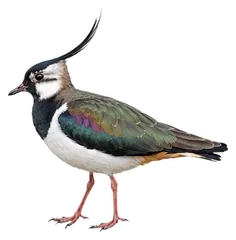 Northern LapwingVanellus vanellus
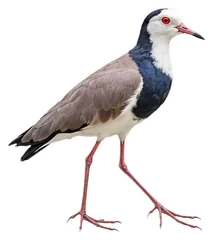 Long-toed LapwingVanellus crassirostris
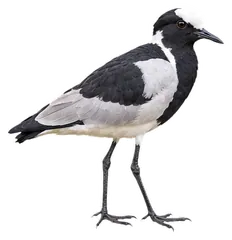 Blacksmith LapwingVanellus armatus
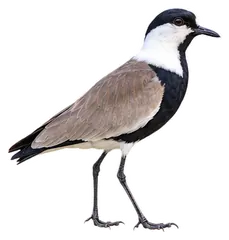 Spur-winged LapwingVanellus spinosus
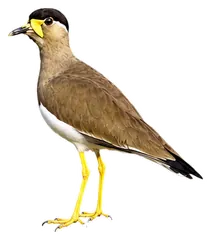 Yellow-wattled LapwingVanellus malabaricus
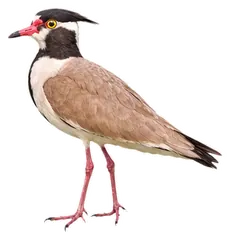 Black-headed LapwingVanellus tectus
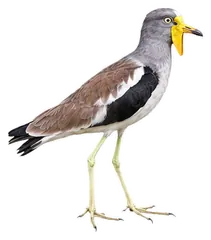 White-crowned LapwingVanellus albiceps
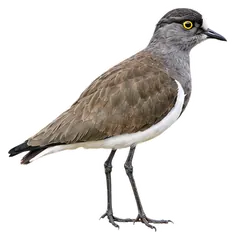 Senegal LapwingVanellus lugubris
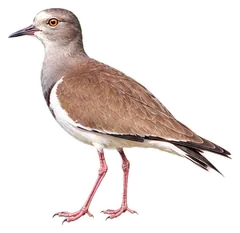 Black-winged LapwingVanellus melanopterus
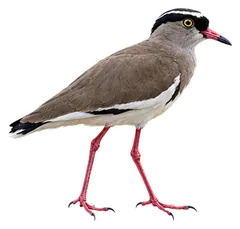 Crowned LapwingVanellus coronatus
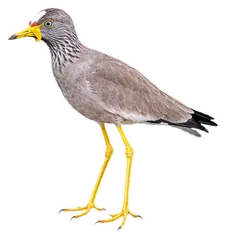 African Wattled LapwingVanellus senegallus
 Spot-breasted LapwingVanellus melanocephalus
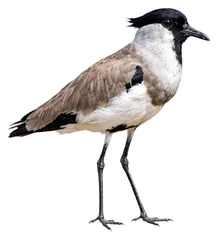
Download illustration
Free to use with credit: “Illustration: Bird Album (birdalbum.com)”. Drawn by AI from a reference photo by Andaman Kaosung. ↗
Heard it but can't see it? Mingji identifies birds by sound and photo, on your phone.