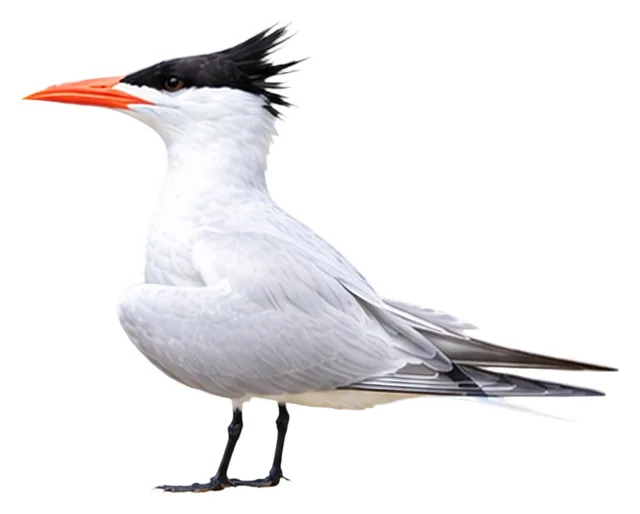
Royal Tern
Thalasseus maximus (Boddaert, 1783)
415 gWeight
The royal tern (Thalasseus maximus) is a tern in the family Laridae.
Busiest months: April · Most records: United States, Mexico, Costa Rica
Where and when it's recorded
Busiest months: April · Most records: United States, Mexico, Costa Rica

Royal Tern has been recorded at 772 of the 8,276 birding hotspots we track, in 52 countries and regions.
Records by month Northern Hemisphere
Where it's recorded most
- Fort De Soto ParkUnited States18,231 records
- South Padre Is. – WBC/Conv. Center/Laguna Madre TrailUnited States9,160 records
- Bolivar Flats Shorebird SanctuaryUnited States7,644 records
More places
- South Padre Is. – Birding and Nature CenterUnited States7,533 records
- San Diego River mudflatsUnited States7,211 records
- Rollover PassUnited States6,569 records
- Cape Island – Cape May Point SPUnited States5,439 records
- Huguenot Memorial City ParkUnited States5,423 records
- Cape Island – South Cape May MeadowsUnited States5,272 records
- San Carlos Bay/Bunche Beach PreserveUnited States5,161 records
Countries and regions with the most records
eBird records via GBIF up to 2024-12-31. A record means someone listed it; more records partly mean more birders, not more birds.
About
The royal tern (Thalasseus maximus) is a tern in the family Laridae. The species is endemic to the Americas, though vagrants have been identified in Europe.
Excerpt from Wikipedia, CC BY-SA 4.0 · authors · Read more on Wikipedia
Questions
How big is the Royal Tern?
The Royal Tern weighs around 415 g.
Where does the Royal Tern live?
Its breeding range: North America, Middle America, South America: coastal western North Atlantic from Virginia to Florida, Gulf of Mexico to southern Texas, Campeche Bank (northeastern Mexico), off northern Honduras, through West Indies and off northern Venezuela to French Guiana; southern California, northern Gulf of California to Sinaloa and Islands Tres Marias (off west-central Mexico) and disjunctly coastal southern Brazil, Uruguay and east-central Argentina. It is most often recorded in United States, Mexico and Costa Rica.
When is the best time to see the Royal Tern?
At the hotspots we track, it is recorded most in April (Northern Hemisphere).
Is the Royal Tern endangered?
The IUCN Red List classifies the Royal Tern as Least Concern.
What does the Royal Tern eat?
Main food: Fish, shrimp & shellfish.
What family is the Royal Tern in?
It belongs to the family Gulls, Terns, Skimmers (Laridae), order Charadriiformes.
At a glance
- Weight
- 415 g
- Habitat
- Ocean
- Diet
- Fish, shrimp & shellfish
- Lifestyle
- Feeds in the air
- Migration
- Migratory
- Conservation
- Least Concern
More measurements
- Wing
- 364 mm
- Tail
- 154 mm
- Bill
- 74 mm
- Tarsus
- 33 mm
Averages from the AVONET dataset; length from field guides where available.
Range
North America, Middle America, South America: coastal western North Atlantic from Virginia to Florida, Gulf of Mexico to southern Texas, Campeche Bank (northeastern Mexico), off northern Honduras, through West Indies and off northern Venezuela to French Guiana; southern California, northern Gulf of California to Sinaloa and Islands Tres Marias (off west-central Mexico) and disjunctly coastal southern Brazil, Uruguay and east-central Argentina
Breeding range, IOC World Bird List 15.2
Classification
- Order
- Charadriiformes
- Family
- Gulls, Terns, Skimmers Laridae
- Genus
- Thalasseus
Other birds in the genus Thalasseus
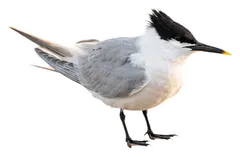 Sandwich TernThalasseus sandvicensis
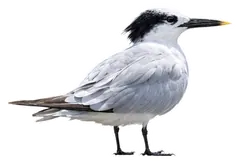 Cabot's TernThalasseus acuflavidus
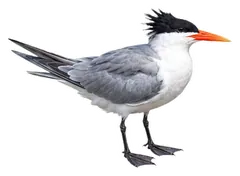 Elegant TernThalasseus elegans
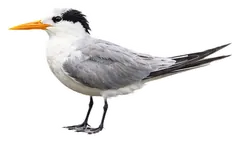 Lesser Crested TernThalasseus bengalensis
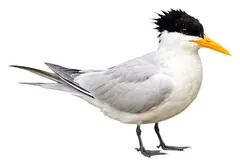 West African Crested TernThalasseus albididorsalis
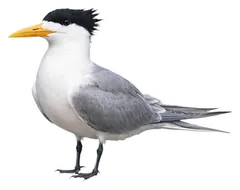 Greater Crested TernThalasseus bergii
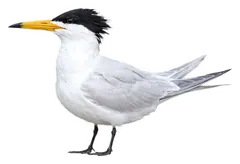 Chinese Crested TernThalasseus bernsteini
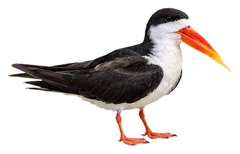 African SkimmerRynchops flavirostris
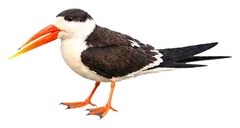 Indian SkimmerRynchops albicollis
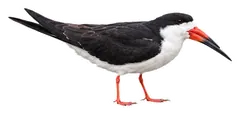 Black SkimmerRynchops niger
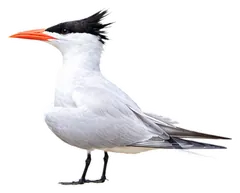
Download illustration
Free to use with credit: “Illustration: Bird Album (birdalbum.com)”. Drawn by AI from a reference photo by Sean. ↗
Heard it but can't see it? Mingji identifies birds by sound and photo, on your phone.