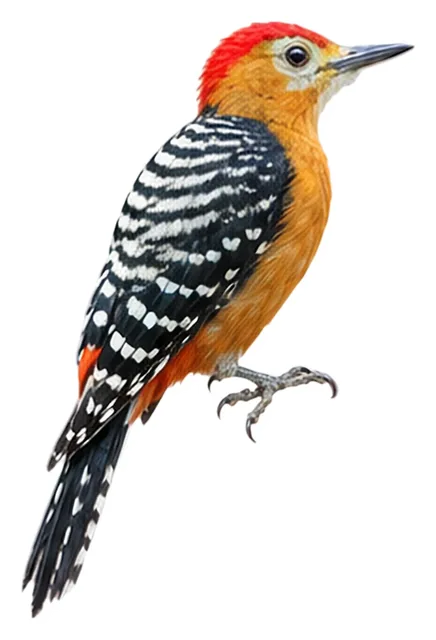
Rufous-bellied Woodpecker
Dendrocopos hyperythrus (Vigors, 1831)
≈21 cmLength46 gWeight
This woodpecker has a white face and uniformly cinnamon-rufous throat and underparts, with a red crown in the male.
Busiest months: May · Most records: China, India, Cambodia
How to identify
Field marks
- White face; throat and underparts uniformly cinnamon-rufous
- Black back; black wings with white barring
- Black lower belly with white barring; red or pink undertail-coverts
- Black upper mandible, gray lower mandible and gray or olive legs and feet
Male, female and young
The male has a red crown; the female has a black crown with fine white spots.
Where and when it's recorded
Busiest months: May · Most records: China, India, Cambodia

Rufous-bellied Woodpecker has been recorded at 243 of the 8,276 birding hotspots we track, in 10 countries and regions.
Records by month Northern Hemisphere
Where it's recorded most
- PangotIndia558 records
- TmatboeyCambodia377 records
- Dochula – Royal Botanical ParkBhutan183 records
More places
- Munsyari – Bheema WodeyarIndia135 records
- Veal Krous Vulture RestaurantCambodia125 records
- SattalIndia123 records
- Mt. PhulchowkiNepal102 records
- Happy IslandChina93 records
- Temple of HeavenChina89 records
- Natma Taung NP – Mount VictoriaMyanmar (Burma)69 records
Countries and regions with the most records
eBird records via GBIF up to 2024-12-31. A record means someone listed it; more records partly mean more birders, not more birds.
About
The rufous-bellied woodpecker or rufous-bellied sapsucker (Dendrocopos hyperythrus) is a species of bird in the family Picidae. This woodpecker has a habit of making a series of small pits on the bark of trees leading to its being considered an Asiatic member of the sapsuckers in the past. It is found along the Himalayas in the Indian subcontinent and Southeast Asia, ranging across Bangladesh, Bhutan, Cambodia, Hong Kong (China), India, Korea, Myanmar, Nepal, Thailand, Manchuria, Ussuriland and Vietnam.
Excerpt from Wikipedia, CC BY-SA 4.0 · authors · Read more on Wikipedia
Questions
How big is the Rufous-bellied Woodpecker?
The Rufous-bellied Woodpecker is about ≈21 cm long and weighs around 46 g.
Where does the Rufous-bellied Woodpecker live?
Its breeding range: Oriental: northern India to southeastern, East Asia. It is most often recorded in China, India and Cambodia.
When is the best time to see the Rufous-bellied Woodpecker?
At the hotspots we track, it is recorded most in May (Northern Hemisphere).
Is the Rufous-bellied Woodpecker endangered?
The IUCN Red List classifies the Rufous-bellied Woodpecker as Least Concern.
What does the Rufous-bellied Woodpecker eat?
Main food: Insects & other invertebrates.
What family is the Rufous-bellied Woodpecker in?
It belongs to the family Woodpeckers (Picidae), order Piciformes.
At a glance
- Length
- ≈21 cm
- Weight
- 46 g
- Habitat
- Forest
- Diet
- Insects & other invertebrates
- Lifestyle
- Perches in trees
- Migration
- Resident (barely migrates)
- Conservation
- Least Concern
More measurements
- Wing
- 116 mm
- Tail
- 70 mm
- Bill
- 25 mm
- Tarsus
- 19 mm
Averages from the AVONET dataset; length from field guides where available.
Range
Oriental: northern India to southeastern, East Asia
Breeding range, IOC World Bird List 15.2
Subspecies · 2
- Dendrocopos hyperythrus hyperythrus n India (Uttarakhand) and Nepal to Tibet, sw China, Myanmar and n Thailand
- Dendrocopos hyperythrus subrufinus ne China, se Siberia and Korean Pen. | non-breeding: to China and n Indochina
Classification
- Order
- Piciformes
- Family
- Woodpeckers Picidae
- Genus
- Dendrocopos
Other birds in the genus Dendrocopos
 Fulvous-breasted WoodpeckerDendrocopos macei
 Freckle-breasted WoodpeckerDendrocopos analis
 Stripe-breasted WoodpeckerDendrocopos atratus
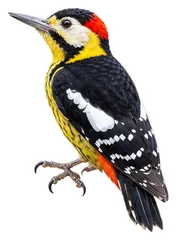 Darjeeling WoodpeckerDendrocopos darjellensis
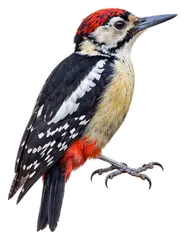 Himalayan WoodpeckerDendrocopos himalayensis
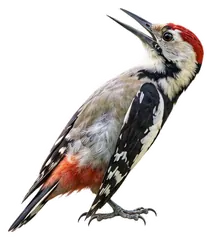 Sind WoodpeckerDendrocopos assimilis
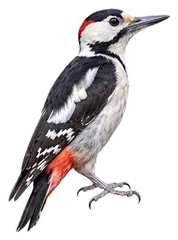 Syrian WoodpeckerDendrocopos syriacus
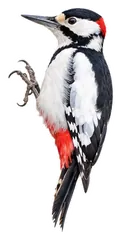 White-winged WoodpeckerDendrocopos leucopterus
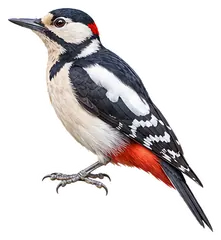 Great Spotted WoodpeckerDendrocopos major
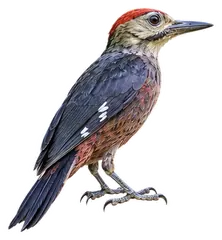 Okinawa WoodpeckerDendrocopos noguchii
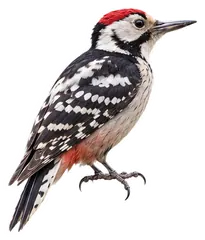 White-backed WoodpeckerDendrocopos leucotos
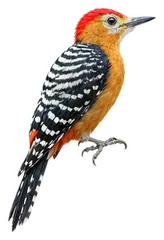
Download illustration
Free to use with credit: “Illustration: Bird Album (birdalbum.com)”. Drawn by AI from a reference photo by Francesco Veronesi. ↗

Heard it but can't see it? Mingji identifies birds by sound and photo, on your phone.
In other languages
- EnglishRufous-bellied Woodpecker
- 简体中文棕腹啄木鸟
- 繁體中文棕腹啄木
- 日本語チャバラアカゲラ
- 한국어붉은배오색딱다구리
- DeutschRostbauchspecht
- FrançaisPic à ventre fauve
- EspañolPico ventrirrufo
- Portuguêspica-pau-de-ventre-vermelho
- ItalianoPicchio panciarossiccia
- NederlandsBruinkeelspecht
- РусскийРыжебрюхий дятел
- Svenskarostbuksspett
- DanskBrunbuget Flagspætte
- Polskidzięcioł rdzawobrzuchy