 Bird Album
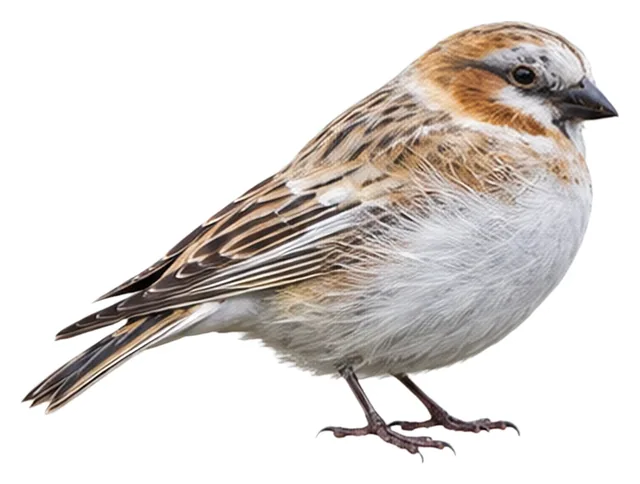
Rufous-necked Snowfinch
Pyrgilauda ruficollis (Blanford, 1871)
≈15 cmLength23 gWeight
This plateau snowfinch has chestnut-brown on the rear ear-coverts and sides of the neck, and often nests and shelters in pika burrows during the breeding season.
Busiest months: June–July · Most records: China
Looks like Blanford's Snowfinch
How to identify
Field marks
- Adult has black lores and a whitish face
- Rear ear-coverts and sides of neck chestnut
- Otherwise pale brown, with dark streaks on upper back and scapulars
- Two white wing-bars
Male, female and young
Juvenile is paler than adult, with no clear facial pattern.
Voice
Vocalizations are soft, with chattering when alarmed and buzzing in flight.
Similar species
Where and when it's recorded

Rufous-necked Snowfinch has been recorded at 65 of the 8,171 birding hotspots we track, in 1 country or region.
Records by month Northern Hemisphere
Where it's recorded most
- Rubber Mountain PassChina143 records
- E'La Mountain PassChina103 records
- Flower LakeChina64 records
More places
- Qinghai Lake – K11 hillChina48 records
- Xiaobeihu Freshwater MarshChina43 records
- Temple of Princess WenchengChina37 records
- Longbao NNRChina34 records
- Gahai LakeChina31 records
- Baizha ForestChina28 records
- Yamdrok LakeChina24 records
Countries and regions with the most records
eBird records via GBIF up to 2024-12-31. A record means someone listed it; more records partly mean more birders, not more birds.
Questions
How big is the Rufous-necked Snowfinch?
The Rufous-necked Snowfinch is about ≈15 cm long and weighs around 23 g.
Where does the Rufous-necked Snowfinch live?
Its breeding range: Palearctic: south-central Palearctic in Tibetan Plateau alpine stony and grassy steppe: southwestern Xinjiang east to Qinghai and western Gansu, in south from eastern Ladakh, northern Nepal, northern Sikkim east to western Sichuan. It is most often recorded in China.
When is the best time to see the Rufous-necked Snowfinch?
At the hotspots we track, it is recorded most in June and July (Northern Hemisphere).
Is the Rufous-necked Snowfinch endangered?
The IUCN Red List classifies the Rufous-necked Snowfinch as Least Concern.
What does the Rufous-necked Snowfinch eat?
Main food: Seeds.
What family is the Rufous-necked Snowfinch in?
It belongs to the family Old World Sparrows, Snowfinches (Passeridae), order Passerines (Passeriformes).
At a glance
- Length
- ≈15 cm
- Weight
- 23 g
- Habitat
- Grassland
- Diet
- Seeds
- Lifestyle
- Active on the ground
- Migration
- Partial migrant
- Conservation
- Least Concern
More measurements
- Wing
- 92 mm
- Tail
- 53 mm
- Bill
- 14 mm
- Tarsus
- 20 mm
Averages from the AVONET dataset; length from field guides where available.
Range
Palearctic: south-central Palearctic in Tibetan Plateau alpine stony and grassy steppe: southwestern Xinjiang east to Qinghai and western Gansu, in south from eastern Ladakh, northern Nepal, northern Sikkim east to western Sichuan
Breeding range, IOC World Bird List 15.2
Subspecies · 2
- Pyrgilauda ruficollis isabellina wc China and n Tibet
- Pyrgilauda ruficollis ruficollis s, e Tibet, n Nepal, n Sikkim to c China
Classification
- Order
- Passerines Passeriformes
- Family
- Old World Sparrows, Snowfinches Passeridae
- Genus
- Pyrgilauda
Other birds in the genus Pyrgilauda
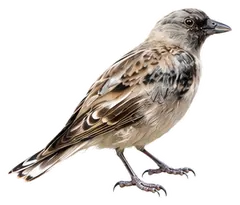 Afghan SnowfinchPyrgilauda theresae
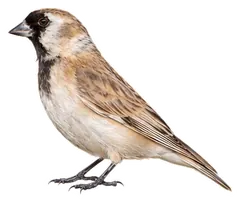 Pere David's SnowfinchPyrgilauda davidiana
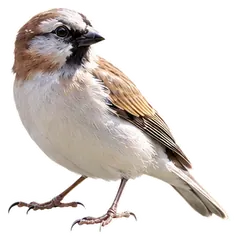 Blanford's SnowfinchPyrgilauda blanfordi
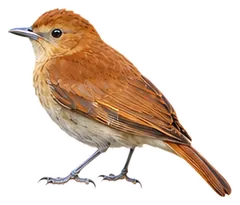 Cinnamon IbonHypocryptadius cinnamomeus
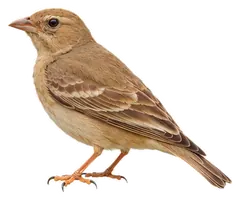 Pale RockfinchCarpospiza brachydactyla
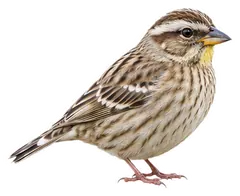 Rock SparrowPetronia petronia
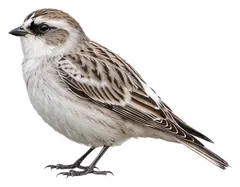 White-rumped SnowfinchOnychostruthus taczanowskii
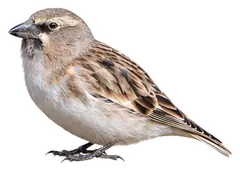 Tibetan SnowfinchMontifringilla henrici
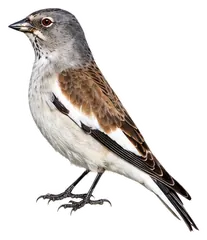 White-winged SnowfinchMontifringilla nivalis
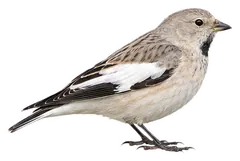 Black-winged SnowfinchMontifringilla adamsi
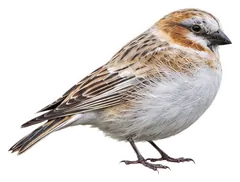
Download illustration
Free to use with credit: “Illustration: Bird Album (birdalbum.com)”. Drawn by AI from a reference photo by Dibyendu Ash. ↗

Heard it but can't see it? Mingji identifies birds by sound and photo, on your phone.
In other languages
- EnglishRufous-necked Snowfinch
- 简体中文棕颈雪雀
- 繁體中文棕頸雪雀
- 日本語チャミミユキスズメ
- DeutschRothals-Erdsperling
- FrançaisNiverolle à cou roux
- EspañolGorrión cuellirrufo
- Portuguêspardal-de-pescoço-ruivo
- ItalianoFringuello alpino collorossiccio
- NederlandsRoodhalssneeuwvink
- РусскийРыжешейный земляной воробей
- Svenskarödhalsad snöfink
- DanskRustnakket Snefinke
- Polskiśnieżka rdzawoszyja