 Bird Album
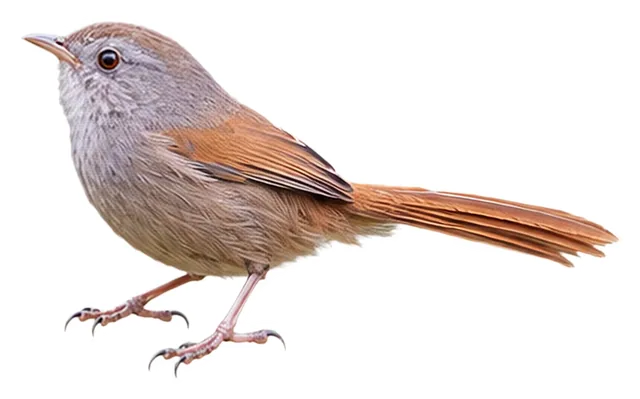
Rufous-tailed Babbler
Moupinia poecilotis (Verreaux, J, 1871)
≈13 cmLength19 gWeight
Endemic to China, this bird mainly inhabits mixed coniferous and broadleaf forest or coniferous forest.
Busiest months: June · Most records: China
How to identify
Where and when it's recorded

Rufous-tailed Babbler has been recorded at 22 of the 8,171 birding hotspots we track, in 1 country or region.
Records by month Northern Hemisphere
Where it's recorded most
- Erlang ShanChina63 records
- Shangri-La Alpine Botanical GardenChina32 records
- ErlangshanChina12 records
More places
- Jade Dragon Snow MountainChina11 records
- Napa LakeChina6 records
- Cangshan [General Area]China4 records
- Buwa VillageChina3 records
- Azalea ForestChina3 records
- Laojunshan – BomiluoChina3 records
- Wolong Giant Panda Museum and ReserveChina3 records
Countries and regions with the most records
eBird records via GBIF up to 2024-12-31. A record means someone listed it; more records partly mean more birders, not more birds.
About
The rufous-tailed babbler (Moupinia poecilotis) is a bird species in the family Paradoxornithidae. As with many other species known as "babblers", it was formerly placed in the family Sylviidae. It is endemic to central China.
Excerpt from Wikipedia, CC BY-SA 4.0 · authors · Read more on Wikipedia
Questions
How big is the Rufous-tailed Babbler?
The Rufous-tailed Babbler is about ≈13 cm long and weighs around 19 g.
Where does the Rufous-tailed Babbler live?
Its breeding range: Palearctic: central China. It is most often recorded in China.
When is the best time to see the Rufous-tailed Babbler?
At the hotspots we track, it is recorded most in June (Northern Hemisphere).
Is the Rufous-tailed Babbler endangered?
The IUCN Red List classifies the Rufous-tailed Babbler as Least Concern.
What does the Rufous-tailed Babbler eat?
Main food: Insects & other invertebrates.
What family is the Rufous-tailed Babbler in?
It belongs to the family Parrotbills & Allies (Paradoxornithidae), order Passerines (Passeriformes).
At a glance
- Length
- ≈13 cm
- Weight
- 19 g
- Habitat
- Grassland
- Diet
- Insects & other invertebrates
- Lifestyle
- Perches in trees
- Migration
- Resident (barely migrates)
- Conservation
- Least Concern
More measurements
- Wing
- 53 mm
- Tail
- 69 mm
- Bill
- 11 mm
- Tarsus
- 21 mm
Averages from the AVONET dataset; length from field guides where available.
Range
Palearctic: central China
Breeding range, IOC World Bird List 15.2
Classification
- Order
- Passerines Passeriformes
- Family
- Parrotbills & Allies Paradoxornithidae
- Genus
- Moupinia
More from the family Parrotbills & Allies
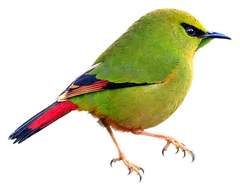 Fire-tailed MyzornisMyzornis pyrrhoura
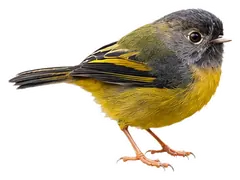 Golden-breasted FulvettaLioparus chrysotis
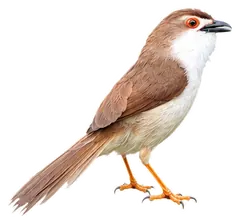 Yellow-eyed BabblerChrysomma sinense
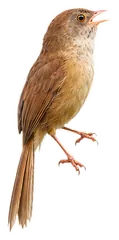 Jerdon's BabblerChrysomma altirostre
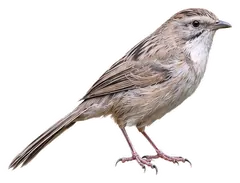 Tarim BabblerRhopophilus albosuperciliaris
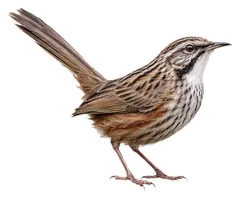 Beijing BabblerRhopophilus pekinensis
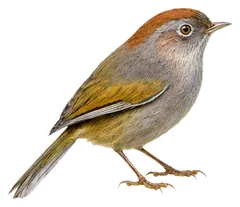 Spectacled FulvettaFulvetta ruficapilla
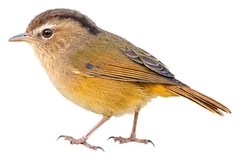 Indochinese FulvettaFulvetta danisi
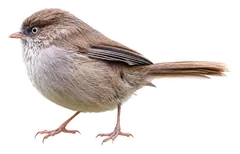 Chinese FulvettaFulvetta striaticollis
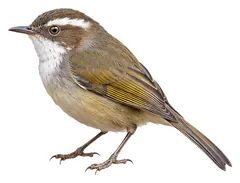 White-browed FulvettaFulvetta vinipectus
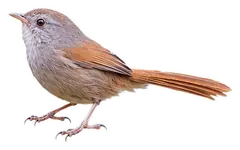
Download illustration
Free to use with credit: “Illustration: Bird Album (birdalbum.com)”. Drawn by AI from a reference photo by Carolyn Stewart. ↗
Heard it but can't see it? Mingji identifies birds by sound and photo, on your phone.
In other languages
- EnglishRufous-tailed Babbler
- 简体中文宝兴鹛雀
- 繁體中文褐尾鶥雀
- 日本語センニュウチメドリ
- DeutschRostschwanz-Grasmücke
- FrançaisMoupinie à couronne rousse
- EspañolTimalí colirrufo
- Portuguêszaragateiro-rabirruivo
- ItalianoGarrulo codarossiccia
- NederlandsRoodstaartmoupinia
- РусскийРыжехвостая мупиния
- Svenskaroststjärtad sångare
- DanskØreplettet Timale
- Polskirdzawosterka