 Bird Album
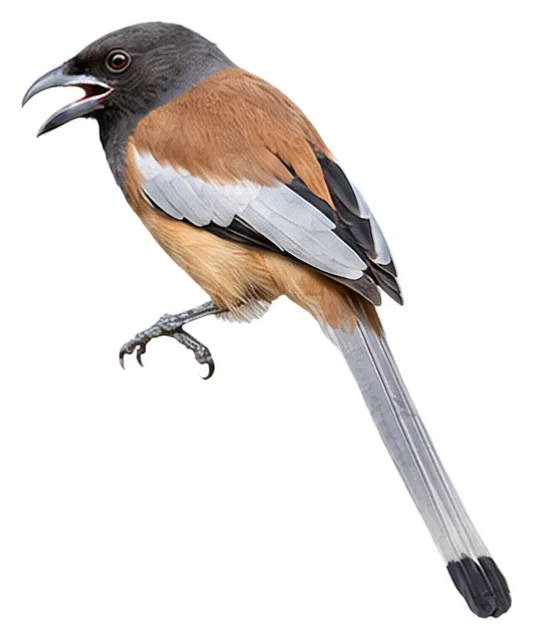
Rufous Treepie
Dendrocitta vagabunda (Latham, 1790)
≈36 cmLength100 gWeight
It has a black head, a cinnamon body and a long blue-gray tail, and gives loud calls.
Busiest months: February · Most records: India, Nepal, Bangladesh
Looks like Grey Treepie
How to identify
Field marks
- Head black; body cinnamon
- Long tail blue-gray with a black tip
- White wing patch; primaries black
- Bill stout, black, with a hooked tip
Male, female and young
Sexes similar.
Voice
Calls are varied; the most frequently heard are “bob-o-link” and “ko-tree”.
Similar species
Where and when it's recorded

Rufous Treepie has been recorded at 390 of the 8,171 birding hotspots we track, in 11 countries and regions.
Records by month Northern Hemisphere
Where it's recorded most
- Kanha NP – Mukki ZoneIndia7,712 records
- GKVK CampusIndia5,840 records
- Wildlife Institute of IndiaIndia4,306 records
More places
- Bharatpur – Keoladeo Ghana NPIndia3,680 records
- Kerala Agricultural UniversityIndia3,677 records
- Rabindra SarovarIndia2,605 records
- IIT MadrasIndia1,964 records
- Vetal Tekdi/HillIndia1,951 records
- Kanha Tiger Reserve – Mukki GateIndia1,911 records
- Thrissur Government Medical CollegeIndia1,555 records
Countries and regions with the most records
eBird records via GBIF up to 2024-12-31. A record means someone listed it; more records partly mean more birders, not more birds.
About
The rufous treepie (Dendrocitta vagabunda) is a treepie, native to the Indian subcontinent and adjoining parts of Southeast Asia. It is a member of the crow family, Corvidae. It is long tailed and has loud musical calls making it very conspicuous.
Excerpt from Wikipedia, CC BY-SA 4.0 · authors · Read more on Wikipedia
Questions
How big is the Rufous Treepie?
The Rufous Treepie is about ≈36 cm long and weighs around 100 g.
Where does the Rufous Treepie live?
Its breeding range: Oriental: widespread. It is most often recorded in India, Nepal and Bangladesh.
When is the best time to see the Rufous Treepie?
At the hotspots we track, it is recorded most in February (Northern Hemisphere).
Is the Rufous Treepie endangered?
The IUCN Red List classifies the Rufous Treepie as Least Concern.
What does the Rufous Treepie eat?
Main food: Omnivore.
What family is the Rufous Treepie in?
It belongs to the family Crows, Jays (Corvidae), order Passerines (Passeriformes).
At a glance
- Length
- ≈36 cm
- Weight
- 100 g
- Habitat
- Woodland
- Diet
- Omnivore
- Lifestyle
- Active on the ground
- Migration
- Resident (barely migrates)
- Conservation
- Least Concern
More measurements
- Wing
- 155 mm
- Tail
- 257 mm
- Bill
- 33 mm
- Tarsus
- 34 mm
Averages from the AVONET dataset; length from field guides where available.
Range
Oriental: widespread
Breeding range, IOC World Bird List 15.2
Subspecies · 1
- Dendrocitta vagabunda kinneari c Myanmar to s China and nw Thailand
Classification
- Order
- Passerines Passeriformes
- Family
- Crows, Jays Corvidae
- Genus
- Dendrocitta
Other birds in the genus Dendrocitta
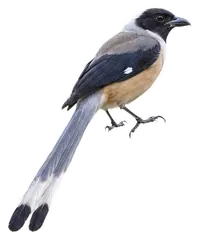 Sumatran TreepieDendrocitta occipitalis
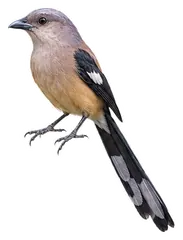 Bornean TreepieDendrocitta cinerascens
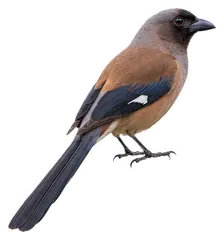 Grey TreepieDendrocitta formosae
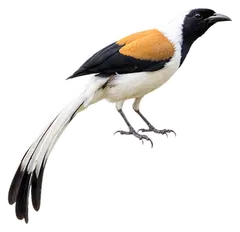 White-bellied TreepieDendrocitta leucogastra
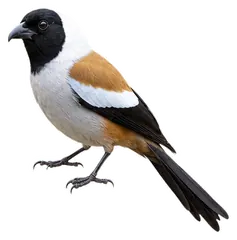 Collared TreepieDendrocitta frontalis
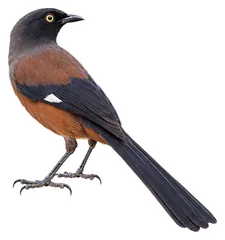 Andaman TreepieDendrocitta bayleii
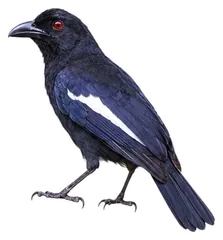 Malayan Black MagpiePlatysmurus leucopterus
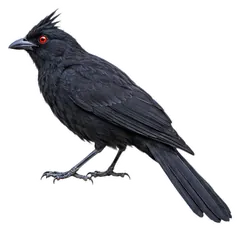 Bornean Black MagpiePlatysmurus aterrimus
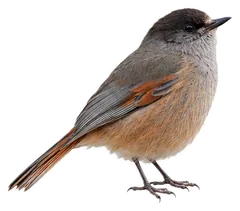 Siberian JayPerisoreus infaustus
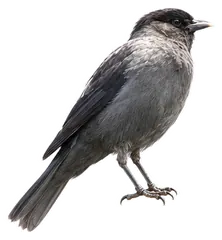 Sichuan JayPerisoreus internigrans
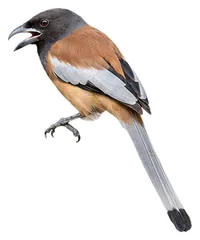
Download illustration
Free to use with credit: “Illustration: Bird Album (birdalbum.com)”. Drawn by AI from a reference photo by Sharma BC. ↗
Heard it but can't see it? Mingji identifies birds by sound and photo, on your phone.