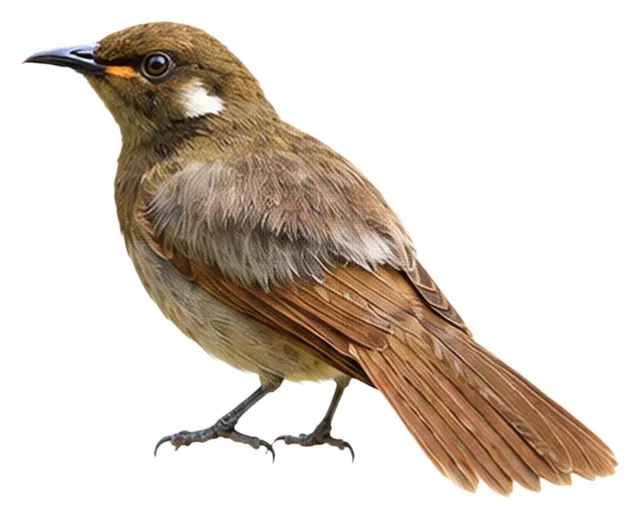
Scrub Honeyeater
Microptilotis albonotatus (Salvadori, 1876)
22 gWeight
Busiest months: July–August · Most records: Papua New Guinea, Indonesia
Where and when it's recorded
Busiest months: July–August · Most records: Papua New Guinea, Indonesia

Scrub Honeyeater has been recorded at 28 of the 8,276 birding hotspots we track, in 2 countries and regions.
Records by month Southern Hemisphere
Where it's recorded most
- Dablin Creek RoadPapua New Guinea100 records
- Tabubil AreaPapua New Guinea73 records
- Ok Menga Hydro IntakePapua New Guinea28 records
More places
- MalagufukIndonesia23 records
- Kwatu LodgePapua New Guinea22 records
- Malagufuk villageIndonesia20 records
- Tabubil-Kiunga Rd – Km 17Papua New Guinea16 records
- Sera (formerly Crater Mountain) Biological Research StationPapua New Guinea14 records
- Varirata National ParkPapua New Guinea10 records
- Fly River – between Kiunga and Elevala RiverPapua New Guinea9 records
Countries and regions with the most records
eBird records via GBIF up to 2024-12-31. A record means someone listed it; more records partly mean more birders, not more birds.
Questions
How big is the Scrub Honeyeater?
The Scrub Honeyeater weighs around 22 g.
Where does the Scrub Honeyeater live?
Its breeding range: Australasia: Bird's Head and Neck (northwestern New Guinea), southern New Guinea to Huon Gulf (northeastern New Guinea). It is most often recorded in Papua New Guinea and Indonesia.
When is the best time to see the Scrub Honeyeater?
At the hotspots we track, it is recorded most in July and August (Southern Hemisphere).
Is the Scrub Honeyeater endangered?
The IUCN Red List classifies the Scrub Honeyeater as Least Concern.
What does the Scrub Honeyeater eat?
Main food: Omnivore.
What family is the Scrub Honeyeater in?
It belongs to the family Honeyeaters (Meliphagidae), order Passerines (Passeriformes).
At a glance
- Weight
- 22 g
- Habitat
- Shrubland
- Diet
- Omnivore
- Lifestyle
- Perches in trees
- Migration
- Resident (barely migrates)
- Conservation
- Least Concern
More measurements
- Wing
- 84 mm
- Tail
- 69 mm
- Bill
- 22 mm
- Tarsus
- 22 mm
Averages from the AVONET dataset; length from field guides where available.
Range
Australasia: Bird's Head and Neck (northwestern New Guinea), southern New Guinea to Huon Gulf (northeastern New Guinea)
Breeding range, IOC World Bird List 15.2
Classification
- Order
- Passerines Passeriformes
- Family
- Honeyeaters Meliphagidae
- Genus
- Microptilotis
Other birds in the genus Microptilotis
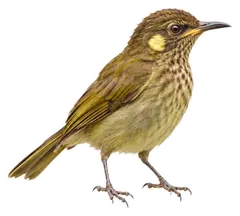 Mottle-breasted HoneyeaterMicroptilotis mimikae
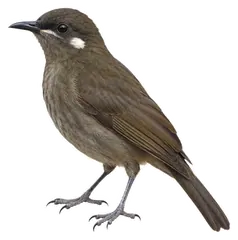 Forest HoneyeaterMicroptilotis montanus
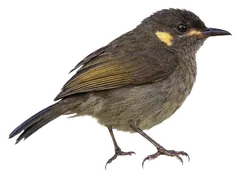 Mountain HoneyeaterMicroptilotis orientalis
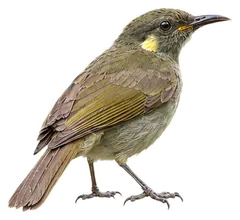 Mimic HoneyeaterMicroptilotis analogus
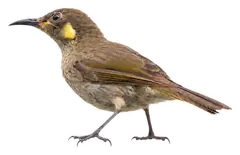 Tagula HoneyeaterMicroptilotis vicina
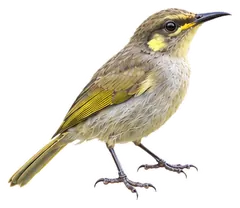 Graceful HoneyeaterMicroptilotis gracilis
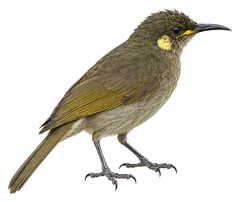 Cryptic HoneyeaterMicroptilotis imitatrix
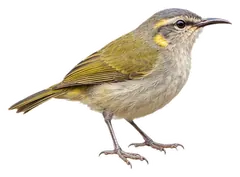 Elegant HoneyeaterMicroptilotis cinereifrons
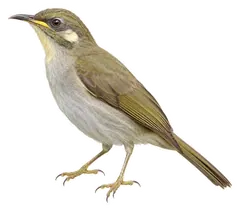 Yellow-gaped HoneyeaterMicroptilotis flavirictus
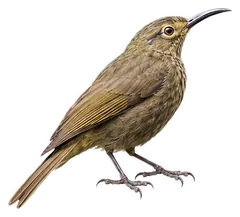 Dark-eared MyzaMyza celebensis
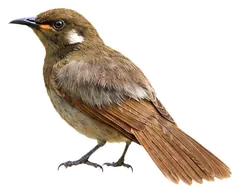
Download illustration
Free to use with credit: “Illustration: Bird Album (birdalbum.com)”. Drawn by AI from a reference photo by markus lilje. ↗
Heard it but can't see it? Mingji identifies birds by sound and photo, on your phone.
In other languages
- EnglishScrub Honeyeater
- 简体中文灌丛吸蜜鸟
- 繁體中文白邊吸蜜鳥
- 日本語シロフサミツスイ
- DeutschSchneeohr-Honigfresser
- FrançaisMéliphage buissonnier
- EspañolMielero matorralero
- Portuguêspapa-mel-do-mato
- ItalianoSucciamiele di macchia
- NederlandsWitgevlekte Honingeter
- РусскийКустарниковый медосос
- Svenskabuskhonungsfågel
- DanskKrathonningæder
- Polskimiodojad białouchy