 Bird Album
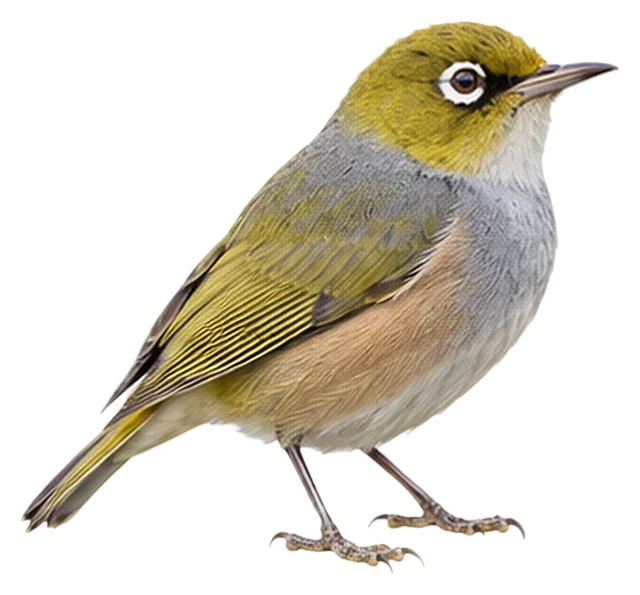
Silvereye
Zosterops lateralis (Latham, 1801)
11–13 cmLength13 gWeight
The silvereye or wax-eye (Zosterops lateralis), also known by its Māori name tauhou, is a very small omnivorous passerine bird of the south-west Pacific.
Busiest months: January and October–November · Most records: Australia, New Zealand, Norfolk Island
Where and when it's recorded

Silvereye has been recorded at 361 of the 8,171 birding hotspots we track, in 8 countries and regions.
Records by month Southern Hemisphere
Where it's recorded most
- Jerrabomberra Wetlands Nature ReserveAustralia6,442 records
- Oxley Creek CommonAustralia4,558 records
- Western Treatment PlantAustralia3,292 records
More places
- Royal Botanic Gardens MelbourneAustralia2,765 records
- Lake Samsonvale – Golds Scrub LaneAustralia2,670 records
- Sandy Camp Road WetlandsAustralia2,539 records
- Herdsman LakeAustralia2,387 records
- Royal ParkAustralia2,205 records
- Australian National Botanic GardensAustralia1,852 records
- Banyule Flats ReserveAustralia1,744 records
Countries and regions with the most records
eBird records via GBIF up to 2024-12-31. A record means someone listed it; more records partly mean more birders, not more birds.
About
The silvereye or wax-eye (Zosterops lateralis), also known by its Māori name tauhou, is a very small omnivorous passerine bird of the south-west Pacific. In Australia and New Zealand its common name is sometimes white-eye, but this name is more commonly used to refer to all members of the genus Zosterops, or the entire family Zosteropidae.
Excerpt from Wikipedia, CC BY-SA 4.0 · authors · Read more on Wikipedia
Questions
How big is the Silvereye?
The Silvereye is about 11–13 cm long and weighs around 13 g.
Where does the Silvereye live?
Its breeding range: Australasia, Pacific Ocean: Australia, New Zealand and outlying islands, New Caledonia and western Pacific islands to Fiji (southwestern Polynesia). It is most often recorded in Australia, New Zealand and Norfolk Island.
When is the best time to see the Silvereye?
At the hotspots we track, it is recorded most in January, October and November (Southern Hemisphere).
Is the Silvereye endangered?
The IUCN Red List classifies the Silvereye as Least Concern.
What does the Silvereye eat?
Main food: Omnivore.
What family is the Silvereye in?
It belongs to the family White-eyes (Zosteropidae), order Passerines (Passeriformes).
At a glance
- Length
- 11–13 cm
- Weight
- 13 g
- Habitat
- Shrubland
- Diet
- Omnivore
- Lifestyle
- Perches in trees
- Migration
- Resident (barely migrates)
- Conservation
- Least Concern
More measurements
- Wing
- 59 mm
- Tail
- 42 mm
- Bill
- 13 mm
- Tarsus
- 16 mm
Averages from the AVONET dataset; length from field guides where available.
Range
Australasia, Pacific Ocean: Australia, New Zealand and outlying islands, New Caledonia and western Pacific islands to Fiji (southwestern Polynesia)
Breeding range, IOC World Bird List 15.2
Classification
- Order
- Passerines Passeriformes
- Family
- White-eyes Zosteropidae
- Genus
- Zosterops
Other birds in the genus Zosterops
 Sri Lanka White-eyeZosterops ceylonensis
 Yellowish White-eyeZosterops nigrorum
 Black-capped White-eyeZosterops atricapilla
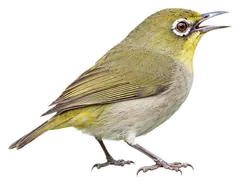 Abyssinian White-eyeZosterops abyssinicus
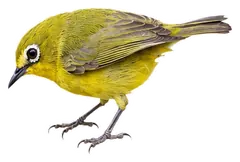 Pale White-eyeZosterops flavilateralis
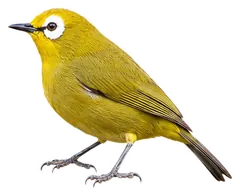 Mbulu White-eyeZosterops mbuluensis
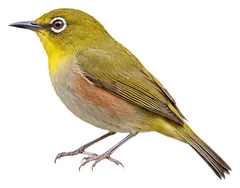 Chestnut-flanked White-eyeZosterops erythropleurus
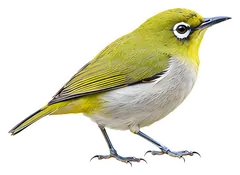 Swinhoe's White-eyeZosterops simplex
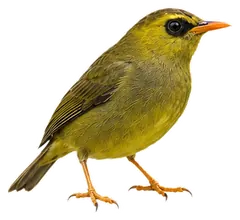 Mountain BlackeyeZosterops emiliae
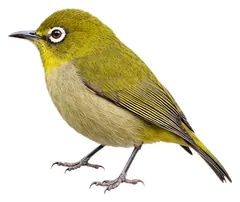 Warbling White-eyeZosterops japonicus
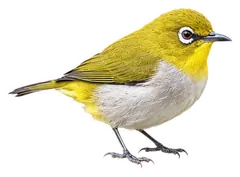 Indian White-eyeZosterops palpebrosus
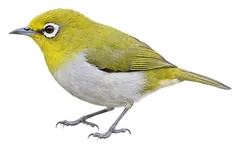 Lowland White-eyeZosterops meyeni
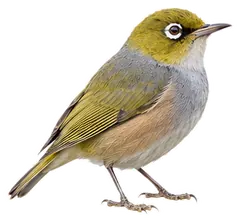
Download illustration
Free to use with credit: “Illustration: Bird Album (birdalbum.com)”. Drawn by AI from a reference photo by BIHNZ. ↗
Heard it but can't see it? Mingji identifies birds by sound and photo, on your phone.
In other languages
- EnglishSilvereye
- 简体中文灰胸绣眼鸟
- 繁體中文灰胸繡眼
- 日本語ハイムネメジロ
- DeutschGraumantel-Brillenvogel
- FrançaisZostérops à dos gris
- EspañolAnteojitos dorsigrís
- Portuguêsolho-branco-de-dorso-cinzento
- ItalianoOcchio d'argento
- NederlandsGrijsrugbrilvogel
- РусскийСеребряная белоглазка
- Svenskagråryggig glasögonfågel
- DanskGrårygget Brillefugl
- Polskiszlarnik rdzawoboczny