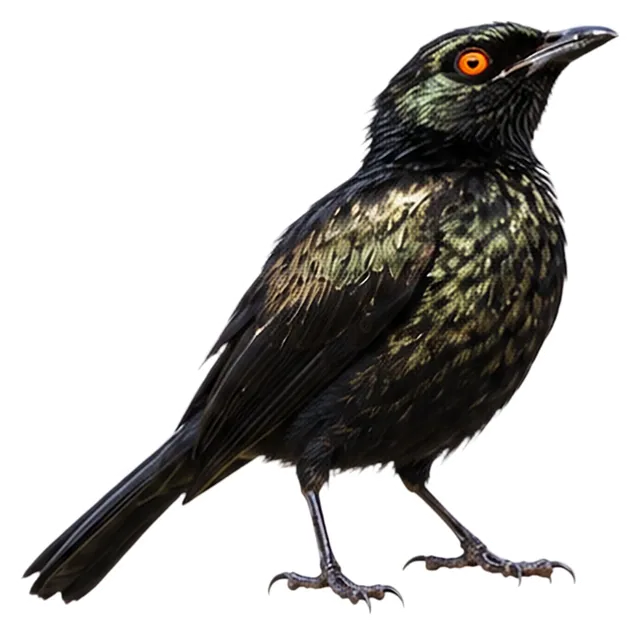
Singing Starling
Aplonis cantoroides (Gray, GR, 1862)
56 gWeight
The singing starling (Aplonis cantoroides) is a medium-sized (20 cm in length) starling.
Busiest months: July · Most records: Papua New Guinea, Solomon Islands, Indonesia
Where and when it's recorded
Busiest months: July · Most records: Papua New Guinea, Solomon Islands, Indonesia

Singing Starling has been recorded at 46 of the 8,276 birding hotspots we track, in 3 countries and regions.
Records by month Southern Hemisphere
Where it's recorded most
- Pacific Adventist UniversityPapua New Guinea281 records
- Tetepare Nature PreserveSolomon Islands89 records
- Airport BayIndonesia48 records
More places
- Sorong MangrovesIndonesia46 records
- Queen Elizabeth National Park – Mt. AustinSolomon Islands42 records
- West Waigeo birding roadIndonesia32 records
- Kulu RiverPapua New Guinea31 records
- Varirata National ParkPapua New Guinea31 records
- Numondo Cattle FarmPapua New Guinea26 records
- Walindi Dive ResortPapua New Guinea23 records
Countries and regions with the most records
eBird records via GBIF up to 2024-12-31. A record means someone listed it; more records partly mean more birders, not more birds.
About
The singing starling (Aplonis cantoroides) is a medium-sized (20 cm in length) starling.
Excerpt from Wikipedia, CC BY-SA 4.0 · authors · Read more on Wikipedia
Questions
How big is the Singing Starling?
The Singing Starling weighs around 56 g.
Where does the Singing Starling live?
Its breeding range: Australasia: New Guinea and satellites, Boigu (northern Torres Strait islands, far northeastern Australia), Bismarck Archipelago (including Admiralty Islands), and Solomon Islands. It is most often recorded in Papua New Guinea, Solomon Islands and Indonesia.
When is the best time to see the Singing Starling?
At the hotspots we track, it is recorded most in July (Southern Hemisphere).
Is the Singing Starling endangered?
The IUCN Red List classifies the Singing Starling as Least Concern.
What does the Singing Starling eat?
Main food: Fruit.
What family is the Singing Starling in?
It belongs to the family Starlings, Rhabdornises (Sturnidae), order Passerines (Passeriformes).
At a glance
- Weight
- 56 g
- Habitat
- Forest
- Diet
- Fruit
- Lifestyle
- Perches in trees
- Migration
- Resident (barely migrates)
- Conservation
- Least Concern
More measurements
- Wing
- 98 mm
- Tail
- 70 mm
- Bill
- 23 mm
- Tarsus
- 23 mm
Averages from the AVONET dataset; length from field guides where available.
Range
Australasia: New Guinea and satellites, Boigu (northern Torres Strait islands, far northeastern Australia), Bismarck Archipelago (including Admiralty Islands), and Solomon Islands
Breeding range, IOC World Bird List 15.2
Classification
- Order
- Passerines Passeriformes
- Family
- Starlings, Rhabdornises Sturnidae
- Genus
- Aplonis
Other birds in the genus Aplonis
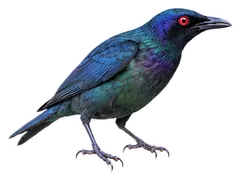 Metallic StarlingAplonis metallica
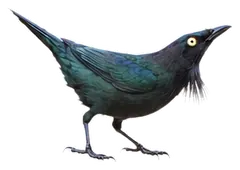 Yellow-eyed StarlingAplonis mystacea
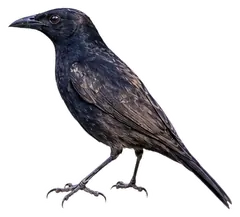 Tanimbar StarlingAplonis crassa
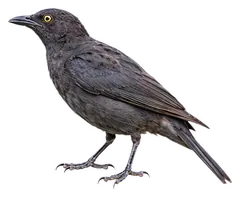 Atoll StarlingAplonis feadensis
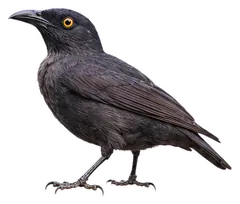 Rennell StarlingAplonis insularis
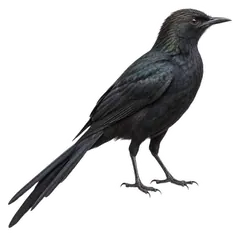 Long-tailed StarlingAplonis magna
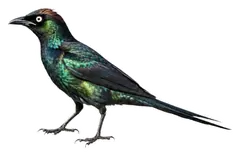 White-eyed StarlingAplonis brunneicapillus
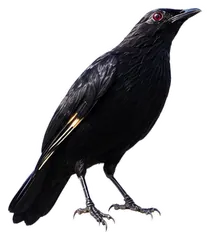 Brown-winged StarlingAplonis grandis
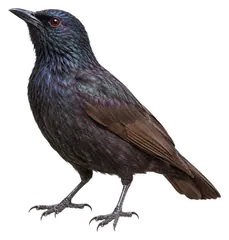 Makira StarlingAplonis dichroa
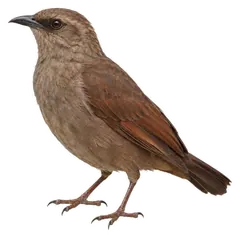 Rusty-winged StarlingAplonis zelandica
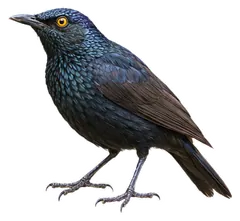 Striated StarlingAplonis striata
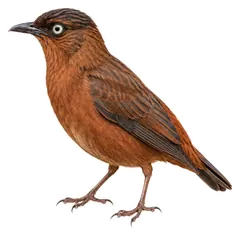 Mountain StarlingAplonis santovestris
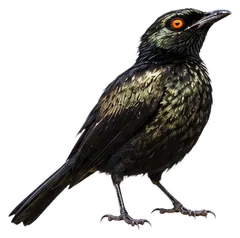
Download illustration
Free to use with credit: “Illustration: Bird Album (birdalbum.com)”. Drawn by AI from a reference photo by ꦥꦤ꧀ꦗꦶꦒꦸꦱ꧀ꦠꦶꦄꦏ꧀ꦧꦂ. ↗
Heard it but can't see it? Mingji identifies birds by sound and photo, on your phone.