 Bird Album
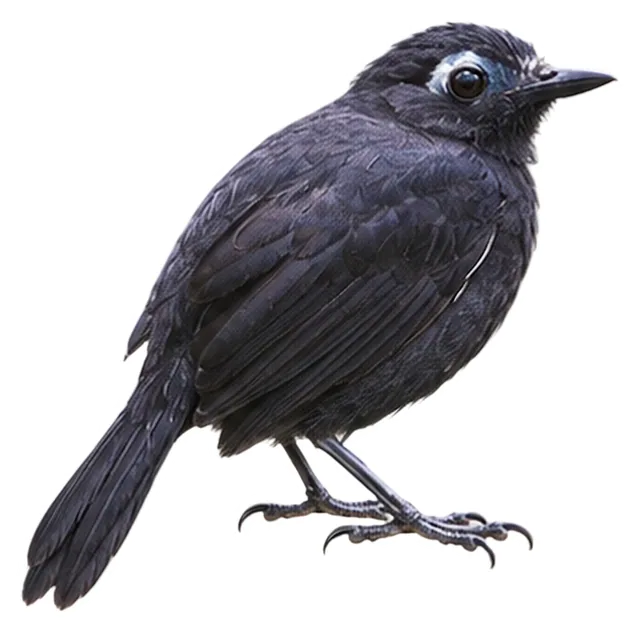
Sooty Antbird
Hafferia fortis (Sclater, PL & Salvin, 1868)
17–19 cmLength46 gWeight
The sooty antbird (Hafferia fortis) is a species of bird in subfamily Thamnophilinae of family Thamnophilidae, the "typical antbirds".
Busiest months: July–August · Most records: Ecuador, Peru, Colombia
Where and when it's recorded

Sooty Antbird has been recorded at 38 of the 8,171 birding hotspots we track, in 5 countries and regions.
Records by month Southern Hemisphere
Where it's recorded most
- Los Amigos Biological StationPeru204 records
- Reserva Natural La Isla EscondidaColombia199 records
- Shiripuno LodgeEcuador187 records
More places
- Sani LodgeEcuador178 records
- Gareno LodgeEcuador146 records
- Reserva Biologica del Rio BigalEcuador135 records
- Sacha LodgeEcuador133 records
- WildSumaco LodgeEcuador128 records
- ExplorNapo LodgePeru110 records
- Amazon Conservatory of Tropical Studies Field StationPeru104 records
Countries and regions with the most records
eBird records via GBIF up to 2024-12-31. A record means someone listed it; more records partly mean more birders, not more birds.
About
The sooty antbird (Hafferia fortis) is a species of bird in subfamily Thamnophilinae of family Thamnophilidae, the "typical antbirds". It is found in Bolivia, Brazil, Colombia, Ecuador, and Peru.
Excerpt from Wikipedia, CC BY-SA 4.0 · authors · Read more on Wikipedia
Questions
How big is the Sooty Antbird?
The Sooty Antbird is about 17–19 cm long and weighs around 46 g.
Where does the Sooty Antbird live?
Its breeding range: South America: western Amazonia. It is most often recorded in Ecuador, Peru and Colombia.
When is the best time to see the Sooty Antbird?
At the hotspots we track, it is recorded most in July and August (Southern Hemisphere).
Is the Sooty Antbird endangered?
The IUCN Red List classifies the Sooty Antbird as Least Concern.
What does the Sooty Antbird eat?
Main food: Insects & other invertebrates.
What family is the Sooty Antbird in?
It belongs to the family Antbirds (Thamnophilidae), order Passerines (Passeriformes).
At a glance
- Length
- 17–19 cm
- Weight
- 46 g
- Habitat
- Forest
- Diet
- Insects & other invertebrates
- Lifestyle
- Perches in trees
- Migration
- Resident (barely migrates)
- Conservation
- Least Concern
More measurements
- Wing
- 82 mm
- Tail
- 63 mm
- Bill
- 23 mm
- Tarsus
- 34 mm
Averages from the AVONET dataset; length from field guides where available.
Range
South America: western Amazonia
Breeding range, IOC World Bird List 15.2
Classification
- Order
- Passerines Passeriformes
- Family
- Antbirds Thamnophilidae
- Genus
- Hafferia
Other birds in the genus Hafferia
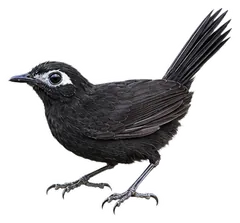 Blue-lored AntbirdHafferia immaculata
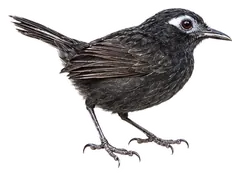 Zeledon's AntbirdHafferia zeledoni
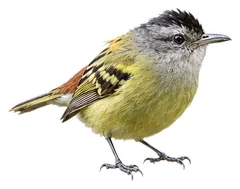 Rufous-rumped AntwrenEuchrepomis callinota
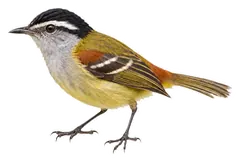 Chestnut-shouldered AntwrenEuchrepomis humeralis
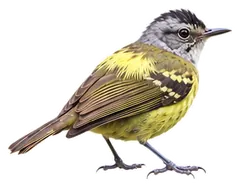 Yellow-rumped AntwrenEuchrepomis sharpei
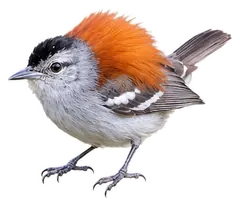 Ash-winged AntwrenEuchrepomis spodioptila
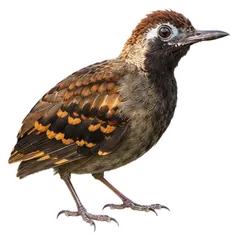 Wing-banded AntbirdMyrmornis torquata
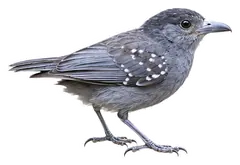 Spot-winged AntshrikePygiptila stellaris
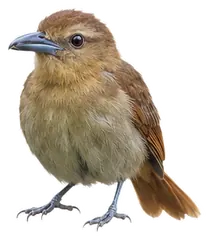 Russet AntshrikeThamnistes anabatinus
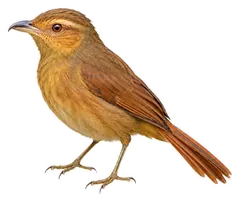 Rufescent AntshrikeThamnistes rufescens
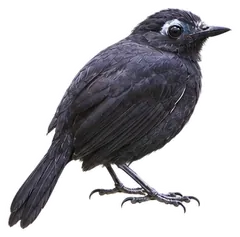
Download illustration
Free to use with credit: “Illustration: Bird Album (birdalbum.com)”. Drawn by AI from a reference photo by Nelson Apolo. ↗
Heard it but can't see it? Mingji identifies birds by sound and photo, on your phone.
In other languages
- EnglishSooty Antbird
- 简体中文乌蚁鸟
- 繁體中文烏黑蟻鳥
- 日本語ススイロアリドリ
- DeutschSchwarzgrau-Ameisenvogel
- FrançaisAlapi fuligineux
- EspañolHormiguero tiznado
- Portuguêsformigueiro-de-taoca
- ItalianoFormichiere fuligginoso
- NederlandsRoetkleurige Miervogel
- РусскийТёмная муравьеловка
- Svenskasotmyrfågel
- DanskSodmyrefugl
- Polskiczarnomrowik okopcony