 Bird Album
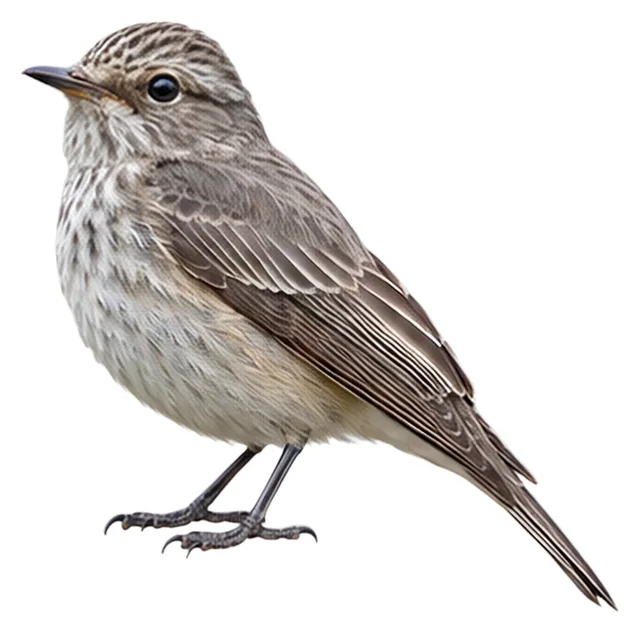
Spotted Flycatcher
Muscicapa striata (Pallas, 1764)
14 cmLength24 cmWingspan16 gWeight
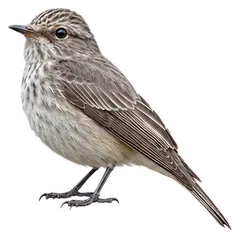
This small bird has gray-brown upperparts and an upright posture, and often sallies from a conspicuous perch to catch flying insects.
Busiest months: September · Most records: Spain, United Kingdom, Israel
How to identify
Field marks
- Rufous stripes on crown, throat, and breast
- Dull gray-brown upperparts and grayish-white underparts
- Short black legs and feet; black bill, broad and pointed
- Narrow pale feather edges on wings and tail feathers
Male, female and young
Sexes similar; juvenile has ochre spots on the upperparts and rufous scaling on the underparts.
Voice
A thin, drawn-out, soft, high-pitched “tssssseeeeeppppp”, falling slightly in pitch.
Where and when it's recorded

Spotted Flycatcher has been recorded at 1,818 of the 8,171 birding hotspots we track, in 127 countries and regions.
Records by month Northern Hemisphere
Where it's recorded most
- Jerusalem Bird ObservatoryIsrael1,635 records
- International Birding and Research Center Eilat (IBRCE)Israel1,622 records
- Txingudi – PlaiaundiSpain1,226 records
More places
- Mushrif Palace GardensUnited Arab Emirates950 records
- Antikythira Bird ObservatoryGreece851 records
- Desembocadura del Guadalhorce – ÁreaSpain839 records
- Private estate near Green MubazzarahUnited Arab Emirates727 records
- Aras Kuş Halkalama İstasyonuTürkiye725 records
- PN Sudoeste Alentejano e Costa Vicentina – CabranosaPortugal619 records
- Gazelle ValleyIsrael616 records
Countries and regions with the most records
eBird records via GBIF up to 2024-12-31. A record means someone listed it; more records partly mean more birders, not more birds.
About
The spotted flycatcher (Muscicapa striata) is a small passerine bird in the Old World flycatcher family. It breeds in most of Europe and in the Palearctic to Siberia, and is migratory, wintering in Africa and south western Asia. It is declining in parts of its range.
Excerpt from Wikipedia, CC BY-SA 4.0 · authors · Read more on Wikipedia
Questions
How big is the Spotted Flycatcher?
The Spotted Flycatcher is about 14 cm long, with a wingspan of 24 cm and weighs around 16 g.
Where does the Spotted Flycatcher live?
Its breeding range: Palearctic: central, western. It is most often recorded in Spain, United Kingdom and Israel.
When is the best time to see the Spotted Flycatcher?
At the hotspots we track, it is recorded most in September (Northern Hemisphere).
Is the Spotted Flycatcher endangered?
The IUCN Red List classifies the Spotted Flycatcher as Least Concern.
What does the Spotted Flycatcher eat?
Main food: Insects & other invertebrates.
What family is the Spotted Flycatcher in?
It belongs to the family Chats, Old World Flycatchers (Muscicapidae), order Passerines (Passeriformes).
At a glance
- Length
- 14 cm
- Wingspan
- 24 cm
- Weight
- 16 g
- Habitat
- Forest
- Diet
- Insects & other invertebrates
- Lifestyle
- Perches in trees
- Migration
- Migratory
- Conservation
- Least Concern
More measurements
- Wing
- 86 mm
- Tail
- 61 mm
- Bill
- 16 mm
- Tarsus
- 14 mm
Averages from the AVONET dataset; length from field guides where available.
Range
Palearctic: central, western
Breeding range, IOC World Bird List 15.2
Classification
- Order
- Passerines Passeriformes
- Family
- Chats, Old World Flycatchers Muscicapidae
- Genus
- Muscicapa
Other birds in the genus Muscicapa
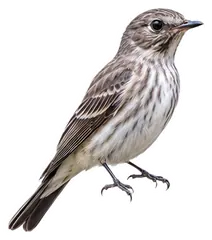 Grey-streaked FlycatcherMuscicapa griseisticta
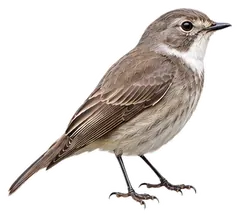 Dark-sided FlycatcherMuscicapa sibirica
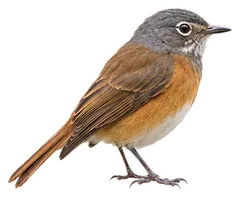 Ferruginous FlycatcherMuscicapa ferruginea
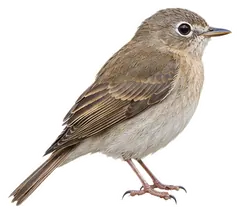 Brown-breasted FlycatcherMuscicapa muttui
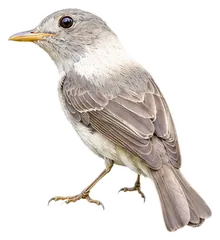 Ashy-breasted FlycatcherMuscicapa randi
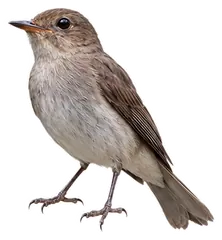 Sumba Brown FlycatcherMuscicapa segregata
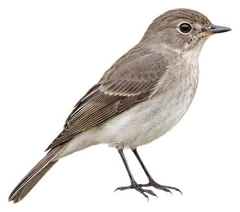 Asian Brown FlycatcherMuscicapa dauurica
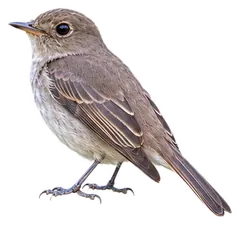 Brown-streaked FlycatcherMuscicapa williamsoni
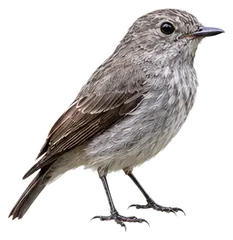 Sulawesi Streaked FlycatcherMuscicapa sodhii
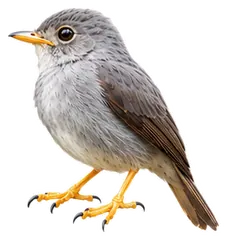 Yellow-footed FlycatcherMuscicapa sethsmithi
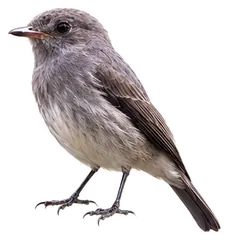 Little Grey FlycatcherMuscicapa epulata
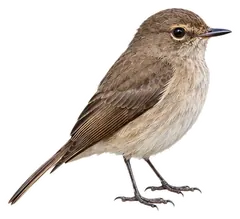 African Dusky FlycatcherMuscicapa adusta
Download illustration
Free to use with credit: “Illustration: Bird Album (birdalbum.com)”. Drawn by AI from a reference photo by Arnt Kvinnesland. ↗
Heard it but can't see it? Mingji identifies birds by sound and photo, on your phone.