 Bird Album
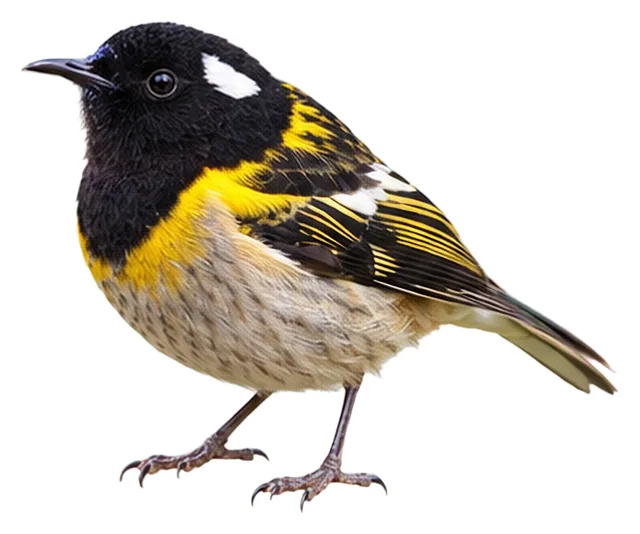
Stitchbird
Notiomystis cincta (Du Bus de Gisignies, 1839)
93 gWeight
The stitchbird or hihi (Notiomystis cincta) is a honeyeater-like bird endemic to the North Island and adjacent offshore islands of New Zealand.
Busiest months: November · Most records: New Zealand
Where and when it's recorded

Stitchbird has been recorded at 10 of the 8,171 birding hotspots we track, in 1 country or region.
Records by month Southern Hemisphere
Where it's recorded most
- Tiritiri MatangiNew Zealand1,632 records
- Zealandia Te Mara a Tane Wildlife SanctuaryNew Zealand982 records
- Tiritiri Matangi – Wattle TrackNew Zealand535 records
More places
- Rotokare Scenic ReserveNew Zealand157 records
- Maungatautari – Southern Enclosure & Tautari WetlandNew Zealand124 records
- Zealandia – Lower DamNew Zealand117 records
- Shakespear Regional ParkNew Zealand54 records
- Gulf Harbour to Tiritiri Matangi ferryNew Zealand7 records
- Kapiti Island LodgeNew Zealand4 records
- Tawharanui Regional ParkNew Zealand4 records
Countries and regions with the most records
eBird records via GBIF up to 2024-12-31. A record means someone listed it; more records partly mean more birders, not more birds.
About
The stitchbird or hihi (Notiomystis cincta) is a honeyeater-like bird endemic to the North Island and adjacent offshore islands of New Zealand. Its evolutionary relationships have long puzzled ornithologists, but it is now classed as the only member of its own family, the Notiomystidae. It is rare, being extirpated everywhere except Little Barrier Island, but has been reintroduced to two other island sanctuaries and four locations on the North Island mainland.
Excerpt from Wikipedia, CC BY-SA 4.0 · authors · Read more on Wikipedia
Questions
How big is the Stitchbird?
The Stitchbird weighs around 93 g.
Where does the Stitchbird live?
Its breeding range: Australasia: North Island and satellites (New Zealand). It is most often recorded in New Zealand.
When is the best time to see the Stitchbird?
At the hotspots we track, it is recorded most in November (Southern Hemisphere).
Is the Stitchbird endangered?
The IUCN Red List classifies the Stitchbird as Vulnerable.
What does the Stitchbird eat?
Main food: Omnivore.
What family is the Stitchbird in?
It belongs to the family Stitchbird (Notiomystidae), order Passerines (Passeriformes).
At a glance
- Weight
- 93 g
- Habitat
- Forest
- Diet
- Omnivore
- Lifestyle
- Perches in trees
- Migration
- Resident (barely migrates)
- Conservation
- Vulnerable
More measurements
- Wing
- 104 mm
- Tail
- 78 mm
- Bill
- 20 mm
- Tarsus
- 28 mm
Averages from the AVONET dataset; length from field guides where available.
Range
Australasia: North Island and satellites (New Zealand)
Breeding range, IOC World Bird List 15.2
Classification
- Order
- Passerines Passeriformes
- Family
- Stitchbird Notiomystidae
- Genus
- Notiomystis
Download illustration
Free to use with credit: “Illustration: Bird Album (birdalbum.com)”. Drawn by AI from a reference photo by digitaltrails. ↗
Heard it but can't see it? Mingji identifies birds by sound and photo, on your phone.