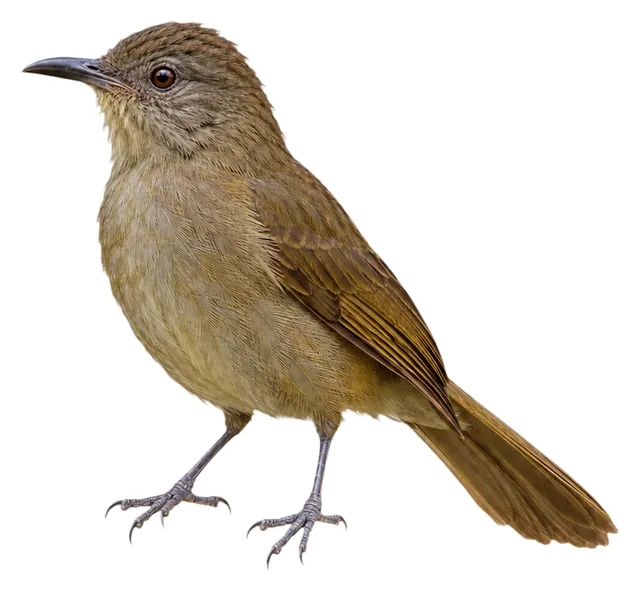
Toro Olive Greenbul
Phyllastrephus hypochloris (Jackson, FJ, 1906)
23 gWeight
The Toro olive greenbul (Phyllastrephus hypochloris) is a species of songbird in the bulbul family, Pycnonotidae.
Busiest months: July · Most records: Uganda, Kenya
Where and when it's recorded
Busiest months: July · Most records: Uganda, Kenya

Toro Olive Greenbul has been recorded at 26 of the 8,276 birding hotspots we track, in 2 countries and regions.
Records by month Northern Hemisphere
Where it's recorded most
- Kibale NPUganda190 records
- Bigodi SwampUganda186 records
- Kakamega Forest NRKenya131 records
More places
- Bwindi-Impenetrable Forest NP – Entrance RoadUganda125 records
- Mabira ForestUganda106 records
- Semuliki NPUganda99 records
- Kakamega Forest NR – Rondo Retreat CentreKenya89 records
- Bwindi-Impenetrable Forest NP – Waterfall WalkUganda87 records
- Bwindi-Impenetrable Forest NP – BuhomaUganda87 records
- Bigodi Ecotourism Research CentreUganda77 records
Countries and regions with the most records
eBird records via GBIF up to 2024-12-31. A record means someone listed it; more records partly mean more birders, not more birds.
About
The Toro olive greenbul (Phyllastrephus hypochloris) is a species of songbird in the bulbul family, Pycnonotidae.
Excerpt from Wikipedia, CC BY-SA 4.0 · authors · Read more on Wikipedia
Questions
How big is the Toro Olive Greenbul?
The Toro Olive Greenbul weighs around 23 g.
Where does the Toro Olive Greenbul live?
Its breeding range: Africa: southern South Sudan; eastern DR Congo through Uganda to western Kenya and northern Tanzania. It is most often recorded in Uganda and Kenya.
When is the best time to see the Toro Olive Greenbul?
At the hotspots we track, it is recorded most in July (Northern Hemisphere).
Is the Toro Olive Greenbul endangered?
The IUCN Red List classifies the Toro Olive Greenbul as Least Concern.
What does the Toro Olive Greenbul eat?
Main food: Insects & other invertebrates.
What family is the Toro Olive Greenbul in?
It belongs to the family Bulbuls (Pycnonotidae), order Passerines (Passeriformes).
At a glance
- Weight
- 23 g
- Habitat
- Forest
- Diet
- Insects & other invertebrates
- Lifestyle
- Perches in trees
- Migration
- Resident (barely migrates)
- Conservation
- Least Concern
More measurements
- Wing
- 77 mm
- Tail
- 81 mm
- Bill
- 19 mm
- Tarsus
- 20 mm
Averages from the AVONET dataset; length from field guides where available.
Range
Africa: southern South Sudan; eastern DR Congo through Uganda to western Kenya and northern Tanzania
Breeding range, IOC World Bird List 15.2
Classification
- Order
- Passerines Passeriformes
- Family
- Bulbuls Pycnonotidae
- Genus
- Phyllastrephus
Other birds in the genus Phyllastrephus
 Lowland Tiny GreenbulPhyllastrephus debilis
 Montane Tiny GreenbulPhyllastrephus albigula
 White-throated GreenbulPhyllastrephus albigularis
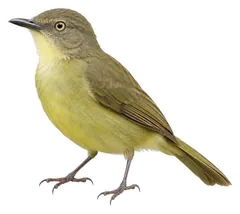 Angola GreenbulPhyllastrephus viridiceps
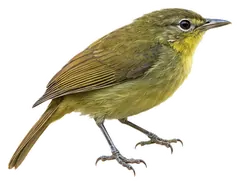 Xavier's GreenbulPhyllastrephus xavieri
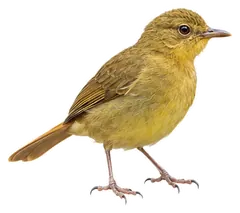 Icterine GreenbulPhyllastrephus icterinus
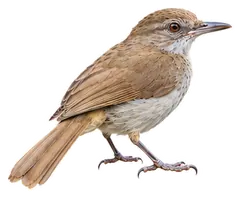 Terrestrial BrownbulPhyllastrephus terrestris
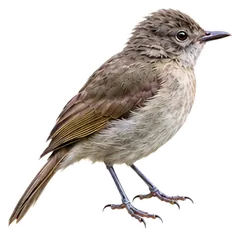 Cameroon Olive GreenbulPhyllastrephus poensis
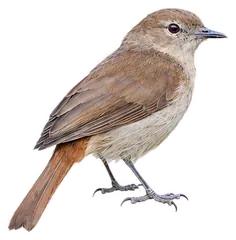 Northern BrownbulPhyllastrephus strepitans
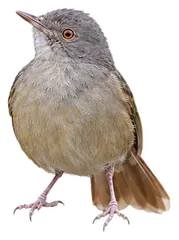 Grey-olive GreenbulPhyllastrephus cerviniventris
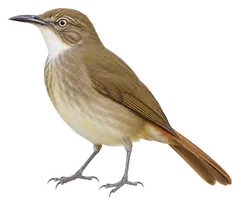 Fischer's GreenbulPhyllastrephus fischeri
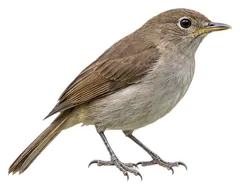 Cabanis's GreenbulPhyllastrephus cabanisi
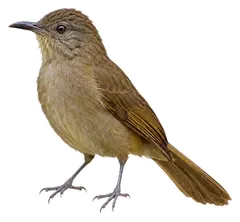
Download illustration
Free to use with credit: “Illustration: Bird Album (birdalbum.com)”. Drawn by AI from reference photos.
Heard it but can't see it? Mingji identifies birds by sound and photo, on your phone.