 Bird Album
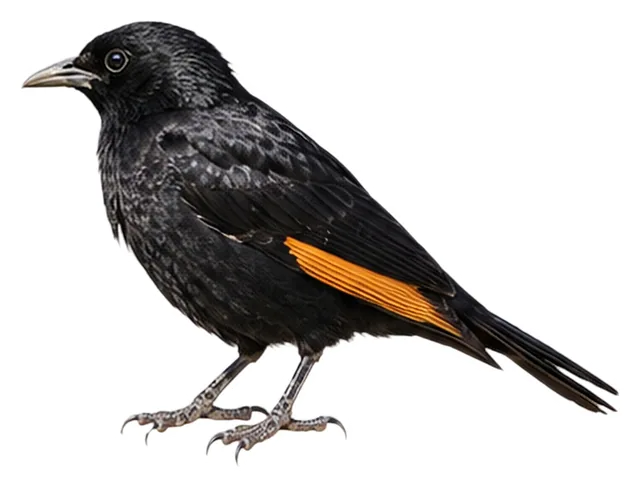
Tristram's Starling
Onychognathus tristramii (Sclater, PL, 1858)
123 gWeight
Tristram's starling (Onychognathus tristramii), also known as Dead Sea starling or Tristram's grackle, is a species of starling native to the Middle East.
Busiest months: March–April · Most records: Israel, Palestinian Territories, Oman
Where and when it's recorded

Tristram's Starling has been recorded at 19 of the 8,171 birding hotspots we track, in 5 countries and regions.
Records by month Northern Hemisphere
Where it's recorded most
- International Birding and Research Center Eilat (IBRCE)Israel1,422 records
- Yeruham LakeIsrael729 records
- Eilat north beachIsrael714 records
More places
- Kfar AdumimPalestinian Territories435 records
- PetraJordan411 records
- Ayn HamranOman360 records
- Kokhav Hashakhar NPPalestinian Territories148 records
- Khawr RawriOman142 records
- Jerusalem Bird ObservatoryIsrael132 records
- Mt. KabirPalestinian Territories126 records
Countries and regions with the most records
eBird records via GBIF up to 2024-12-31. A record means someone listed it; more records partly mean more birders, not more birds.
About
Tristram's starling (Onychognathus tristramii), also known as Dead Sea starling or Tristram's grackle, is a species of starling native to the Middle East. It is the only member of the genus Onychognathus found mainly outside of Africa. The species is named after Reverend Henry Baker Tristram, who collected natural history specimens.
Excerpt from Wikipedia, CC BY-SA 4.0 · authors · Read more on Wikipedia
Questions
How big is the Tristram's Starling?
The Tristram's Starling weighs around 123 g.
Where does the Tristram's Starling live?
Its breeding range: Palearctic: Arabian Peninsula. It is most often recorded in Israel, Palestinian Territories and Oman.
When is the best time to see the Tristram's Starling?
At the hotspots we track, it is recorded most in March and April (Northern Hemisphere).
Is the Tristram's Starling endangered?
The IUCN Red List classifies the Tristram's Starling as Least Concern.
What does the Tristram's Starling eat?
Main food: Fruit.
What family is the Tristram's Starling in?
It belongs to the family Starlings, Rhabdornises (Sturnidae), order Passerines (Passeriformes).
At a glance
- Weight
- 123 g
- Habitat
- Rocky terrain
- Diet
- Fruit
- Lifestyle
- Perches in trees
- Migration
- Resident (barely migrates)
- Conservation
- Least Concern
More measurements
- Wing
- 146 mm
- Tail
- 114 mm
- Bill
- 31 mm
- Tarsus
- 31 mm
Averages from the AVONET dataset; length from field guides where available.
Range
Palearctic: Arabian Peninsula
Breeding range, IOC World Bird List 15.2
Classification
- Order
- Passerines Passeriformes
- Family
- Starlings, Rhabdornises Sturnidae
- Genus
- Onychognathus
Other birds in the genus Onychognathus
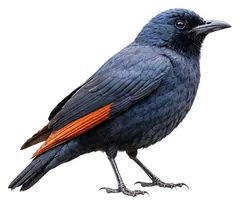 Red-winged StarlingOnychognathus morio
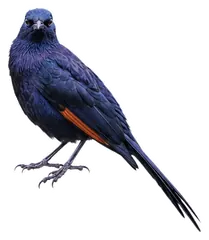 Slender-billed StarlingOnychognathus tenuirostris
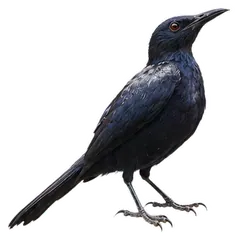 Chestnut-winged StarlingOnychognathus fulgidus
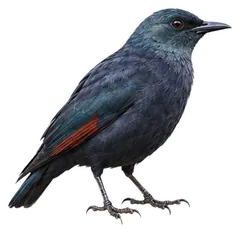 Waller's StarlingOnychognathus walleri
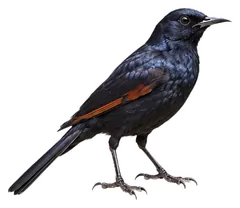 Somali StarlingOnychognathus blythii
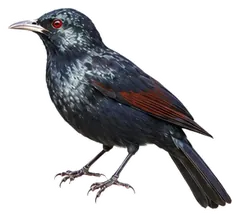 Socotra StarlingOnychognathus frater
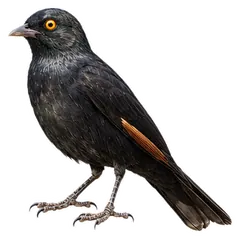 Pale-winged StarlingOnychognathus nabouroup
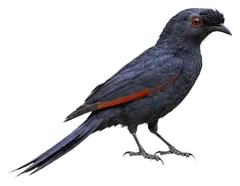 Bristle-crowned StarlingOnychognathus salvadorii
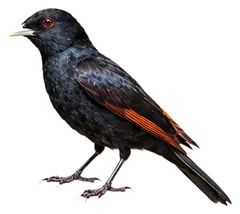 White-billed StarlingOnychognathus albirostris
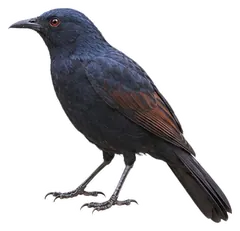 Neumann's StarlingOnychognathus neumanni
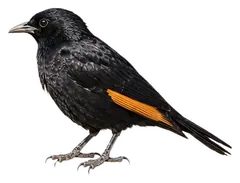
Download illustration
Free to use with credit: “Illustration: Bird Album (birdalbum.com)”. Drawn by AI from reference photos. ↗
Heard it but can't see it? Mingji identifies birds by sound and photo, on your phone.
In other languages
- EnglishTristram's Starling
- 简体中文红海栗翅椋鸟
- 繁體中文紅海栗翅椋鳥
- 日本語アラビアテリムク
- DeutschTristramstar
- FrançaisRufipenne de Tristram
- EspañolEstornino de Tristram
- Portuguêsestorninho-de-asa-ruiva
- ItalianoStorno di Tristram
- NederlandsTristrams Spreeuw
- РусскийТристрамов скворец
- Svenskasinaiglansstare
- DanskTristram´ Sortstær
- Polskiczarnotek arabski