 Bird Album
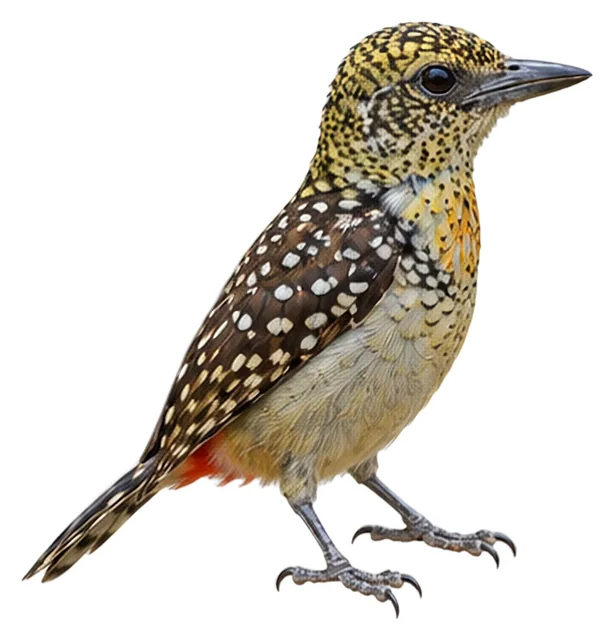
Usambiro Barbet
Trachyphonus usambiro Neumann, 1908
18–19 cmLength36 gWeight
The Usambiro barbet (Trachyphonus usambiro) is a species of bird in the African barbet family Lybiidae.
Where and when it's recorded
No records at the public birding hotspots we track. It may be rare, remote, or its locations protected.
About
The Usambiro barbet (Trachyphonus usambiro) is a species of bird in the African barbet family Lybiidae. It was formerly considered a subspecies of D'Arnaud's barbet, along with Emin's barbet, but was split as a distinct species by the IOC in 2021. It varies from the nominate in having longer wings, a shorter tail, and darker bill.
Excerpt from Wikipedia, CC BY-SA 4.0 · authors · Read more on Wikipedia
Questions
How big is the Usambiro Barbet?
The Usambiro Barbet is about 18–19 cm long and weighs around 36 g.
Where does the Usambiro Barbet live?
Its breeding range: Africa: southwestern Kenya and northwestern Tanzania.
Is the Usambiro Barbet endangered?
The IUCN Red List classifies the Usambiro Barbet as Least Concern.
What does the Usambiro Barbet eat?
Main food: Omnivore.
What family is the Usambiro Barbet in?
It belongs to the family African Barbets (Lybiidae), order Piciformes.
At a glance
- Length
- 18–19 cm
- Weight
- 36 g
- Diet
- Omnivore
- Lifestyle
- Perches in trees
- Migration
- Resident (barely migrates)
- Conservation
- Least Concern
More measurements
- Wing
- 82 mm
- Tail
- 73 mm
- Bill
- 21 mm
- Tarsus
- 24 mm
Averages from the AVONET dataset; length from field guides where available.
Range
Africa: southwestern Kenya and northwestern Tanzania
Breeding range, IOC World Bird List 15.2
Classification
- Order
- Piciformes
- Family
- African Barbets Lybiidae
- Genus
- Trachyphonus
Other birds in the genus Trachyphonus
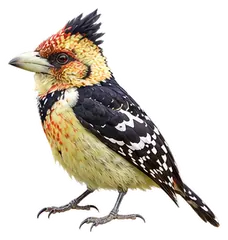 Crested BarbetTrachyphonus vaillantii
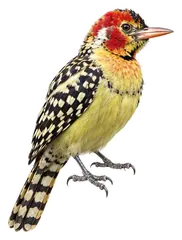 Red-and-yellow BarbetTrachyphonus erythrocephalus
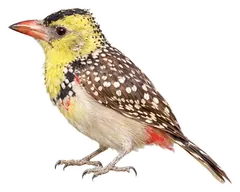 Yellow-breasted BarbetTrachyphonus margaritatus
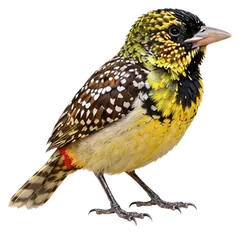 D'Arnaud's BarbetTrachyphonus darnaudii
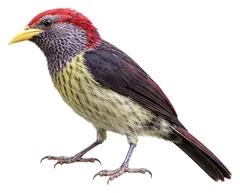 Western Yellow-billed BarbetTrachylaemus goffinii
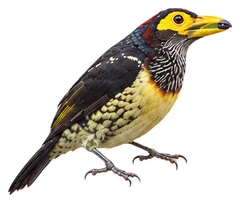 Eastern Yellow-billed BarbetTrachylaemus purpuratus
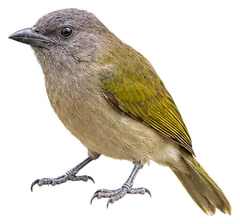 Green BarbetCryptolybia olivacea
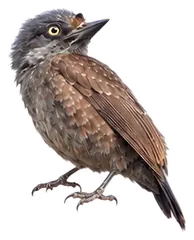 Grey-throated BarbetGymnobucco bonapartei
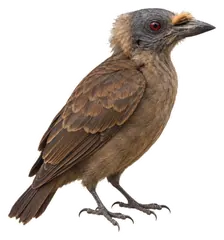 Sladen's BarbetGymnobucco sladeni
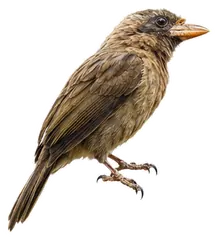 Bristle-nosed BarbetGymnobucco peli
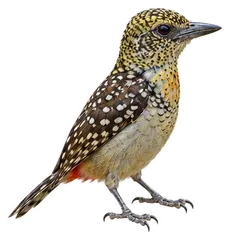
Download illustration
Free to use with credit: “Illustration: Bird Album (birdalbum.com)”. Drawn by AI from a reference photo by Pål A. Olsvik. ↗
Heard it but can't see it? Mingji identifies birds by sound and photo, on your phone.