 Bird Album
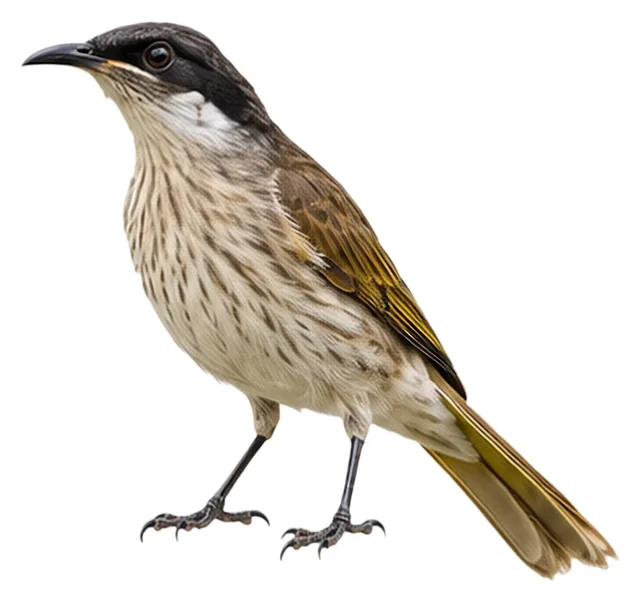
Varied Honeyeater
Gavicalis versicolor (Gould, 1843)
37 gWeight
The varied honeyeater (Gavicalis versicolor) is a species of bird in the family Meliphagidae.
Busiest months: October · Most records: Australia, Papua New Guinea, Indonesia
Where and when it's recorded

Varied Honeyeater has been recorded at 16 of the 8,171 birding hotspots we track, in 3 countries and regions.
Records by month Southern Hemisphere
Where it's recorded most
- Cairns EsplanadeAustralia4,990 records
- Cairns Esplanade – Northern EndAustralia2,022 records
- Cairns Esplanade – Southern EndAustralia1,343 records
More places
- Bushland BeachAustralia200 records
- Cairns Botanical Gardens and Centenary LakesAustralia97 records
- Freshwater and Saltwater LakesAustralia27 records
- GaruahiPapua New Guinea25 records
- Cattana WetlandsAustralia22 records
- Daintree Village Boat CruiseAustralia8 records
- Tyto WetlandsAustralia8 records
Countries and regions with the most records
eBird records via GBIF up to 2024-12-31. A record means someone listed it; more records partly mean more birders, not more birds.
About
The varied honeyeater (Gavicalis versicolor) is a species of bird in the family Meliphagidae. It is found in coastal areas of New Guinea and eastern Cape York Peninsula in Queensland, Australia. Its natural habitat is subtropical or tropical mangrove forests.
Excerpt from Wikipedia, CC BY-SA 4.0 · authors · Read more on Wikipedia
Questions
How big is the Varied Honeyeater?
The Varied Honeyeater weighs around 37 g.
Where does the Varied Honeyeater live?
Its breeding range: Australasia: coastal New Guinea and northeastern Australia. It is most often recorded in Australia, Papua New Guinea and Indonesia.
When is the best time to see the Varied Honeyeater?
At the hotspots we track, it is recorded most in October (Southern Hemisphere).
Is the Varied Honeyeater endangered?
The IUCN Red List classifies the Varied Honeyeater as Least Concern.
What does the Varied Honeyeater eat?
Main food: Omnivore.
What family is the Varied Honeyeater in?
It belongs to the family Honeyeaters (Meliphagidae), order Passerines (Passeriformes).
At a glance
- Weight
- 37 g
- Habitat
- Woodland
- Diet
- Omnivore
- Lifestyle
- Perches in trees
- Migration
- Resident (barely migrates)
- Conservation
- Least Concern
More measurements
- Wing
- 100 mm
- Tail
- 84 mm
- Bill
- 25 mm
- Tarsus
- 25 mm
Averages from the AVONET dataset; length from field guides where available.
Range
Australasia: coastal New Guinea and northeastern Australia
Breeding range, IOC World Bird List 15.2
Classification
- Order
- Passerines Passeriformes
- Family
- Honeyeaters Meliphagidae
- Genus
- Gavicalis
Other birds in the genus Gavicalis
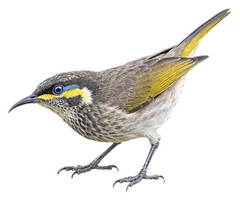 Mangrove HoneyeaterGavicalis fasciogularis
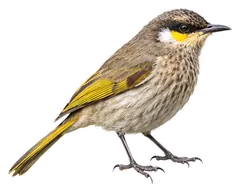 Singing HoneyeaterGavicalis virescens
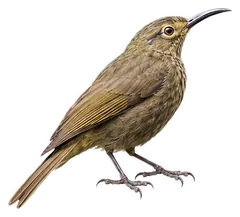 Dark-eared MyzaMyza celebensis
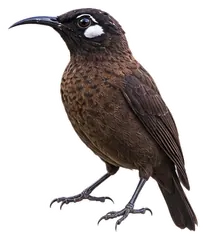 White-eared MyzaMyza sarasinorum
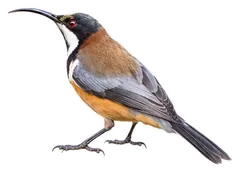 Eastern SpinebillAcanthorhynchus tenuirostris
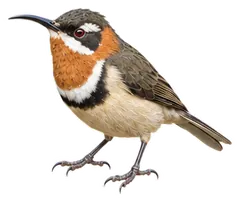 Western SpinebillAcanthorhynchus superciliosus
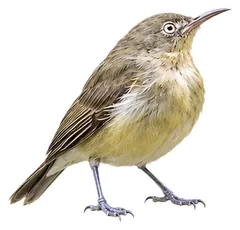 Green-backed HoneyeaterGlycichaera fallax
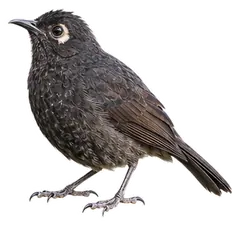 Sooty HoneyeaterMelionyx fuscus
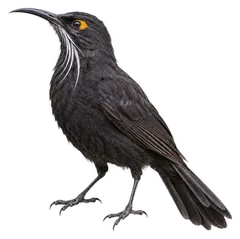 Long-bearded HoneyeaterMelionyx princeps
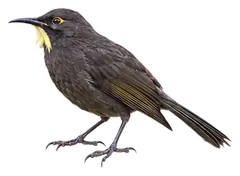 Short-bearded HoneyeaterMelionyx nouhuysi
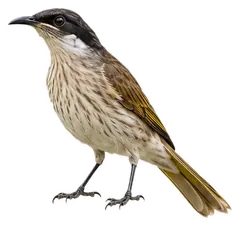
Download illustration
Free to use with credit: “Illustration: Bird Album (birdalbum.com)”. Drawn by AI from a reference photo by Carlos N. G. Bocos. ↗
Heard it but can't see it? Mingji identifies birds by sound and photo, on your phone.
In other languages
- EnglishVaried Honeyeater
- 简体中文杂色吸蜜鸟
- 繁體中文善變吸蜜鳥
- 日本語タテフミツスイ
- DeutschPirolhonigfresser
- FrançaisMéliphage versicolore
- EspañolMielero versicolor
- Portuguêspapa-mel-versicolor
- ItalianoSucciamiele vario
- NederlandsWielewaalhoningeter
- РусскийИволговый медосос
- Svenskaspräcklig honungsfågel
- DanskSpraglet Honningæder
- Polskizłotouch zmienny