 Bird Album
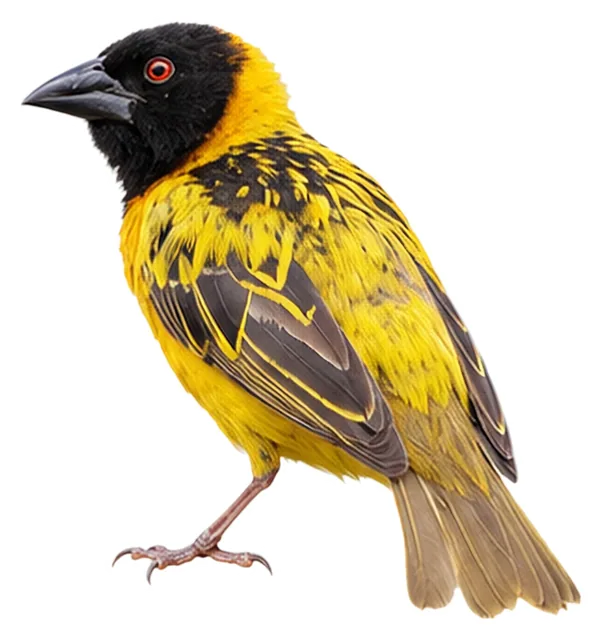
Village Weaver
Ploceus cucullatus (Müller, PLS, 1776)
14–17 cmLength36 gWeight
The breeding male is black and yellow, and the species nests in colonies, with many nests sometimes hanging from one tree.
Most records: Uganda, Kenya, South Africa
How to identify
Field marks
- Breeding male of nominate subspecies has black head and rufous-tinged nape
- Breeding male of nominate subspecies has yellow body and a black V on the wings
- Eyes red, bill black
Male, female and young
The female has a duller head and is olive-yellow overall; the male also becomes duller outside the breeding season.
Voice
Calls are varied, commonly including buzzing sounds and sharp, harsh alarm calls.
Where and when it's recorded

Village Weaver has been recorded at 638 of the 8,171 birding hotspots we track, in 58 countries and regions.
Records by month Northern Hemisphere
Where it's recorded most
- Entebbe Botanical GardenUganda703 records
- Mabamba SwampUganda644 records
- Bigodi SwampUganda440 records
More places
- Lake Mburo NPUganda403 records
- Kisumu WaterfrontKenya333 records
- Amurum Forest ReserveNigeria332 records
- Kruger NP – Lake Panic Bird HideSouth Africa326 records
- Lake BaringoKenya304 records
- Nyandungu Urban Wetland Eco-tourism ParkRwanda289 records
- Lake Baringo – West ShoreKenya285 records
Countries and regions with the most records
eBird records via GBIF up to 2024-12-31. A record means someone listed it; more records partly mean more birders, not more birds.
About
The village weaver (Ploceus cucullatus), also known as the spotted-backed weaver or black-headed weaver (the latter leading to easy confusion with P. melanocephalus), is a bird species in the family Ploceidae found in much of sub-Saharan Africa. It has also been introduced to Portugal and Venezuela as well as to the islands of Hispaniola, Martinique, Puerto Rico, Mauritius and Réunion.
Excerpt from Wikipedia, CC BY-SA 4.0 · authors · Read more on Wikipedia
Questions
How big is the Village Weaver?
The Village Weaver is about 14–17 cm long and weighs around 36 g.
Where does the Village Weaver live?
Its breeding range: Africa: widespread. It is most often recorded in Uganda, Kenya and South Africa.
Is the Village Weaver endangered?
The IUCN Red List classifies the Village Weaver as Least Concern.
What does the Village Weaver eat?
Main food: Seeds.
What family is the Village Weaver in?
It belongs to the family Weavers, Widowbirds (Ploceidae), order Passerines (Passeriformes).
At a glance
- Length
- 14–17 cm
- Weight
- 36 g
- Habitat
- Woodland
- Diet
- Seeds
- Lifestyle
- Perches in trees
- Migration
- Resident (barely migrates)
- Conservation
- Least Concern
More measurements
- Wing
- 83 mm
- Tail
- 49 mm
- Bill
- 20 mm
- Tarsus
- 23 mm
Averages from the AVONET dataset; length from field guides where available.
Range
Africa: widespread
Breeding range, IOC World Bird List 15.2
Classification
- Order
- Passerines Passeriformes
- Family
- Weavers, Widowbirds Ploceidae
- Genus
- Ploceus
Other birds in the genus Ploceus
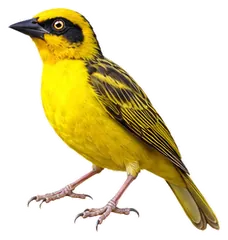 Baglafecht WeaverPloceus baglafecht
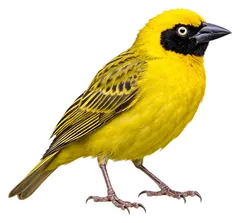 Bannerman's WeaverPloceus bannermani
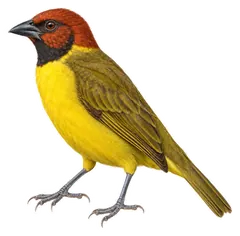 Bates's WeaverPloceus batesi
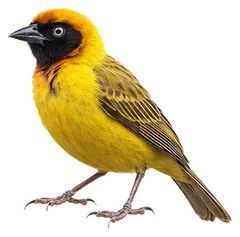 Black-chinned WeaverPloceus nigrimentus
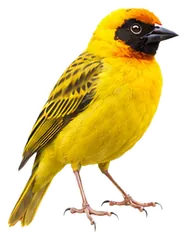 Bertram's WeaverPloceus bertrandi
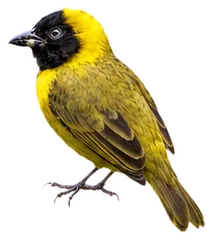 Slender-billed WeaverPloceus pelzelni
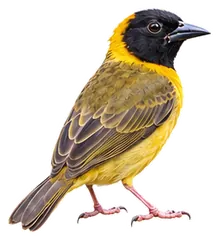 Loango WeaverPloceus subpersonatus
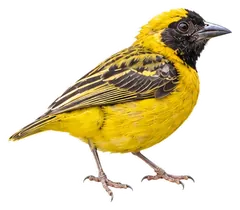 Little WeaverPloceus luteolus
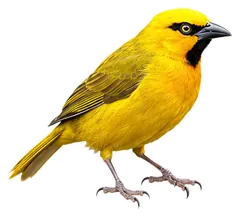 Spectacled WeaverPloceus ocularis
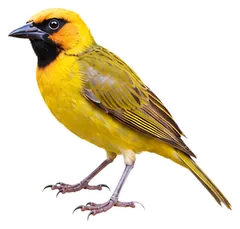 Olive-naped WeaverPloceus brachypterus
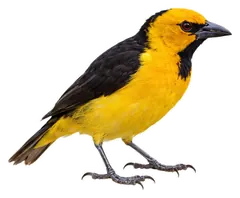 Black-necked WeaverPloceus nigricollis
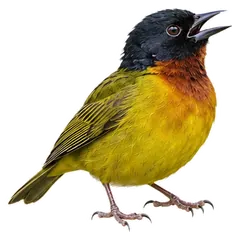 Strange WeaverPloceus alienus
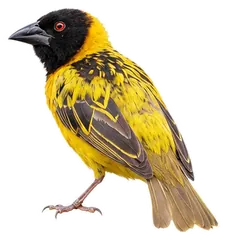
Download illustration
Free to use with credit: “Illustration: Bird Album (birdalbum.com)”. Drawn by AI from a reference photo by Nik Borrow. ↗
Heard it but can't see it? Mingji identifies birds by sound and photo, on your phone.