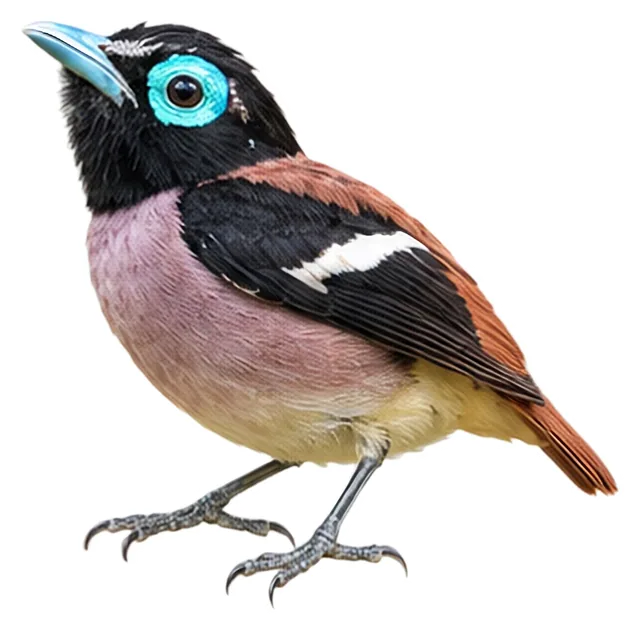
Visayan Broadbill
Sarcophanops samarensis Steere, 1890
27 gWeight
The Visayan broadbill (Sarcophanops samarensis) is a species of bird in the family Eurylaimidae where it was previously conspecific with the wattled broadbill.
Busiest months: March–April and August · Most records: Philippines
Where and when it's recorded
Busiest months: March–April and August · Most records: Philippines

Visayan Broadbill has been recorded at 1 of the 8,276 birding hotspots we track, in 1 country or region.
Records by month Northern Hemisphere
Where it's recorded most
- Raja Sikatuna National ParkPhilippines241 records
Countries and regions with the most records
eBird records via GBIF up to 2024-12-31. A record means someone listed it; more records partly mean more birders, not more birds.
About
The Visayan broadbill (Sarcophanops samarensis) is a species of bird in the family Eurylaimidae where it was previously conspecific with the wattled broadbill. It is endemic to the islands of Samar, Leyte and Bohol in the central Philippines. Its natural habitat is tropical moist lowland forests.
Excerpt from Wikipedia, CC BY-SA 4.0 · authors · Read more on Wikipedia
Questions
How big is the Visayan Broadbill?
The Visayan Broadbill weighs around 27 g.
Where does the Visayan Broadbill live?
Its breeding range: Oriental: East Visayas (east-central Philippines). It is most often recorded in Philippines.
When is the best time to see the Visayan Broadbill?
At the hotspots we track, it is recorded most in March, April and August (Northern Hemisphere).
Is the Visayan Broadbill endangered?
The IUCN Red List classifies the Visayan Broadbill as Vulnerable.
What does the Visayan Broadbill eat?
Main food: Insects & other invertebrates.
What family is the Visayan Broadbill in?
It belongs to the family Typical Broadbills (Eurylaimidae), order Passerines (Passeriformes).
At a glance
- Weight
- 27 g
- Habitat
- Forest
- Diet
- Insects & other invertebrates
- Lifestyle
- Perches in trees
- Migration
- Resident (barely migrates)
- Conservation
- Vulnerable
More measurements
- Wing
- 129 mm
- Tail
- 82 mm
- Bill
- 32 mm
- Tarsus
- 27 mm
Averages from the AVONET dataset; length from field guides where available.
Range
Oriental: East Visayas (east-central Philippines)
Breeding range, IOC World Bird List 15.2
Classification
- Order
- Passerines Passeriformes
- Family
- Typical Broadbills Eurylaimidae
- Genus
- Sarcophanops
Other birds in the genus Sarcophanops
 Wattled BroadbillSarcophanops steerii
 Grauer's BroadbillPseudocalyptomena graueri
 Long-tailed BroadbillPsarisomus dalhousiae
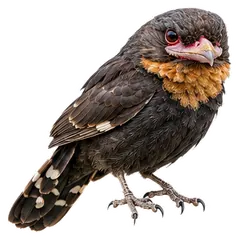 Dusky BroadbillCorydon sumatranus
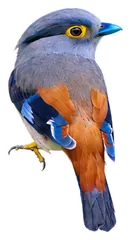 Grey-lored BroadbillSerilophus rubropygius
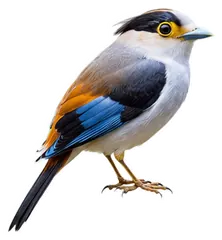 Silver-breasted BroadbillSerilophus lunatus
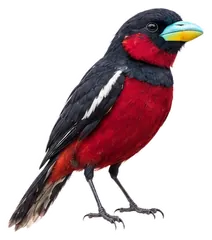 Black-and-red BroadbillCymbirhynchus macrorhynchos
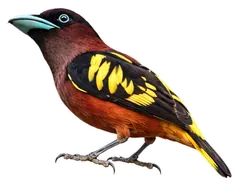 Banded BroadbillEurylaimus javanicus
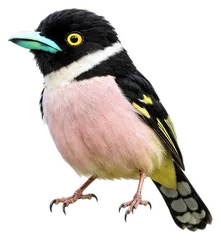 Black-and-yellow BroadbillEurylaimus ochromalus
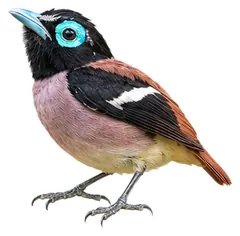
Download illustration
Free to use with credit: “Illustration: Bird Album (birdalbum.com)”. Drawn by AI from a reference photo by hdmiller. ↗
Heard it but can't see it? Mingji identifies birds by sound and photo, on your phone.
In other languages
- EnglishVisayan Broadbill
- 简体中文米岛阔嘴鸟
- 繁體中文維沙揚肉垂闊嘴鳥
- 日本語サマルモンツキヒロハシ
- DeutschSamarbreitrachen
- FrançaisEurylaime de Samar
- EspañolEurilaimo de las Visayan
- Portuguêsbocarra-das-vissaias
- ItalianoBeccolargo caruncolato delle Visayas
- NederlandsSamarhapvogel
- РусскийКрасноспинный рогоклюв
- Svenskasamarbrednäbb
- DanskVisayan Brednæb
- Polskiszerokodziób czerwony