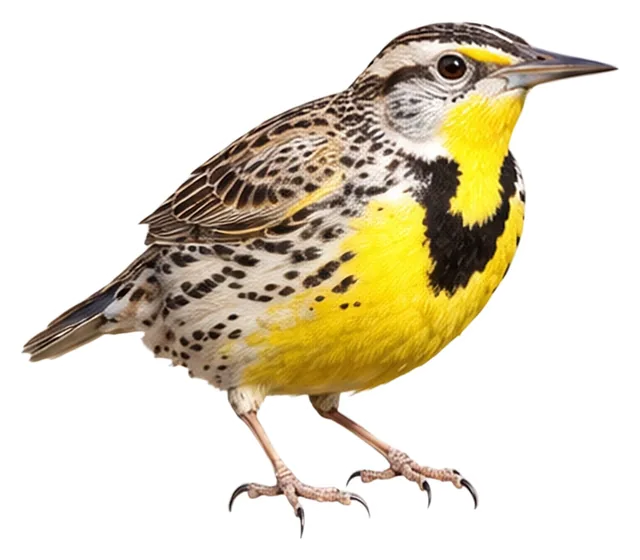
Western Meadowlark
Sturnella neglecta Audubon, 1844
16–26 cmLength100 gWeight
The western meadowlark (Sturnella neglecta) is a medium-sized icterid bird, about 20 cm (7.9 in) in length.
Busiest months: October–November · Most records: United States, Canada, Mexico
Where and when it's recorded
Busiest months: October–November · Most records: United States, Canada, Mexico

Western Meadowlark has been recorded at 365 of the 8,276 birding hotspots we track, in 3 countries and regions.
Records by month Northern Hemisphere
Where it's recorded most
- Yolo Bypass Wildlife AreaUnited States6,733 records
- San Jacinto Wildlife AreaUnited States6,449 records
- Piute PondsUnited States6,233 records
More places
- Rocky Mountain Arsenal NWRUnited States5,800 records
- Bosque del Apache NWRUnited States5,351 records
- Lagerman Agricultural Preserve – Lagerman ReservoirUnited States5,322 records
- Southeast Farallon IslandUnited States5,321 records
- Cherry Creek SPUnited States4,424 records
- Sacramento NWR – Auto Route & Visitor CenterUnited States4,064 records
- Barr Lake SPUnited States3,572 records
Countries and regions with the most records
eBird records via GBIF up to 2024-12-31. A record means someone listed it; more records partly mean more birders, not more birds.
About
The western meadowlark (Sturnella neglecta) is a medium-sized icterid bird, about 20 cm (7.9 in) in length. It is found across western and central North America and is a partial migrant, breeding in western Canada and western United States west of the Great Lakes, and in northern Mexico. In the northern half of the breeding range, the birds migrate south for the winter, while further south they are resident all year.
Excerpt from Wikipedia, CC BY-SA 4.0 · authors · Read more on Wikipedia
Questions
How big is the Western Meadowlark?
The Western Meadowlark is about 16–26 cm long and weighs around 100 g.
Where does the Western Meadowlark live?
Its breeding range: North America, Middle America: southwestern, south-central Canada through the western USA to central Mexico. It is most often recorded in United States, Canada and Mexico.
When is the best time to see the Western Meadowlark?
At the hotspots we track, it is recorded most in October and November (Northern Hemisphere).
Is the Western Meadowlark endangered?
The IUCN Red List classifies the Western Meadowlark as Least Concern.
What does the Western Meadowlark eat?
Main food: Insects & other invertebrates.
What family is the Western Meadowlark in?
It belongs to the family Oropendolas, New World Orioles, Blackbirds (Icteridae), order Passerines (Passeriformes).
At a glance
- Length
- 16–26 cm
- Weight
- 100 g
- Habitat
- Grassland
- Diet
- Insects & other invertebrates
- Lifestyle
- Active on the ground
- Migration
- Partial migrant
- Conservation
- Least Concern
More measurements
- Wing
- 117 mm
- Tail
- 72 mm
- Bill
- 34 mm
- Tarsus
- 35 mm
Averages from the AVONET dataset; length from field guides where available.
Range
North America, Middle America: southwestern, south-central Canada through the western USA to central Mexico
Breeding range, IOC World Bird List 15.2
Classification
- Order
- Passerines Passeriformes
- Family
- Oropendolas, New World Orioles, Blackbirds Icteridae
- Genus
- Sturnella
Other birds in the genus Sturnella
 Eastern MeadowlarkSturnella magna
 Chihuahuan MeadowlarkSturnella lilianae
 Yellow-breasted ChatIcteria virens
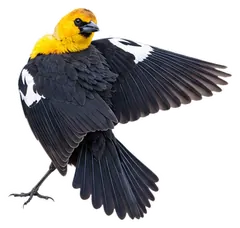 Yellow-headed BlackbirdXanthocephalus xanthocephalus
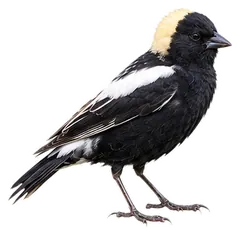 BobolinkDolichonyx oryzivorus
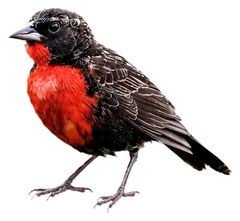 Red-breasted MeadowlarkLeistes militaris
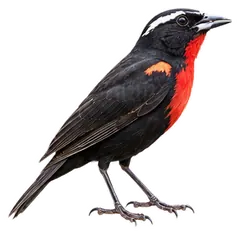 White-browed MeadowlarkLeistes superciliaris
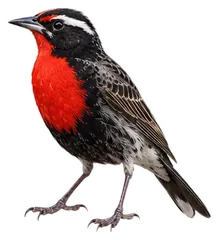 Peruvian MeadowlarkLeistes bellicosus
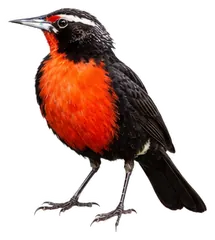 Long-tailed MeadowlarkLeistes loyca
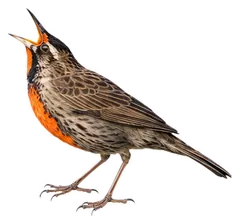 Pampas MeadowlarkLeistes defilippii
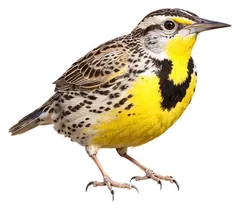
Download illustration
Free to use with credit: “Illustration: Bird Album (birdalbum.com)”. Drawn by AI from a reference photo by Nature Ali. ↗
Heard it but can't see it? Mingji identifies birds by sound and photo, on your phone.
In other languages
- EnglishWestern Meadowlark
- 简体中文西草地鹨
- 繁體中文西方草地鷚
- 日本語ニシマキバドリ
- DeutschWiesenstärling
- FrançaisSturnelle de l’Ouest
- EspañolPradero occidental
- Portuguêspeito-amarelo-ocidental
- ItalianoSturnella occidentale
- NederlandsGeelkaakweidespreeuw
- РусскийЖаворонковый луговой трупиал
- Svenskavästlig ängstrupial
- DanskVestlig Englærke
- Polskiwojak żółtogardły