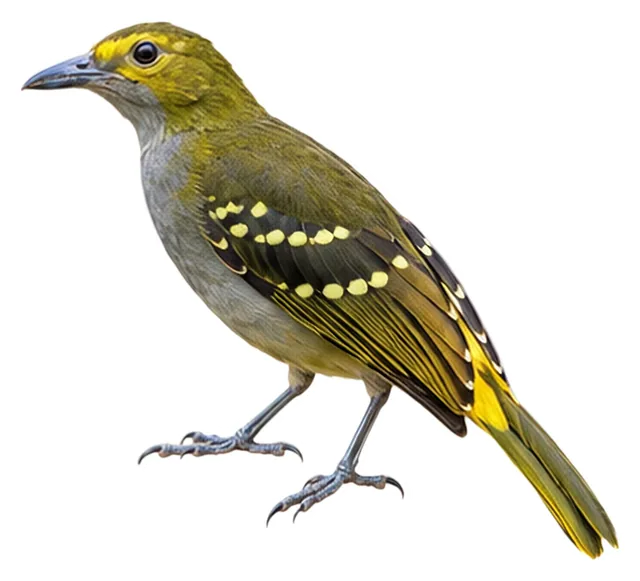
Western Nicator
Nicator chloris (Valenciennes, 1826)
46 gWeight
Busiest months: November–March and July · Most records: Ghana, Uganda, Equatorial Guinea
Where and when it's recorded
Busiest months: November–March and July · Most records: Ghana, Uganda, Equatorial Guinea

Western Nicator has been recorded at 90 of the 8,276 birding hotspots we track, in 14 countries and regions.
Records by month Northern Hemisphere
Where it's recorded most
- Bigodi SwampUganda351 records
- Atewa Range – upland forest & ridgeGhana292 records
- Kibale NPUganda281 records
More places
- Ankasa NPGhana249 records
- Budongo Forest Reserve – Royal MileUganda241 records
- Bobiri Butterfly SanctuaryGhana228 records
- Semuliki NPUganda194 records
- Semuliki NP – Kirumya TrailUganda182 records
- Bosque Científica – Selva PrimariaEquatorial Guinea143 records
- Atewa – farm scrub and degraded forestGhana135 records
Countries and regions with the most records
eBird records via GBIF up to 2024-12-31. A record means someone listed it; more records partly mean more birders, not more birds.
Questions
How big is the Western Nicator?
The Western Nicator weighs around 46 g.
Where does the Western Nicator live?
Its breeding range: Africa: Senegal and Gambia to southern South Sudan, Uganda, western Tanzania, Zambia and northern Angola. It is most often recorded in Ghana, Uganda and Equatorial Guinea.
When is the best time to see the Western Nicator?
At the hotspots we track, it is recorded most in January, February, March, July, November and December (Northern Hemisphere).
Is the Western Nicator endangered?
The IUCN Red List classifies the Western Nicator as Least Concern.
What does the Western Nicator eat?
Main food: Insects & other invertebrates.
What family is the Western Nicator in?
It belongs to the family Nicators (Nicatoridae), order Passerines (Passeriformes).
At a glance
- Weight
- 46 g
- Habitat
- Forest
- Diet
- Insects & other invertebrates
- Lifestyle
- Perches in trees
- Migration
- Resident (barely migrates)
- Conservation
- Least Concern
More measurements
- Wing
- 100 mm
- Tail
- 98 mm
- Bill
- 22 mm
- Tarsus
- 29 mm
Averages from the AVONET dataset; length from field guides where available.
Range
Africa: Senegal and Gambia to southern South Sudan, Uganda, western Tanzania, Zambia and northern Angola
Breeding range, IOC World Bird List 15.2
Classification
- Order
- Passerines Passeriformes
- Family
- Nicators Nicatoridae
- Genus
- Nicator
Other birds in the genus Nicator
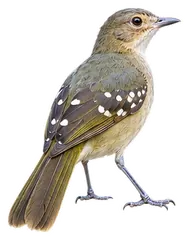 Eastern NicatorNicator gularis
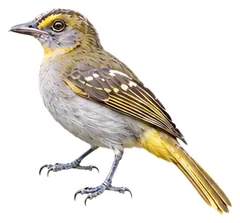 Yellow-throated NicatorNicator vireo
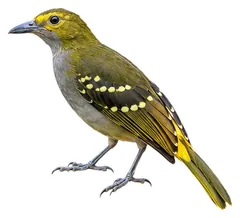
Download illustration
Free to use with credit: “Illustration: Bird Album (birdalbum.com)”. Drawn by AI from a reference photo by Gregoire Dubois. ↗
Heard it but can't see it? Mingji identifies birds by sound and photo, on your phone.
In other languages
- EnglishWestern Nicator
- 简体中文黄翼斑斗鹎
- 繁體中文黃斑斗鵯
- 日本語ノドジロムシクイヒヨ
- DeutschGraukehl-Tropfenvogel
- FrançaisNicator du Sénégal
- EspañolConquistador occidental
- Portuguêstuta-picanço-de-garganta-verde
- ItalianoNicator macchiegialle
- NederlandsGrijskeelnicator
- РусскийСерогорлый никатор
- Svenskavästlig nikator
- DanskVestlig Nicator
- Polskinikator żółtobrzuchy