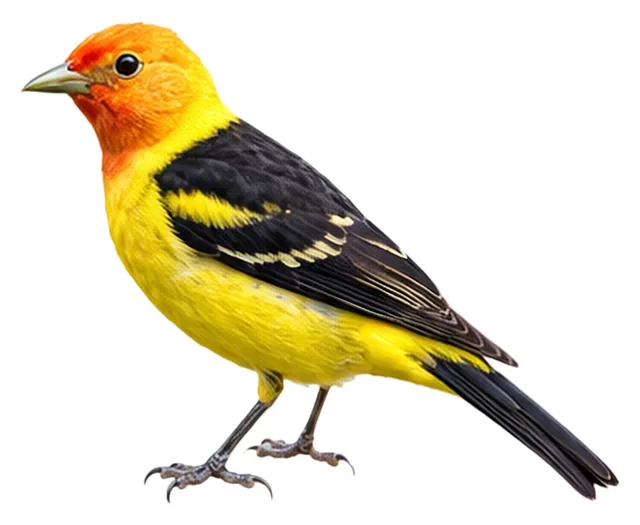
Western Tanager
Piranga ludoviciana (Wilson, A, 1811)
16–19 cmLength28 gWeight
The western tanager (Piranga ludoviciana) is a medium-sized American songbird.
Busiest months: May · Most records: United States, Canada, Mexico
Where and when it's recorded
Busiest months: May · Most records: United States, Canada, Mexico

Western Tanager has been recorded at 515 of the 8,276 birding hotspots we track, in 13 countries and regions.
Records by month Northern Hemisphere
Where it's recorded most
- Malheur NWR – HeadquartersUnited States3,733 records
- Big Morongo Canyon Preserve & Covington ParkUnited States3,720 records
- Putah Creek Riparian ReserveUnited States3,295 records
More places
- Intermountain Bird Observatory at Lucky PeakUnited States3,178 records
- Ramsey Canyon PreserveUnited States3,103 records
- Sweetwater WetlandsUnited States2,817 records
- Paton Center for HummingbirdsUnited States2,657 records
- Desert NWR – Corn CreekUnited States2,538 records
- Rio Grande Nature Center SPUnited States2,347 records
- Mt. Tabor ParkUnited States2,241 records
Countries and regions with the most records
eBird records via GBIF up to 2024-12-31. A record means someone listed it; more records partly mean more birders, not more birds.
About
The western tanager (Piranga ludoviciana) is a medium-sized American songbird. Formerly placed in the tanager family (Thraupidae), it and other members of its genus are now classified in the cardinal family (Cardinalidae). The species' plumage and vocalizations are similar to other members of the cardinal family.
Excerpt from Wikipedia, CC BY-SA 4.0 · authors · Read more on Wikipedia
Questions
How big is the Western Tanager?
The Western Tanager is about 16–19 cm long and weighs around 28 g.
Where does the Western Tanager live?
Its breeding range: North America: western, central Canada through western USA to extreme northwestern Mexico. It is most often recorded in United States, Canada and Mexico.
When is the best time to see the Western Tanager?
At the hotspots we track, it is recorded most in May (Northern Hemisphere).
Is the Western Tanager endangered?
The IUCN Red List classifies the Western Tanager as Least Concern.
What does the Western Tanager eat?
Main food: Insects & other invertebrates.
What family is the Western Tanager in?
It belongs to the family Cardinals & Allies (Cardinalidae), order Passerines (Passeriformes).
At a glance
- Length
- 16–19 cm
- Weight
- 28 g
- Habitat
- Forest
- Diet
- Insects & other invertebrates
- Lifestyle
- Perches in trees
- Migration
- Migratory
- Conservation
- Least Concern
More measurements
- Wing
- 95 mm
- Tail
- 71 mm
- Bill
- 18 mm
- Tarsus
- 20 mm
Averages from the AVONET dataset; length from field guides where available.
Range
North America: western, central Canada through western USA to extreme northwestern Mexico
Breeding range, IOC World Bird List 15.2
Classification
- Order
- Passerines Passeriformes
- Family
- Cardinals & Allies Cardinalidae
- Genus
- Piranga
Other birds in the genus Piranga
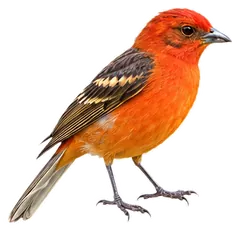 Flame-colored TanagerPiranga bidentata
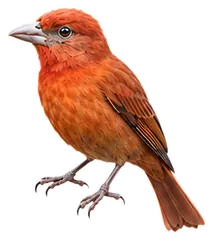 Tooth-billed TanagerPiranga lutea
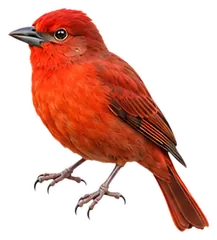 Red TanagerPiranga flava
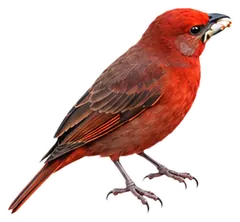 Hepatic TanagerPiranga hepatica
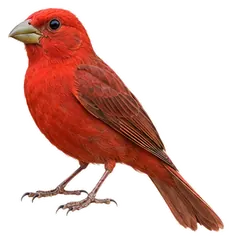 Summer TanagerPiranga rubra
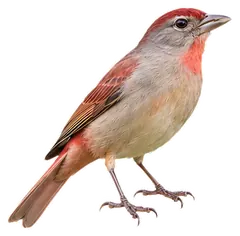 Rose-throated TanagerPiranga roseogularis
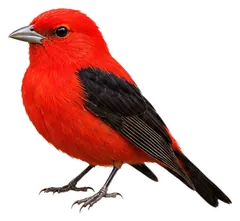 Scarlet TanagerPiranga olivacea
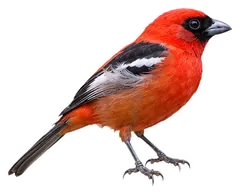 White-winged TanagerPiranga leucoptera
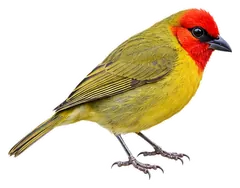 Red-headed TanagerPiranga erythrocephala
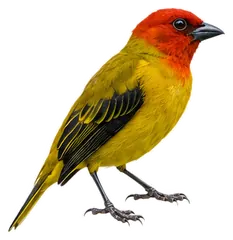 Red-hooded TanagerPiranga rubriceps
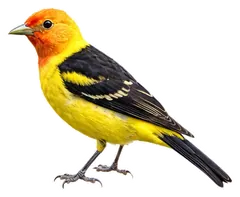
Download illustration
Free to use with credit: “Illustration: Bird Album (birdalbum.com)”. Drawn by AI from a reference photo by Jim Gain. ↗
Heard it but can't see it? Mingji identifies birds by sound and photo, on your phone.