 Bird Album
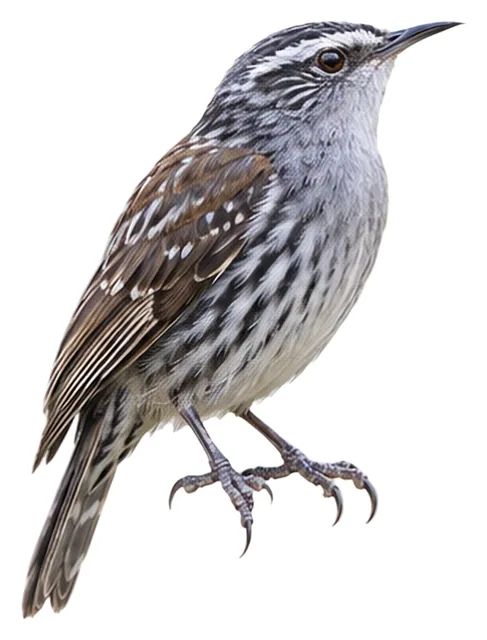
White-browed Treecreeper
Climacteris affinis Blyth, 1863
22 gWeight
The white-browed treecreeper (Climacteris affinis) is the smallest of the Australo-papuan treecreepers and sole family member adapted to arid environments.
Busiest months: August–September · Most records: Australia
Where and when it's recorded

White-browed Treecreeper has been recorded at 3 of the 8,171 birding hotspots we track, in 1 country or region.
Records by month Southern Hemisphere
Where it's recorded most
- Bowra Wildlife SanctuaryAustralia983 records
- Gluepot ReserveAustralia366 records
- Hattah-Kulkyne National ParkAustralia8 records
Countries and regions with the most records
eBird records via GBIF up to 2024-12-31. A record means someone listed it; more records partly mean more birders, not more birds.
About
The white-browed treecreeper (Climacteris affinis) is the smallest of the Australo-papuan treecreepers and sole family member adapted to arid environments. The species foraging strategy involves climbing the trunks of trees in search of invertebrate prey on and under bark. Although some populations within the species range have declined, the species IUCN conservation status is of Least Concern.
Excerpt from Wikipedia, CC BY-SA 4.0 · authors · Read more on Wikipedia
Questions
How big is the White-browed Treecreeper?
The White-browed Treecreeper weighs around 22 g.
Where does the White-browed Treecreeper live?
Its breeding range: Australasia: south-central Australia. It is most often recorded in Australia.
When is the best time to see the White-browed Treecreeper?
At the hotspots we track, it is recorded most in August and September (Southern Hemisphere).
Is the White-browed Treecreeper endangered?
The IUCN Red List classifies the White-browed Treecreeper as Least Concern.
What does the White-browed Treecreeper eat?
Main food: Insects & other invertebrates.
What family is the White-browed Treecreeper in?
It belongs to the family Australasian Treecreepers (Climacteridae), order Passerines (Passeriformes).
At a glance
- Weight
- 22 g
- Habitat
- Shrubland
- Diet
- Insects & other invertebrates
- Lifestyle
- Perches in trees
- Migration
- Resident (barely migrates)
- Conservation
- Least Concern
More measurements
- Wing
- 85 mm
- Tail
- 58 mm
- Bill
- 18 mm
- Tarsus
- 19 mm
Averages from the AVONET dataset; length from field guides where available.
Range
Australasia: south-central Australia
Breeding range, IOC World Bird List 15.2
Classification
- Order
- Passerines Passeriformes
- Family
- Australasian Treecreepers Climacteridae
- Genus
- Climacteris
Other birds in the genus Climacteris
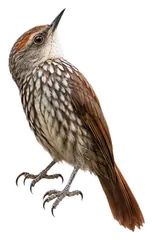 Red-browed TreecreeperClimacteris erythrops
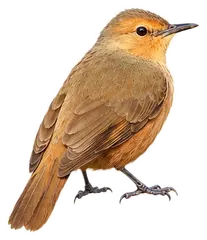 Rufous TreecreeperClimacteris rufus
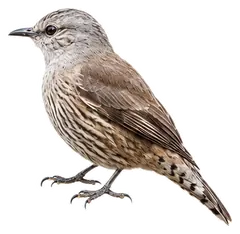 Brown TreecreeperClimacteris picumnus
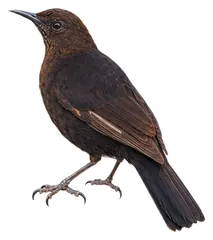 Black-tailed TreecreeperClimacteris melanurus
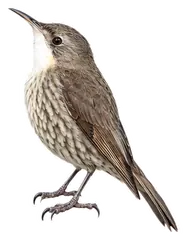 White-throated TreecreeperCormobates leucophaea
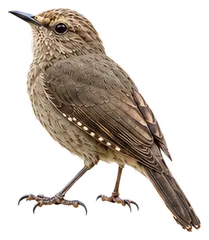 Papuan TreecreeperCormobates placens
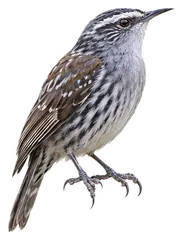
Download illustration
Free to use with credit: “Illustration: Bird Album (birdalbum.com)”. Drawn by AI from a reference photo by nealed. ↗
Heard it but can't see it? Mingji identifies birds by sound and photo, on your phone.
In other languages
- EnglishWhite-browed Treecreeper
- 简体中文白眉短嘴旋木雀
- 繁體中文白眉短嘴旋木雀
- 日本語マミジロキノボリ
- DeutschWeißbrauen-Baumrutscher
- FrançaisÉchelet à sourcils blancs
- EspañolCorretroncos cejiblanco
- Portuguêscorre-troncos-de-sobrancelha-branca
- ItalianoRampichino cigliabianche
- NederlandsWitbrauwkruiper
- РусскийБелобровая ложнопищуха
- Svenskavitbrynad eukalyptuskrypare
- DanskHvidbrynet Barkløber
- Polskikorołaz białobrewy