 Bird Album
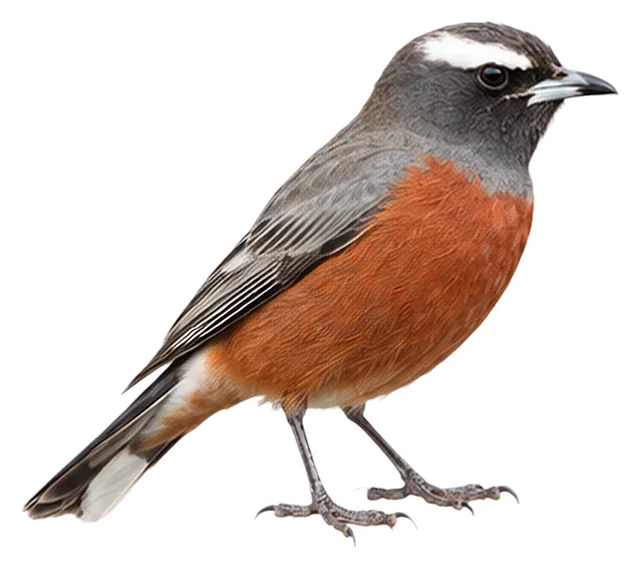
White-browed Woodswallow
Artamus superciliosus (Gould, 1837)
36 gWeight
The white-browed woodswallow (Artamus superciliosus) is a medium-sized (~19 cm) passerine bird endemic to Australia.
Busiest months: October · Most records: Australia
Where and when it's recorded

White-browed Woodswallow has been recorded at 105 of the 8,171 birding hotspots we track, in 1 country or region.
Records by month Southern Hemisphere
Where it's recorded most
- Bowra Wildlife SanctuaryAustralia1,993 records
- Goschen Bushland ReserveAustralia864 records
- Hattah-Kulkyne National ParkAustralia424 records
More places
- Gluepot ReserveAustralia305 records
- Terrick Terrick National ParkAustralia255 records
- Greater Bendigo National Park – KamarookaAustralia252 records
- Mount Korong Nature Conservation ReserveAustralia175 records
- Capertee ValleyAustralia160 records
- Mt Ainslie Nature Reserve – Campbell ParkAustralia157 records
- Chiltern-Mt Pilot National Park – ChilternAustralia128 records
Countries and regions with the most records
eBird records via GBIF up to 2024-12-31. A record means someone listed it; more records partly mean more birders, not more birds.
About
The white-browed woodswallow (Artamus superciliosus) is a medium-sized (~19 cm) passerine bird endemic to Australia. The white-browed woodswallow has very distinctive plumage consisting of white brow over a black head with the upper body being a deep blue-grey and with a chestnut under body. The females are paler then the males.
Excerpt from Wikipedia, CC BY-SA 4.0 · authors · Read more on Wikipedia
Questions
How big is the White-browed Woodswallow?
The White-browed Woodswallow weighs around 36 g.
Where does the White-browed Woodswallow live?
Its breeding range: Australasia: northeastern Western Australia to northeastern QLC and south to southeastern South Australia and Victoria (central, eastern Australia). It is most often recorded in Australia.
When is the best time to see the White-browed Woodswallow?
At the hotspots we track, it is recorded most in October (Southern Hemisphere).
Is the White-browed Woodswallow endangered?
The IUCN Red List classifies the White-browed Woodswallow as Least Concern.
What does the White-browed Woodswallow eat?
Main food: Insects & other invertebrates.
What family is the White-browed Woodswallow in?
It belongs to the family Woodswallows, Butcherbirds & Allies (Artamidae), order Passerines (Passeriformes).
At a glance
- Weight
- 36 g
- Habitat
- Woodland
- Diet
- Insects & other invertebrates
- Lifestyle
- Feeds in the air
- Migration
- Migratory
- Conservation
- Least Concern
More measurements
- Wing
- 120 mm
- Tail
- 74 mm
- Bill
- 23 mm
- Tarsus
- 20 mm
Averages from the AVONET dataset; length from field guides where available.
Range
Australasia: northeastern Western Australia to northeastern QLC and south to southeastern South Australia and Victoria (central, eastern Australia)
Breeding range, IOC World Bird List 15.2
Classification
- Order
- Passerines Passeriformes
- Family
- Woodswallows, Butcherbirds & Allies Artamidae
- Genus
- Artamus
Other birds in the genus Artamus
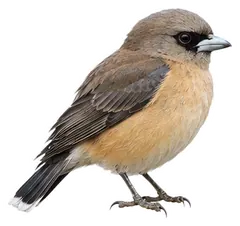 Ashy WoodswallowArtamus fuscus
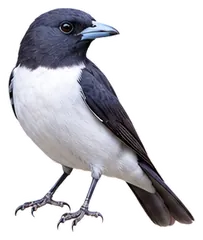 White-breasted WoodswallowArtamus leucorynchus
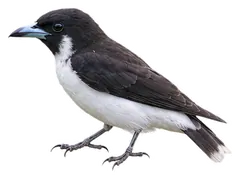 Fiji WoodswallowArtamus mentalis
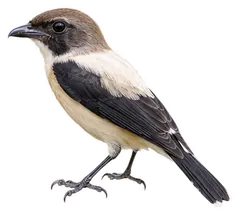 Ivory-backed WoodswallowArtamus monachus
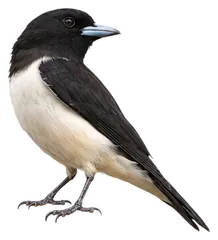 Great WoodswallowArtamus maximus
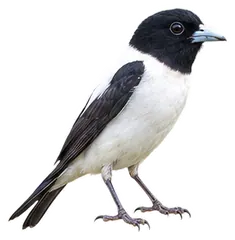 White-backed WoodswallowArtamus insignis
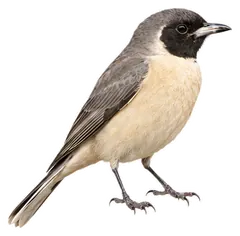 Masked WoodswallowArtamus personatus
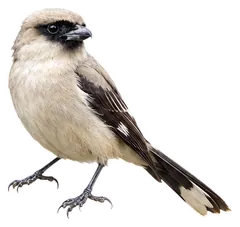 Black-faced WoodswallowArtamus cinereus
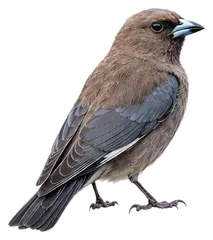 Dusky WoodswallowArtamus cyanopterus
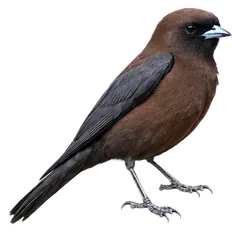 Little WoodswallowArtamus minor
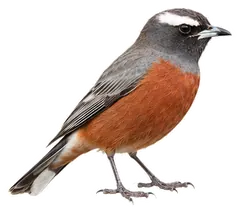
Download illustration
Free to use with credit: “Illustration: Bird Album (birdalbum.com)”. Drawn by AI from a reference photo by samzhang. ↗
Heard it but can't see it? Mingji identifies birds by sound and photo, on your phone.
In other languages
- EnglishWhite-browed Woodswallow
- 简体中文白眉燕鵙
- 繁體中文白眉燕鵙
- 日本語マミジロモリツバメ
- DeutschWeißbrauen-Schwalbenstar
- FrançaisLangrayen bridé
- EspañolArtamo cejiblanco
- Portuguêsandorinha-do-mato-de-sobrolho-branco
- ItalianoRondine boschereccia cigliabianche
- NederlandsWenkbrauwspitsvogel
- РусскийБелобровый артам
- Svenskavitbrynad svalstare
- DanskHvidbrynet Svalestær
- Polskiostrolot białobrewy