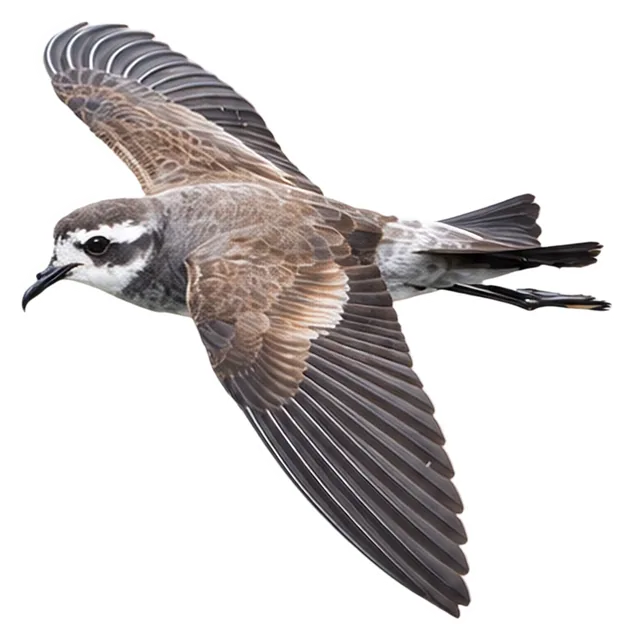
White-faced Storm Petrel
Pelagodroma marina (Latham, 1790)
47 gWeight
The white-faced storm petrel (Pelagodroma marina), (Māori: takahikare) also known as white-faced petrel or frigate petrel, is a small seabird of the austral storm petrel family Oceanitidae.
Busiest months: November · Most records: New Zealand, Australia, Cape Verde
Where and when it's recorded
Busiest months: November · Most records: New Zealand, Australia, Cape Verde

White-faced Storm Petrel has been recorded at 29 of the 8,276 birding hotspots we track, in 7 countries and regions.
Records by month Southern Hemisphere
Where it's recorded most
- Eaglehawk Neck Pelagic TripAustralia894 records
- Poor Knights Shelf AreaNew Zealand505 records
- Hauraki Gulf PelagicNew Zealand280 records
More places
- Tutukaka To Poor KnightsNew Zealand261 records
- Kaikoura – offshore – Albatross Encounter pelagicNew Zealand86 records
- Stewart Island – east coast pelagic watersNew Zealand62 records
- Foveaux StraitNew Zealand24 records
- Gulf Harbour to Tiritiri Matangi ferryNew Zealand23 records
- Tiritiri MatangiNew Zealand21 records
- Cook Strait FerryNew Zealand20 records
Countries and regions with the most records
eBird records via GBIF up to 2024-12-31. A record means someone listed it; more records partly mean more birders, not more birds.
About
The white-faced storm petrel (Pelagodroma marina), (Māori: takahikare) also known as white-faced petrel or frigate petrel, is a small seabird of the austral storm petrel family Oceanitidae. It is the only member of the monotypic genus Pelagodroma. It is widely distributed across the northern and southern hemisphere, especially around the coastal and open ocean waters of southern Australia, New Zealand, Tristan da Cunha, Cabo Verde, the Canary islands and the Selvagens islands.
Excerpt from Wikipedia, CC BY-SA 4.0 · authors · Read more on Wikipedia
Questions
How big is the White-faced Storm Petrel?
The White-faced Storm Petrel weighs around 47 g.
Where does the White-faced Storm Petrel live?
Its breeding range: Atlantic Ocean, Indian Ocean, Pacific Ocean: Salvage (northwest of Canary Islands), Canary and Cape Verde islands (Macaronesia, off northwestern Africa), Tristan da Cunha group including Gough (south-central Atlantic Ocean), southern Australian islets and New Zealand region. It is most often recorded in New Zealand, Australia and Cape Verde.
When is the best time to see the White-faced Storm Petrel?
At the hotspots we track, it is recorded most in November (Southern Hemisphere).
Is the White-faced Storm Petrel endangered?
The IUCN Red List classifies the White-faced Storm Petrel as Least Concern.
What does the White-faced Storm Petrel eat?
Main food: Fish, shrimp & shellfish.
What family is the White-faced Storm Petrel in?
It belongs to the family Austral Storm Petrels (Oceanitidae), order Procellariiformes.
At a glance
- Weight
- 47 g
- Habitat
- Ocean
- Diet
- Fish, shrimp & shellfish
- Lifestyle
- Feeds in the air
- Migration
- Migratory
- Conservation
- Least Concern
More measurements
- Wing
- 158 mm
- Tail
- 73 mm
- Bill
- 21 mm
- Tarsus
- 41 mm
Averages from the AVONET dataset; length from field guides where available.
Range
Atlantic Ocean, Indian Ocean, Pacific Ocean: Salvage (northwest of Canary Islands), Canary and Cape Verde islands (Macaronesia, off northwestern Africa), Tristan da Cunha group including Gough (south-central Atlantic Ocean), southern Australian islets and New Zealand region
Breeding range, IOC World Bird List 15.2
Classification
- Order
- Procellariiformes
- Family
- Austral Storm Petrels Oceanitidae
- Genus
- Pelagodroma
More from the family Austral Storm Petrels
 Wilson's Storm PetrelOceanites oceanicus
 Elliot's Storm PetrelOceanites gracilis
 Pincoya Storm PetrelOceanites pincoyae
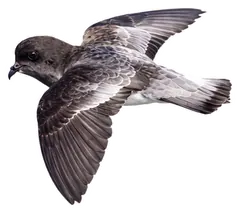 Grey-backed Storm PetrelGarrodia nereis
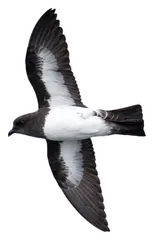 White-bellied Storm PetrelFregetta grallaria
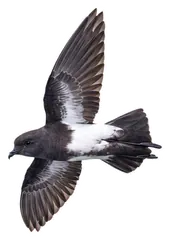 Black-bellied Storm PetrelFregetta tropica
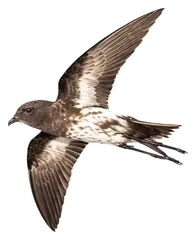 New Caledonian Storm PetrelFregetta lineata
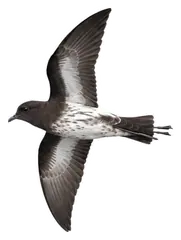 New Zealand Storm PetrelFregetta maoriana
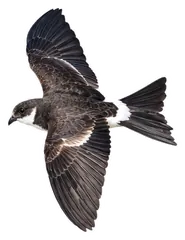 Polynesian Storm PetrelNesofregetta fuliginosa
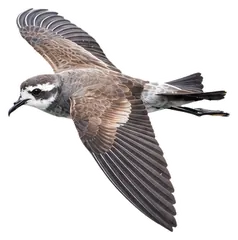
Download illustration
Free to use with credit: “Illustration: Bird Album (birdalbum.com)”. Drawn by AI from a reference photo by Caiden. ↗
Heard it but can't see it? Mingji identifies birds by sound and photo, on your phone.
In other languages
- EnglishWhite-faced Storm Petrel
- 简体中文白脸海燕
- 繁體中文白臉海燕
- 日本語カオジロウミツバメ
- DeutschWeißgesicht-Sturmschwalbe
- FrançaisOcéanite frégate
- EspañolPaíño pechialbo
- Portuguêscalca-mar
- ItalianoUccello delle tempeste facciabianca
- NederlandsBont Stormvogeltje
- РусскийБелолицая океанида
- Svenskafregatthavslöpare
- DanskFregatstormsvale
- Polskioceannik białobrewy