 Bird Album
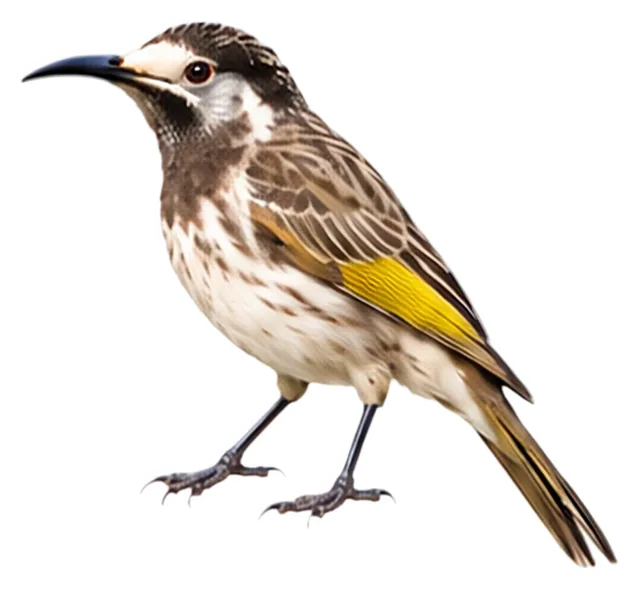
White-fronted Honeyeater
Purnella albifrons (Gould, 1841)
17 gWeight
The white-fronted honeyeater (Purnella albifrons) is a medium-sized bird species endemic to Australia.
Busiest months: October · Most records: Australia
Where and when it's recorded

White-fronted Honeyeater has been recorded at 16 of the 8,171 birding hotspots we track, in 1 country or region.
Records by month Southern Hemisphere
Where it's recorded most
- Gluepot ReserveAustralia584 records
- Greater Bendigo National Park – KamarookaAustralia381 records
- Bowra Wildlife SanctuaryAustralia185 records
More places
- Goschen Bushland ReserveAustralia180 records
- Hattah-Kulkyne National ParkAustralia122 records
- Sandy Camp Road WetlandsAustralia102 records
- Mount Korong Nature Conservation ReserveAustralia51 records
- Bushy Park WetlandsAustralia26 records
- Minnippi ParklandsAustralia19 records
- Victoria Dam – Access road, track and picnic areaAustralia7 records
Countries and regions with the most records
eBird records via GBIF up to 2024-12-31. A record means someone listed it; more records partly mean more birders, not more birds.
About
The white-fronted honeyeater (Purnella albifrons) is a medium-sized bird species endemic to Australia. Mainly distributed throughout arid and semi-arid landscapes. The white-fronted honeyeater has distinct colourings with a white face, black or brown upper chest with white speckles and yellow panels on their brown wings.
Excerpt from Wikipedia, CC BY-SA 4.0 · authors · Read more on Wikipedia
Questions
How big is the White-fronted Honeyeater?
The White-fronted Honeyeater weighs around 17 g.
Where does the White-fronted Honeyeater live?
Its breeding range: Australasia: Australia. It is most often recorded in Australia.
When is the best time to see the White-fronted Honeyeater?
At the hotspots we track, it is recorded most in October (Southern Hemisphere).
Is the White-fronted Honeyeater endangered?
The IUCN Red List classifies the White-fronted Honeyeater as Least Concern.
What does the White-fronted Honeyeater eat?
Main food: Nectar.
What family is the White-fronted Honeyeater in?
It belongs to the family Honeyeaters (Meliphagidae), order Passerines (Passeriformes).
At a glance
- Weight
- 17 g
- Habitat
- Shrubland
- Diet
- Nectar
- Lifestyle
- Perches in trees
- Migration
- Resident (barely migrates)
- Conservation
- Least Concern
More measurements
- Wing
- 81 mm
- Tail
- 72 mm
- Bill
- 21 mm
- Tarsus
- 20 mm
Averages from the AVONET dataset; length from field guides where available.
Range
Australasia: Australia
Breeding range, IOC World Bird List 15.2
Classification
- Order
- Passerines Passeriformes
- Family
- Honeyeaters Meliphagidae
- Genus
- Purnella
More from the family Honeyeaters
 Dark-eared MyzaMyza celebensis
 White-eared MyzaMyza sarasinorum
 Eastern SpinebillAcanthorhynchus tenuirostris
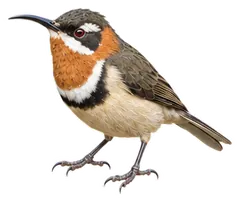 Western SpinebillAcanthorhynchus superciliosus
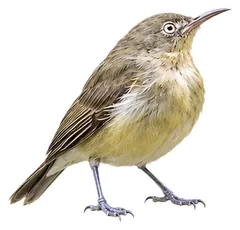 Green-backed HoneyeaterGlycichaera fallax
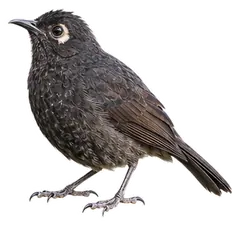 Sooty HoneyeaterMelionyx fuscus
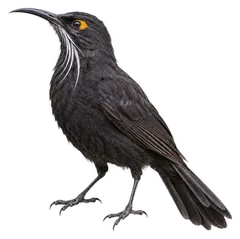 Long-bearded HoneyeaterMelionyx princeps
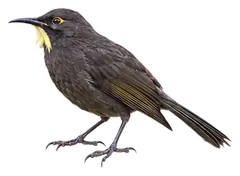 Short-bearded HoneyeaterMelionyx nouhuysi
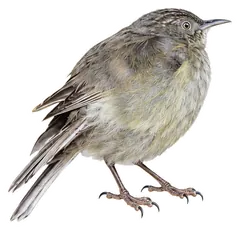 Leaden HoneyeaterPtiloprora plumbea
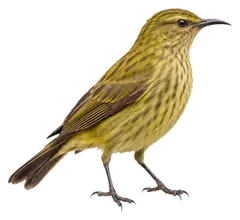 Yellowish-streaked HoneyeaterPtiloprora meekiana
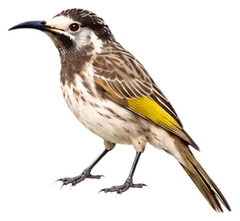
Download illustration
Free to use with credit: “Illustration: Bird Album (birdalbum.com)”. Drawn by AI from a reference photo by Ashley Anderson. ↗
Heard it but can't see it? Mingji identifies birds by sound and photo, on your phone.
In other languages
- EnglishWhite-fronted Honeyeater
- 简体中文白额澳蜜鸟
- 繁體中文白額澳吸蜜鳥
- 日本語シロビタイキバネミツスイ
- DeutschWeißstirn-Honigfresser
- FrançaisMéliphage à front blanc
- EspañolMielero frentiblanco
- Portuguêspapa-mel-de-testa-branca
- ItalianoSucciamiele frontebianca
- NederlandsWitvoorhoofdhoningeter
- РусскийБелолобый медосос
- Svenskavitpannad honungsfågel
- DanskHvidpandet Honningæder
- Polskipstromiodzik