 Bird Album
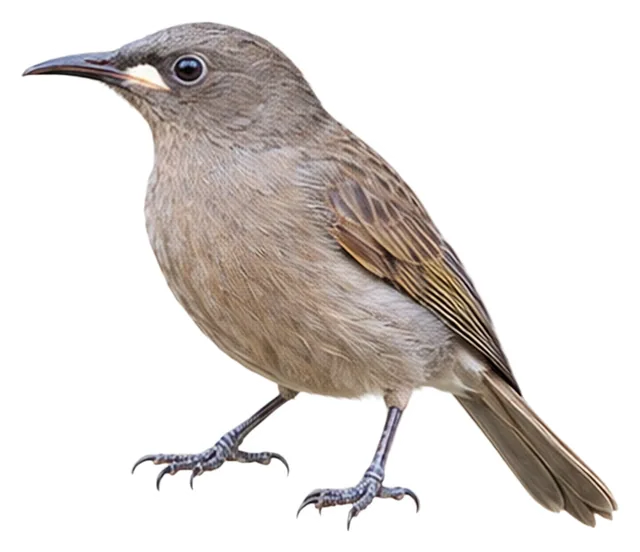
White-gaped Honeyeater
Stomiopera unicolor (Gould, 1843)
31 gWeight
The white-gaped honeyeater (Stomiopera unicolor) is a species of bird in the family Meliphagidae.
Busiest months: July–October · Most records: Australia
Where and when it's recorded

White-gaped Honeyeater has been recorded at 27 of the 8,171 birding hotspots we track, in 1 country or region.
Records by month Southern Hemisphere
Where it's recorded most
- Broome Bird ObservatoryAustralia2,558 records
- George Brown Darwin Botanic GardensAustralia1,392 records
- Tyto WetlandsAustralia1,204 records
More places
- East Point Mangrove BoardwalkAustralia1,048 records
- Muirhead bushlandAustralia995 records
- East PointAustralia673 records
- Fogg Dam Conservation ReserveAustralia651 records
- Buffalo CreekAustralia604 records
- Holmes Jungle Nature ReserveAustralia519 records
- Townsville Town Common Conservation ParkAustralia431 records
Countries and regions with the most records
eBird records via GBIF up to 2024-12-31. A record means someone listed it; more records partly mean more birders, not more birds.
About
The white-gaped honeyeater (Stomiopera unicolor) is a species of bird in the family Meliphagidae.
Excerpt from Wikipedia, CC BY-SA 4.0 · authors · Read more on Wikipedia
Questions
How big is the White-gaped Honeyeater?
The White-gaped Honeyeater weighs around 31 g.
Where does the White-gaped Honeyeater live?
Its breeding range: Australasia: northeastern Western Australia to northeastern Queensland (northern Australia). It is most often recorded in Australia.
When is the best time to see the White-gaped Honeyeater?
At the hotspots we track, it is recorded most in July, August, September and October (Southern Hemisphere).
Is the White-gaped Honeyeater endangered?
The IUCN Red List classifies the White-gaped Honeyeater as Least Concern.
What does the White-gaped Honeyeater eat?
Main food: Omnivore.
What family is the White-gaped Honeyeater in?
It belongs to the family Honeyeaters (Meliphagidae), order Passerines (Passeriformes).
At a glance
- Weight
- 31 g
- Habitat
- Forest
- Diet
- Omnivore
- Lifestyle
- Perches in trees
- Migration
- Resident (barely migrates)
- Conservation
- Least Concern
More measurements
- Wing
- 95 mm
- Tail
- 78 mm
- Bill
- 23 mm
- Tarsus
- 25 mm
Averages from the AVONET dataset; length from field guides where available.
Range
Australasia: northeastern Western Australia to northeastern Queensland (northern Australia)
Breeding range, IOC World Bird List 15.2
Classification
- Order
- Passerines Passeriformes
- Family
- Honeyeaters Meliphagidae
- Genus
- Stomiopera
Other birds in the genus Stomiopera
 Yellow HoneyeaterStomiopera flava
 Dark-eared MyzaMyza celebensis
 White-eared MyzaMyza sarasinorum
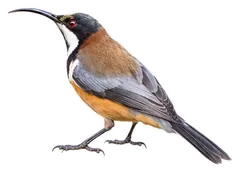 Eastern SpinebillAcanthorhynchus tenuirostris
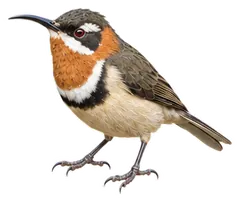 Western SpinebillAcanthorhynchus superciliosus
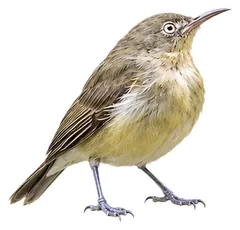 Green-backed HoneyeaterGlycichaera fallax
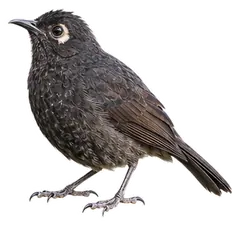 Sooty HoneyeaterMelionyx fuscus
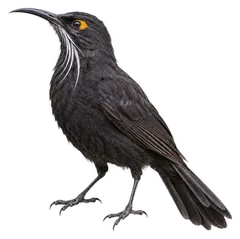 Long-bearded HoneyeaterMelionyx princeps
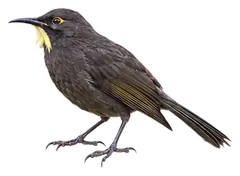 Short-bearded HoneyeaterMelionyx nouhuysi
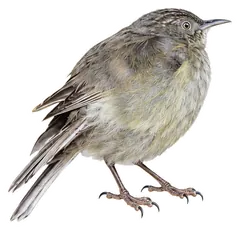 Leaden HoneyeaterPtiloprora plumbea
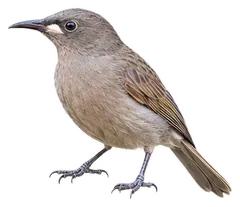
Download illustration
Free to use with credit: “Illustration: Bird Album (birdalbum.com)”. Drawn by AI from a reference photo by Graham Winterflood. ↗
Heard it but can't see it? Mingji identifies birds by sound and photo, on your phone.
In other languages
- EnglishWhite-gaped Honeyeater
- 简体中文白颊纹吸蜜鸟
- 繁體中文白嘴吸蜜鳥
- 日本語クチシロミツスイ
- DeutschWulsthonigfresser
- FrançaisMéliphage unicolore
- EspañolMielero unicolor
- Portuguêspapa-mel-unicolor
- ItalianoSucciamiele rimabianca
- NederlandsWitsnavelhoningeter
- РусскийОдноцветный медосос
- Svenskaenfärgad honungsfågel
- DanskEnsfarvet Honningæder
- Polskikantarowiec jednobarwny