 Bird Album
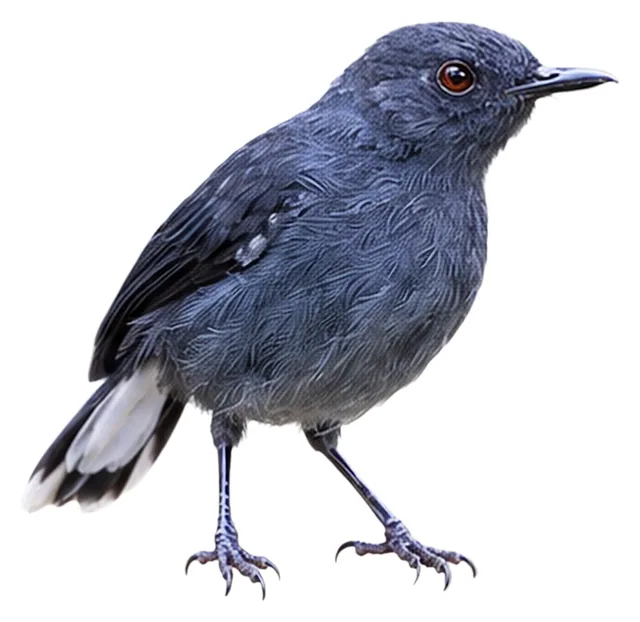
White-tailed Warbler
Poliolais lopezi (Alexander, 1903)
12 gWeight
The white-tailed warbler (Poliolais lopezi) is a species of bird in the family Cisticolidae, the only species of the genus Poliolais.
Busiest months: March and December · Most records: Cameroon, Equatorial Guinea
Where and when it's recorded

White-tailed Warbler has been recorded at 7 of the 8,171 birding hotspots we track, in 2 countries and regions.
Records by month Northern Hemisphere
Where it's recorded most
- Bakossi Mountains – Kodmin ForestCameroon30 records
- Mt. Cameroon – Guinness TrackCameroon20 records
- Mt. KupeCameroon20 records
More places
- BBPP Research Station – MokaEquatorial Guinea14 records
- Mt. Kupe – Max's trailCameroon10 records
- RC de la Caldera de Luba – North (American) CampEquatorial Guinea2 records
- Sendero de Pico BiaoEquatorial Guinea1 record
Countries and regions with the most records
eBird records via GBIF up to 2024-12-31. A record means someone listed it; more records partly mean more birders, not more birds.
About
The white-tailed warbler (Poliolais lopezi) is a species of bird in the family Cisticolidae, the only species of the genus Poliolais. It is native to the Western High Plateau and Bioko.
Excerpt from Wikipedia, CC BY-SA 4.0 · authors · Read more on Wikipedia
Questions
How big is the White-tailed Warbler?
The White-tailed Warbler weighs around 12 g.
Where does the White-tailed Warbler live?
Its breeding range: Africa: west-central. It is most often recorded in Cameroon and Equatorial Guinea.
When is the best time to see the White-tailed Warbler?
At the hotspots we track, it is recorded most in March and December (Northern Hemisphere).
Is the White-tailed Warbler endangered?
The IUCN Red List classifies the White-tailed Warbler as Least Concern.
What does the White-tailed Warbler eat?
Main food: Insects & other invertebrates.
What family is the White-tailed Warbler in?
It belongs to the family Cisticolas & Allies (Cisticolidae), order Passerines (Passeriformes).
At a glance
- Weight
- 12 g
- Habitat
- Forest
- Diet
- Insects & other invertebrates
- Lifestyle
- Perches in trees
- Migration
- Resident (barely migrates)
- Conservation
- Least Concern
More measurements
- Wing
- 52 mm
- Tail
- 29 mm
- Bill
- 15 mm
- Tarsus
- 21 mm
Averages from the AVONET dataset; length from field guides where available.
Range
Africa: west-central
Breeding range, IOC World Bird List 15.2
Classification
- Order
- Passerines Passeriformes
- Family
- Cisticolas & Allies Cisticolidae
- Genus
- Poliolais
More from the family Cisticolas & Allies
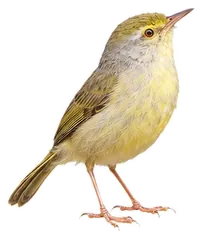 Common JeryNeomixis tenella
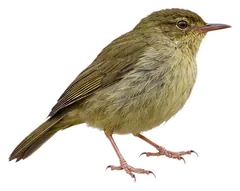 Green JeryNeomixis viridis
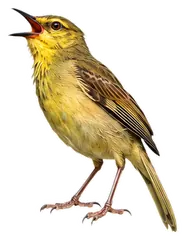 Stripe-throated JeryNeomixis striatigula
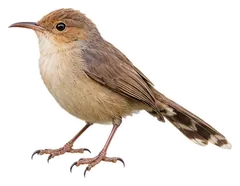 Red-faced CisticolaCisticola erythrops
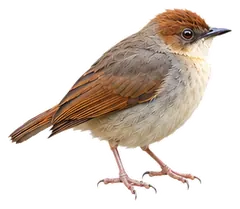 Singing CisticolaCisticola cantans
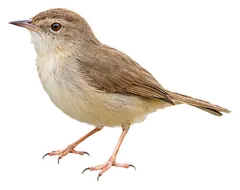 Whistling CisticolaCisticola lateralis
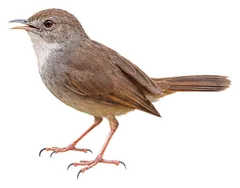 Trilling CisticolaCisticola woosnami
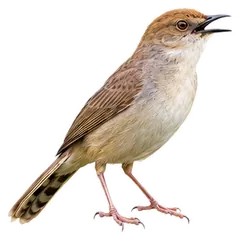 Chattering CisticolaCisticola anonymus
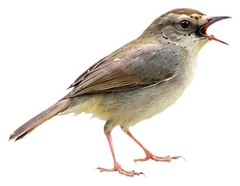 Bubbling CisticolaCisticola bulliens
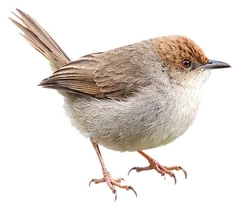 Hunter's CisticolaCisticola hunteri
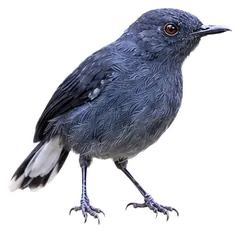
Download illustration
Free to use with credit: “Illustration: Bird Album (birdalbum.com)”. Drawn by AI from a reference photo by Dubi Shapiro. ↗
Heard it but can't see it? Mingji identifies birds by sound and photo, on your phone.
In other languages
- EnglishWhite-tailed Warbler
- 简体中文白尾拱翅莺
- 繁體中文白尾拱翅鶯
- 日本語フェルナンドポームシクイ
- DeutschWeißschwanzsänger
- FrançaisPoliolaïs à queue blanche
- EspañolCamaróptera coliblanca
- Portuguêscamaróptera-de-cauda-branca
- ItalianoSilvide codabianca
- NederlandsWitstaartzanger
- РусскийШиферная белохвостка
- Svenskavitstjärtad sångare
- DanskHvidhalet Sanger
- Polskibiałosterka