 Bird Album
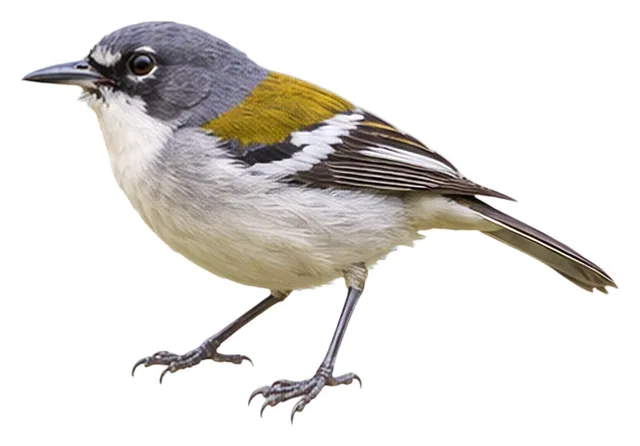
White-winged Warbler
Xenoligea montana (Chapman, 1917)
12 gWeight
The white-winged warbler (Xenoligea montana), also called the white-winged ground-warbler or Hispaniolan highland-tanager, is a Vulnerable species of bird of the family Phaenicophilidae, the Hispaniolan tanagers.
Busiest months: January and March · Most records: Dominican Republic
Where and when it's recorded

White-winged Warbler has been recorded at 4 of the 8,171 birding hotspots we track, in 1 country or region.
Records by month Northern Hemisphere
Where it's recorded most
- ZapoténDominican Republic486 records
- Rabo de GatoDominican Republic8 records
- Reserva Científica Ebano VerdeDominican Republic2 records
More places
- Cabo Rojo - PedernalesDominican Republic1 record
Countries and regions with the most records
eBird records via GBIF up to 2024-12-31. A record means someone listed it; more records partly mean more birders, not more birds.
About
The white-winged warbler (Xenoligea montana), also called the white-winged ground-warbler or Hispaniolan highland-tanager, is a Vulnerable species of bird of the family Phaenicophilidae, the Hispaniolan tanagers. It is endemic to the island of Hispaniola which is shared by Haiti and the Dominican Republic.
Excerpt from Wikipedia, CC BY-SA 4.0 · authors · Read more on Wikipedia
Questions
How big is the White-winged Warbler?
The White-winged Warbler weighs around 12 g.
Where does the White-winged Warbler live?
Its breeding range: North America: Hispaniola. It is most often recorded in Dominican Republic.
When is the best time to see the White-winged Warbler?
At the hotspots we track, it is recorded most in January and March (Northern Hemisphere).
Is the White-winged Warbler endangered?
The IUCN Red List classifies the White-winged Warbler as Vulnerable.
What does the White-winged Warbler eat?
Main food: Insects & other invertebrates.
What family is the White-winged Warbler in?
It belongs to the family Greater Antillean Tanagers (Phaenicophilidae), order Passerines (Passeriformes).
At a glance
- Weight
- 12 g
- Habitat
- Shrubland
- Diet
- Insects & other invertebrates
- Lifestyle
- Perches in trees
- Migration
- Resident (barely migrates)
- Conservation
- Vulnerable
More measurements
- Wing
- 64 mm
- Tail
- 66 mm
- Bill
- 15 mm
- Tarsus
- 20 mm
Averages from the AVONET dataset; length from field guides where available.
Range
North America: Hispaniola
Breeding range, IOC World Bird List 15.2
Classification
- Order
- Passerines Passeriformes
- Family
- Greater Antillean Tanagers Phaenicophilidae
- Genus
- Xenoligea
More from the family Greater Antillean Tanagers
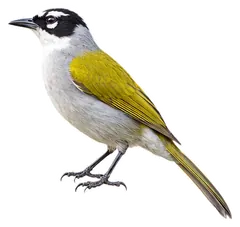 Black-crowned Palm-tanagerPhaenicophilus palmarum
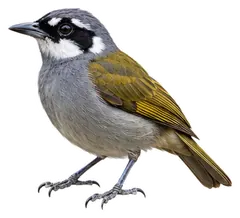 Grey-crowned Palm-tanagerPhaenicophilus poliocephalus
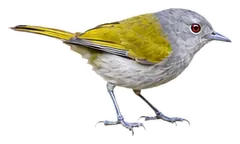 Green-tailed WarblerMicroligea palustris
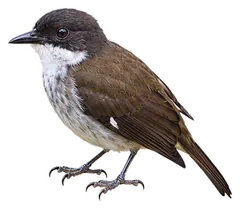 Puerto Rican TanagerNesospingus speculiferus
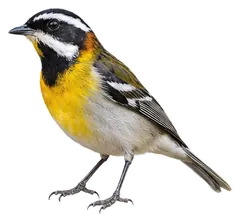 Western SpindalisSpindalis zena
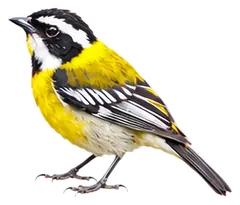 Hispaniolan SpindalisSpindalis dominicensis
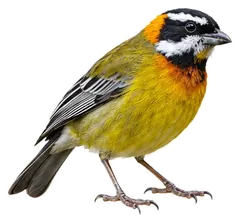 Puerto Rican SpindalisSpindalis portoricensis
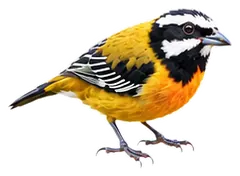 Jamaican SpindalisSpindalis nigricephala
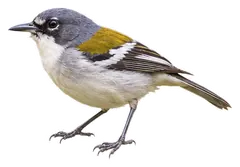
Download illustration
Free to use with credit: “Illustration: Bird Album (birdalbum.com)”. Drawn by AI from a reference photo by Pedro Genaro Rodriguez. ↗
Heard it but can't see it? Mingji identifies birds by sound and photo, on your phone.
In other languages
- EnglishWhite-winged Warbler
- 简体中文白翅地唐纳雀
- 繁體中文白翅地鶯
- 日本語ハジロアメリカムシクイ
- DeutschSpiegelpalmtangare
- FrançaisPetit Quatre-yeux
- EspañolReinita montana
- Portuguêsquatro-olhos-de-asa-branca
- ItalianoParula alibianche
- NederlandsWitvleugelzanger
- РусскийБелокрылая эспаньола
- Svenskavitvingad sångtangara
- DanskHvidvinget Sanger
- Polskihispaniolka