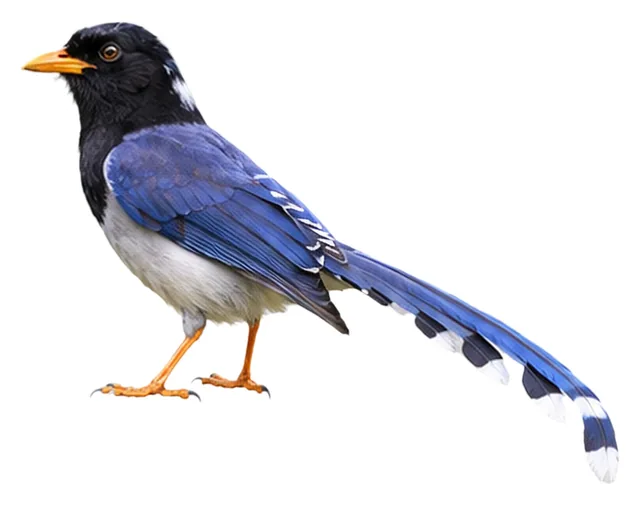
Yellow-billed Blue Magpie
Urocissa flavirostris (Blyth, 1846)
≈44 cmLength149 gWeight
It has a black head and a blue-purple back, with the tail making up more than half its body length.
Busiest months: April · Most records: Bhutan, India, China
Looks like Red-billed Blue Magpie
How to identify
Field marks
- Head, neck and breast black, with a white patch on the nape
- Upperparts purple-blue; wings and tail brighter
- Underparts white with a slight pale purple tinge
- Tail long; blue feathers white-tipped
Male, female and young
Sexes similar.
Similar species
Where and when it's recorded
Busiest months: April · Most records: Bhutan, India, China

Yellow-billed Blue Magpie has been recorded at 94 of the 8,276 birding hotspots we track, in 6 countries and regions.
Records by month Northern Hemisphere
Where it's recorded most
- Munsyari – Bheema WodeyarIndia748 records
- Hike to Tiger's Nest MonasteryBhutan315 records
- ChelelaBhutan294 records
More places
- Dochula PassBhutan293 records
- Dochula – Royal Botanical ParkBhutan288 records
- PelelaBhutan276 records
- Margalla Hills Trail 5Pakistan139 records
- Sengor – camp and upper Lingmethan RdBhutan95 records
- Jigme Dorji NP – Cheri valleyBhutan58 records
- Australian Base Camp - Raptor Migration SiteNepal57 records
Countries and regions with the most records
eBird records via GBIF up to 2024-12-31. A record means someone listed it; more records partly mean more birders, not more birds.
About
The yellow-billed blue-magpie or gold-billed magpie (Urocissa flavirostris) is a passerine bird in the family Corvidae, along with crows and jays. It forms a superspecies with the Taiwan (China) blue magpie and the red-billed blue magpie. The species' range covers the northern parts of the Indian subcontinent, including the lower Himalayan foothills, with a disjunct population in Vietnam.
Excerpt from Wikipedia, CC BY-SA 4.0 · authors · Read more on Wikipedia
Questions
How big is the Yellow-billed Blue Magpie?
The Yellow-billed Blue Magpie is about ≈44 cm long and weighs around 149 g.
Where does the Yellow-billed Blue Magpie live?
Its breeding range: Oriental: Himalayas. It is most often recorded in Bhutan, India and China.
When is the best time to see the Yellow-billed Blue Magpie?
At the hotspots we track, it is recorded most in April (Northern Hemisphere).
Is the Yellow-billed Blue Magpie endangered?
The IUCN Red List classifies the Yellow-billed Blue Magpie as Least Concern.
What does the Yellow-billed Blue Magpie eat?
Main food: Omnivore.
What family is the Yellow-billed Blue Magpie in?
It belongs to the family Crows, Jays (Corvidae), order Passerines (Passeriformes).
At a glance
- Length
- ≈44 cm
- Weight
- 149 g
- Habitat
- Forest
- Diet
- Omnivore
- Lifestyle
- Perches in trees
- Migration
- Resident (barely migrates)
- Conservation
- Least Concern
More measurements
- Wing
- 185 mm
- Tail
- 392 mm
- Bill
- 39 mm
- Tarsus
- 48 mm
Averages from the AVONET dataset; length from field guides where available.
Range
Oriental: Himalayas
Breeding range, IOC World Bird List 15.2
Subspecies · 1
- Urocissa flavirostris flavirostris Nepal to n Myanmar and s China
Classification
- Order
- Passerines Passeriformes
- Family
- Crows, Jays Corvidae
- Genus
- Urocissa
Other birds in the genus Urocissa
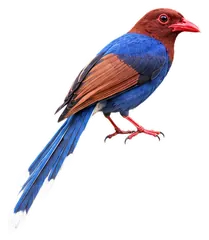 Sri Lanka Blue MagpieUrocissa ornata
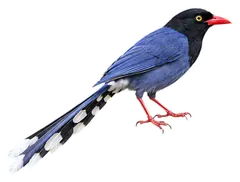 Taiwan Blue MagpieUrocissa caerulea
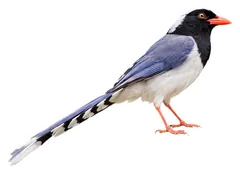 Red-billed Blue MagpieUrocissa erythroryncha
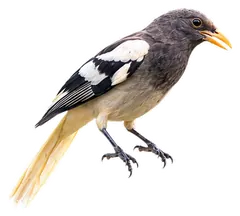 White-winged MagpieUrocissa whiteheadi
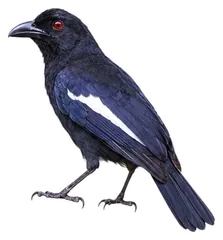 Malayan Black MagpiePlatysmurus leucopterus
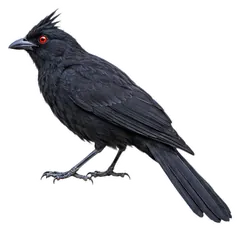 Bornean Black MagpiePlatysmurus aterrimus
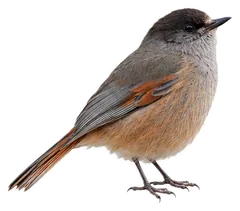 Siberian JayPerisoreus infaustus
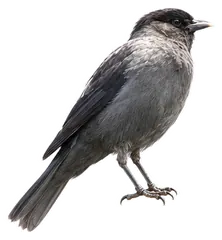 Sichuan JayPerisoreus internigrans
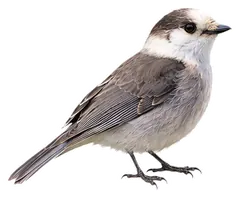 Canada JayPerisoreus canadensis
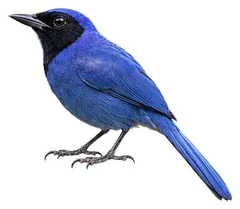 Black-collared JayCyanolyca armillata
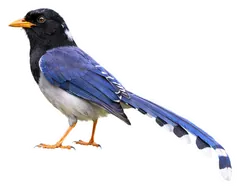
Download illustration
Free to use with credit: “Illustration: Bird Album (birdalbum.com)”. Drawn by AI from a reference photo by Dibyendu Ash. ↗

Heard it but can't see it? Mingji identifies birds by sound and photo, on your phone.
In other languages
- EnglishYellow-billed Blue Magpie
- 简体中文黄嘴蓝鹊
- 繁體中文黃嘴藍鵲
- 日本語キバシサンジャク
- DeutschGelbschnabelkitta
- FrançaisPirolle à bec jaune
- EspañolUrraca piquigualda
- Portuguêspega-azul-de-bico-amarelo
- ItalianoGazza beccodorato
- NederlandsGeelsnavelkitta
- РусскийЖелтоклювая лазоревая сорока
- Svenskagulnäbbad blåskata
- DanskGulnæbbet Kitta
- Polskikitta żółtodzioba