 Bird Album
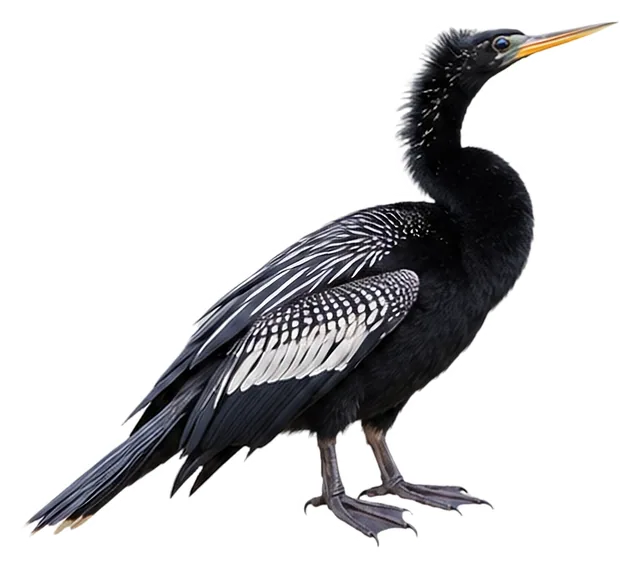
Anhinga
Anhinga anhinga (Linnaeus, 1766)
1.2 kgWeight
The anhinga (Anhinga anhinga), sometimes called darter, American darter, snakebird, or water turkey, is a water bird of the warmer parts of the Americas.
Busiest months: January–March · Most records: United States, Costa Rica, Brazil
Where and when it's recorded

Anhinga has been recorded at 772 of the 8,171 birding hotspots we track, in 27 countries and regions.
Records by month Northern Hemisphere
Where it's recorded most
- Sweetwater Wetlands ParkUnited States15,633 records
- Audubon Corkscrew Swamp SanctuaryUnited States14,735 records
- Merritt Island NWR – Black Point Wildlife DriveUnited States14,206 records
More places
- The Celery FieldsUnited States13,775 records
- Lake Apopka Wildlife DriveUnited States13,078 records
- Green Cay Wetlands & Nature CenterUnited States12,919 records
- Estero Llano Grande SP WBCUnited States12,340 records
- Wakodahatchee WetlandsUnited States10,163 records
- Orlando WetlandsUnited States9,275 records
- Six Mile Cypress Slough PreserveUnited States8,113 records
Countries and regions with the most records
eBird records via GBIF up to 2024-12-31. A record means someone listed it; more records partly mean more birders, not more birds.
About
The anhinga (Anhinga anhinga), sometimes called darter, American darter, snakebird, or water turkey, is a water bird of the warmer parts of the Americas. The word anhinga comes from a'ñinga in the Brazilian Tupi language and means "devil bird" or "snake bird". The origin of the name is apparent when swimming: only the neck appears above water, so the bird looks like a snake ready to strike.
Excerpt from Wikipedia, CC BY-SA 4.0 · authors · Read more on Wikipedia
Questions
How big is the Anhinga?
The Anhinga weighs around 1.2 kg.
Where does the Anhinga live?
Its breeding range: North America, Middle America, South America: south-central, southeastern USA and west-central Mexico to northern Argentina, Cuba and Cayman Islands. It is most often recorded in United States, Costa Rica and Brazil.
When is the best time to see the Anhinga?
At the hotspots we track, it is recorded most in January, February and March (Northern Hemisphere).
Is the Anhinga endangered?
The IUCN Red List classifies the Anhinga as Least Concern.
What does the Anhinga eat?
Main food: Fish, shrimp & shellfish.
What family is the Anhinga in?
It belongs to the family Anhingas, Darters (Anhingidae), order Suliformes.
At a glance
- Weight
- 1.2 kg
- Habitat
- Wetland
- Diet
- Fish, shrimp & shellfish
- Lifestyle
- On the water surface
- Migration
- Resident (barely migrates)
- Conservation
- Least Concern
More measurements
- Wing
- 340 mm
- Tail
- 267 mm
- Bill
- 86 mm
- Tarsus
- 39 mm
Averages from the AVONET dataset; length from field guides where available.
Range
North America, Middle America, South America: south-central, southeastern USA and west-central Mexico to northern Argentina, Cuba and Cayman Islands
Breeding range, IOC World Bird List 15.2
Classification
- Order
- Suliformes
- Family
- Anhingas, Darters Anhingidae
- Genus
- Anhinga
Other birds in the genus Anhinga
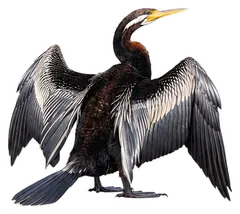 Australasian DarterAnhinga novaehollandiae
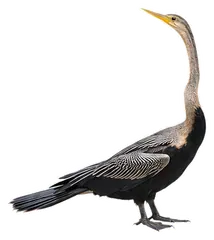 Oriental DarterAnhinga melanogaster
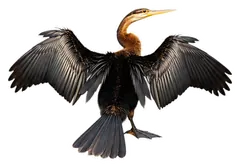 African DarterAnhinga rufa
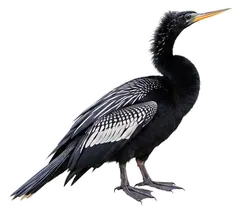
Download illustration
Free to use with credit: “Illustration: Bird Album (birdalbum.com)”. Drawn by AI from reference photos. ↗
Heard it but can't see it? Mingji identifies birds by sound and photo, on your phone.
In other languages
- EnglishAnhinga
- 简体中文美洲蛇鹈
- 繁體中文美洲蛇鵜
- 日本語アメリカヘビウ
- DeutschAmerika-Schlangenhalsvogel
- FrançaisAnhinga d’Amérique
- EspañolAnhinga americana
- Portuguêsbiguatinga
- ItalianoAninga americana
- NederlandsAmerikaanse Slangenhalsvogel
- РусскийАмериканская змеешейка
- Svenskaamerikansk ormhalsfågel
- DanskSydamerikansk Slangehalsfugl
- Polskiwężówka amerykańska