 Bird Album
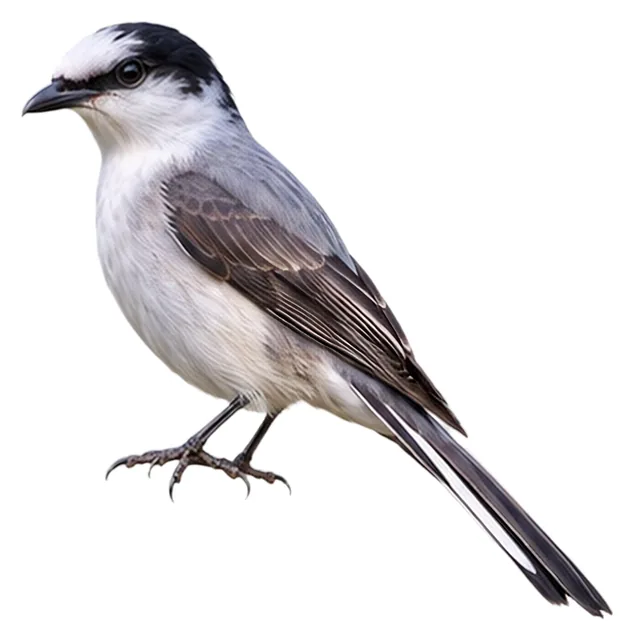
Ashy Minivet
Pericrocotus divaricatus (Raffles, 1822)
≈18 cmLength25 gWeight
Unusually for a minivet, it is gray, white and black, with no yellow, orange or red.
Busiest months: April and October · Most records: China, Thailand, Singapore
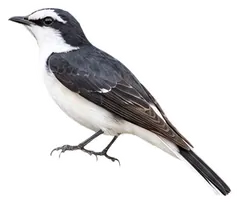
Looks like Swinhoe's Minivet
How to identify
Field marks
- Black crown and white forehead in the male
- Gray upperparts and nearly white underparts in the male
- A single white band across the flight feathers
- White outer tail feathers; black bill, legs and feet
Male, female and young
The female has a gray crown, with only a single black band between the bill and eye and a narrow white band above it.
Voice
A high-pitched, metallic trill.
Similar species
Where and when it's recorded

Ashy Minivet has been recorded at 761 of the 8,171 birding hotspots we track, in 16 countries and regions.
Records by month Northern Hemisphere
Where it's recorded most
- Kenting NP – Sheding Lingxiao Pavilion (Raptors Observation Spot)Taiwan (China)1,256 records
- Matsu – Dongyin Vegetable FarmChina675 records
- Khao Dinsor (Khao Dinso) / Chumphon Raptor CenterThailand564 records
More places
- Matsu – DongyinChina451 records
- Phutthamonthon ParkThailand437 records
- Angkor WatCambodia415 records
- Po ToiHong Kong (China)401 records
- TmatboeyCambodia292 records
- Jurong Lake GardensSingapore292 records
- Pasir Ris ParkSingapore279 records
Countries and regions with the most records
eBird records via GBIF up to 2024-12-31. A record means someone listed it; more records partly mean more birders, not more birds.
About
The ashy minivet (Pericrocotus divaricatus) is a passerine bird of eastern Asia belonging to the minivet genus Pericrocotus in the cuckooshrike family Campephagidae. They forage in the canopy, often along with other minivets and join mixed-species foraging flocks.
Excerpt from Wikipedia, CC BY-SA 4.0 · authors · Read more on Wikipedia
Questions
How big is the Ashy Minivet?
The Ashy Minivet is about ≈18 cm long and weighs around 25 g.
Where does the Ashy Minivet live?
Its breeding range: Palearctic: southeastern Siberia, northeastern China, Korean Peninsula and Japan (main islands). It is most often recorded in China, Thailand and Singapore.
When is the best time to see the Ashy Minivet?
At the hotspots we track, it is recorded most in April and October (Northern Hemisphere).
Is the Ashy Minivet endangered?
The IUCN Red List classifies the Ashy Minivet as Least Concern.
What does the Ashy Minivet eat?
Main food: Insects & other invertebrates.
What family is the Ashy Minivet in?
It belongs to the family Cuckooshrikes (Campephagidae), order Passerines (Passeriformes).
At a glance
- Length
- ≈18 cm
- Weight
- 25 g
- Habitat
- Forest
- Diet
- Insects & other invertebrates
- Lifestyle
- Perches in trees
- Migration
- Migratory
- Conservation
- Least Concern
More measurements
- Wing
- 96 mm
- Tail
- 90 mm
- Bill
- 18 mm
- Tarsus
- 16 mm
Averages from the AVONET dataset; length from field guides where available.
Range
Palearctic: southeastern Siberia, northeastern China, Korean Peninsula and Japan (main islands)
Breeding range, IOC World Bird List 15.2
Classification
- Order
- Passerines Passeriformes
- Family
- Cuckooshrikes Campephagidae
- Genus
- Pericrocotus
Other birds in the genus Pericrocotus
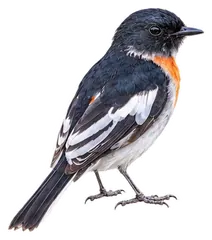 White-bellied MinivetPericrocotus erythropygius
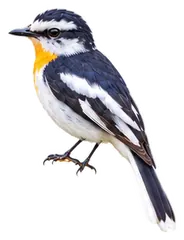 Jerdon's MinivetPericrocotus albifrons
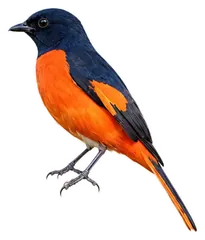 Fiery MinivetPericrocotus igneus
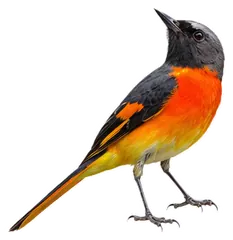 Small MinivetPericrocotus cinnamomeus
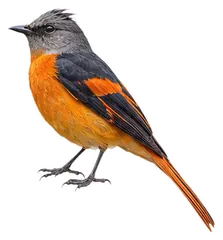 Grey-chinned MinivetPericrocotus solaris
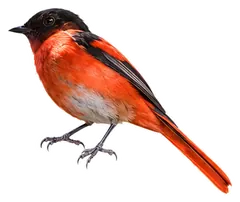 Sunda MinivetPericrocotus miniatus
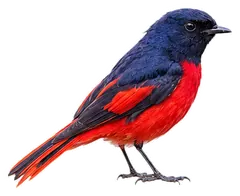 Short-billed MinivetPericrocotus brevirostris
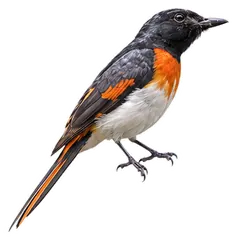 Little MinivetPericrocotus lansbergei
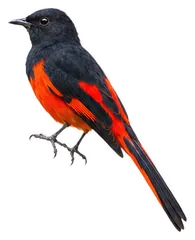 Long-tailed MinivetPericrocotus ethologus
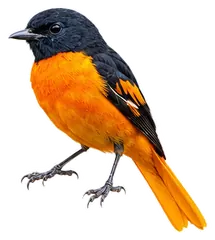 Orange MinivetPericrocotus flammeus
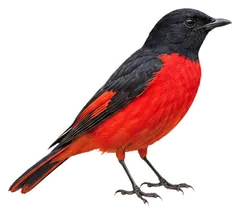 Scarlet MinivetPericrocotus speciosus
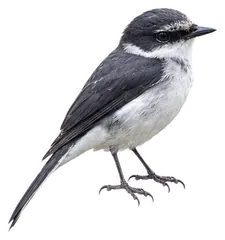 Ryukyu MinivetPericrocotus tegimae
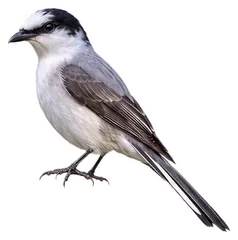
Download illustration
Free to use with credit: “Illustration: Bird Album (birdalbum.com)”. Drawn by AI from a reference photo by Ariefrahman. ↗

Heard it but can't see it? Mingji identifies birds by sound and photo, on your phone.