 Bird Album
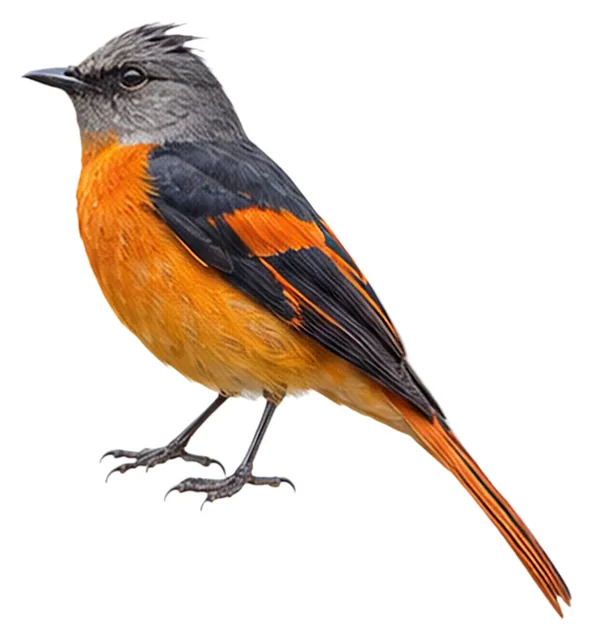
Grey-chinned Minivet
Pericrocotus solaris Blyth, 1846
17–19 cmLength14 gWeight
The male has a dark gray head and back and orange underparts, replaced by bright yellow in the female.
Busiest months: December–March · Most records: China, Malaysia, Thailand
How to identify
Field marks
- Male has a dark gray head and back and a pale gray chin
- Male has an orange-yellow throat
- Male has orange underparts and lower back
- Male has blackish wings and orange tips to the greater coverts
Male, female and young
In the female, these orange areas are replaced by bright yellow; immatures resemble the female, with yellow-olive barring on the back.
Voice
Twitters while foraging; contact calls include the high-pitched “sri-sisi” and “chirit-chirit”.
Where and when it's recorded

Grey-chinned Minivet has been recorded at 504 of the 8,171 birding hotspots we track, in 11 countries and regions.
Records by month Northern Hemisphere
Where it's recorded most
- Tai Po Kau Nature ReserveHong Kong (China)1,976 records
- Kinabalu Park – HQ areaMalaysia1,566 records
- Bukit FraserMalaysia1,222 records
More places
- Taipei – WulaiTaiwan (China)710 records
- Tai Lam Country ParkHong Kong (China)703 records
- Dasyueshan IBA – Hengliu Creek (15K)Taiwan (China)695 records
- Dasyueshan IBA – Dasyueshan Forest-Road 23.5KTaiwan (China)612 records
- Pak Sha OHong Kong (China)582 records
- Doi Inthanon NPThailand511 records
- Taipei – Xindian SikanshuiTaiwan (China)507 records
Countries and regions with the most records
eBird records via GBIF up to 2024-12-31. A record means someone listed it; more records partly mean more birders, not more birds.
About
The grey-chinned minivet (Pericrocotus solaris) is a species of bird in the family Campephagidae. It is found from the Himalayas to China, Taiwan (China) and Southeast Asia. Its natural habitat is forests about 1,000–2,000 m (3,300–6,600 ft) in elevation.
Excerpt from Wikipedia, CC BY-SA 4.0 · authors · Read more on Wikipedia
Questions
How big is the Grey-chinned Minivet?
The Grey-chinned Minivet is about 17–19 cm long and weighs around 14 g.
Where does the Grey-chinned Minivet live?
Its breeding range: Oriental: Himalayas from west-central Nepal to eastern China, Taiwan (China), Vietnam, Sumatra and Borneo. It is most often recorded in China, Malaysia and Thailand.
When is the best time to see the Grey-chinned Minivet?
At the hotspots we track, it is recorded most in January, February, March and December (Northern Hemisphere).
Is the Grey-chinned Minivet endangered?
The IUCN Red List classifies the Grey-chinned Minivet as Least Concern.
What does the Grey-chinned Minivet eat?
Main food: Insects & other invertebrates.
What family is the Grey-chinned Minivet in?
It belongs to the family Cuckooshrikes (Campephagidae), order Passerines (Passeriformes).
At a glance
- Length
- 17–19 cm
- Weight
- 14 g
- Habitat
- Forest
- Diet
- Insects & other invertebrates
- Lifestyle
- Perches in trees
- Migration
- Resident (barely migrates)
- Conservation
- Least Concern
More measurements
- Wing
- 85 mm
- Tail
- 92 mm
- Bill
- 15 mm
- Tarsus
- 16 mm
Averages from the AVONET dataset; length from field guides where available.
Range
Oriental: Himalayas from west-central Nepal to eastern China, Taiwan (China), Vietnam, Sumatra and Borneo
Breeding range, IOC World Bird List 15.2
Subspecies · 2
- Pericrocotus solaris montpellieri s China
- Pericrocotus solaris griseogularis se China, Taiwan (China), Hainan, ne Laos and n Vietnam
Classification
- Order
- Passerines Passeriformes
- Family
- Cuckooshrikes Campephagidae
- Genus
- Pericrocotus
Other birds in the genus Pericrocotus
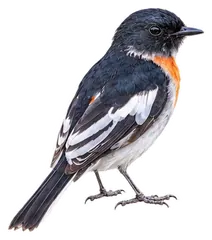 White-bellied MinivetPericrocotus erythropygius
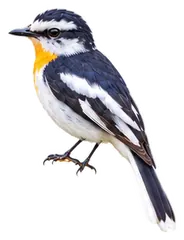 Jerdon's MinivetPericrocotus albifrons
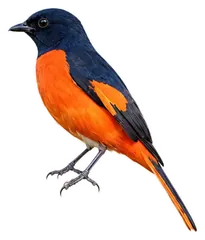 Fiery MinivetPericrocotus igneus
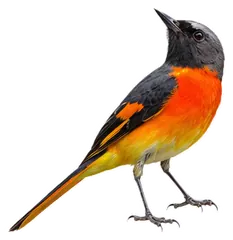 Small MinivetPericrocotus cinnamomeus
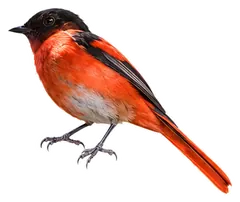 Sunda MinivetPericrocotus miniatus
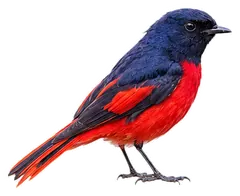 Short-billed MinivetPericrocotus brevirostris
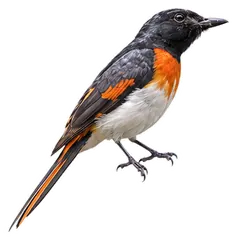 Little MinivetPericrocotus lansbergei
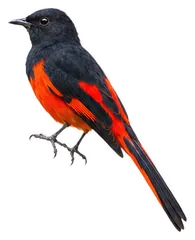 Long-tailed MinivetPericrocotus ethologus
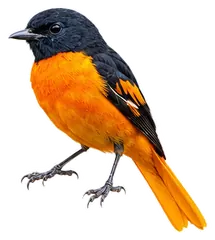 Orange MinivetPericrocotus flammeus
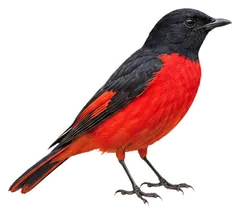 Scarlet MinivetPericrocotus speciosus
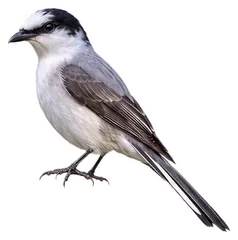 Ashy MinivetPericrocotus divaricatus
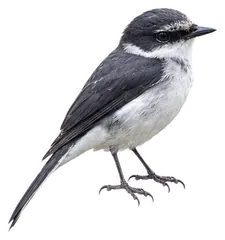 Ryukyu MinivetPericrocotus tegimae
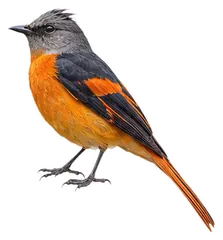
Download illustration
Free to use with credit: “Illustration: Bird Album (birdalbum.com)”. Drawn by AI from a reference photo by Charles J. Sharp. ↗

Heard it but can't see it? Mingji identifies birds by sound and photo, on your phone.
In other languages
- EnglishGrey-chinned Minivet
- 简体中文灰喉山椒鸟
- 繁體中文灰喉山椒
- 日本語ベニサンショウクイ
- DeutschGraukehl-Mennigvogel
- FrançaisMinivet mandarin
- EspañolMinivet gorjigrís
- Portuguêsminivete-de-faces-cinzentas
- ItalianoMinivet mentogrigio
- NederlandsGrijskeelmenievogel
- РусскийСерощёкий личинкоед
- Svenskagråstrupig minivett
- DanskOrientminivet
- Polskipurpurek pomarańczowy