 Bird Album
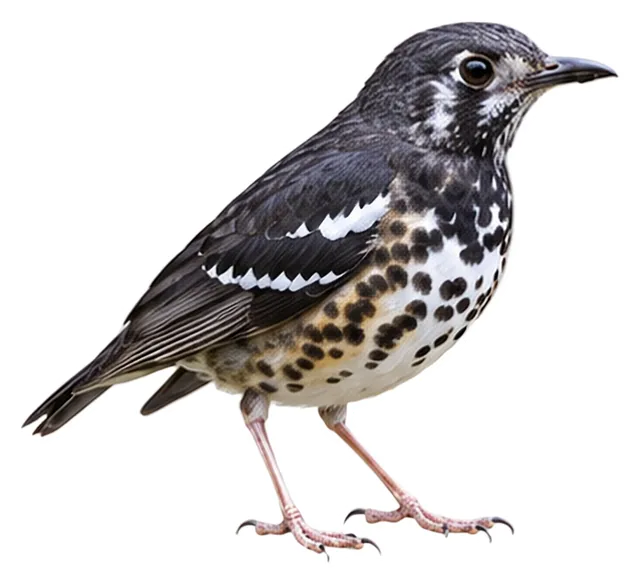
Ashy Thrush
Geokichla cinerea Bourns & Worcester, 1894
63 gWeight
The ashy thrush (Geokichla cinerea), also known as the ashy ground-thrush, is a species of bird in the family Turdidae.
Busiest months: February and May · Most records: Philippines
Where and when it's recorded
Busiest months: February and May · Most records: Philippines

Ashy Thrush has been recorded at 9 of the 8,276 birding hotspots we track, in 1 country or region.
Records by month Northern Hemisphere
Where it's recorded most
- La Mesa Eco Park, Quezon CityPhilippines666 records
- Palo Alto, BarasPhilippines34 records
- Mt. Makiling Forest Reserve – TrailPhilippines29 records
More places
- Jariel's Peak – Restaurant, Bgy. Magsaysay, InfantaPhilippines8 records
- Victoria Valley - Valley Golf, AntipoloPhilippines5 records
- Mt. Makiling Forest Reserve – TREESPhilippines4 records
- Victoria Valley Subdivision, AntipoloPhilippines4 records
- Subic Bay – Nabasan TrailPhilippines3 records
- Subic BayPhilippines1 record
Countries and regions with the most records
eBird records via GBIF up to 2024-12-31. A record means someone listed it; more records partly mean more birders, not more birds.
About
The ashy thrush (Geokichla cinerea), also known as the ashy ground-thrush, is a species of bird in the family Turdidae. It is endemic to the Philippines in Luzon and Mindoro. Its natural habitats are tropical moist lowland forests and or tropical moist montane forests.
Excerpt from Wikipedia, CC BY-SA 4.0 · authors · Read more on Wikipedia
Questions
How big is the Ashy Thrush?
The Ashy Thrush weighs around 63 g.
Where does the Ashy Thrush live?
Its breeding range: Oriental: Luzon group and Mindoro (northern Philippines). It is most often recorded in Philippines.
When is the best time to see the Ashy Thrush?
At the hotspots we track, it is recorded most in February and May (Northern Hemisphere).
Is the Ashy Thrush endangered?
The IUCN Red List classifies the Ashy Thrush as Vulnerable.
What does the Ashy Thrush eat?
Main food: Insects & other invertebrates.
What family is the Ashy Thrush in?
It belongs to the family Thrushes (Turdidae), order Passerines (Passeriformes).
At a glance
- Weight
- 63 g
- Habitat
- Forest
- Diet
- Insects & other invertebrates
- Lifestyle
- Varied
- Migration
- Migratory
- Conservation
- Vulnerable
More measurements
- Wing
- 114 mm
- Tail
- 71 mm
- Bill
- 22 mm
- Tarsus
- 31 mm
Averages from the AVONET dataset; length from field guides where available.
Range
Oriental: Luzon group and Mindoro (northern Philippines)
Breeding range, IOC World Bird List 15.2
Classification
- Order
- Passerines Passeriformes
- Family
- Thrushes Turdidae
- Genus
- Geokichla
Other birds in the genus Geokichla
 Siberian ThrushGeokichla sibirica
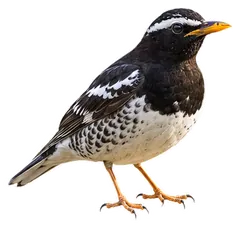 Pied ThrushGeokichla wardii
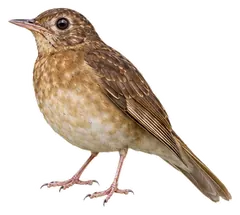 Grey Ground ThrushGeokichla princei
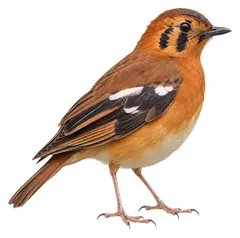 Black-eared Ground ThrushGeokichla camaronensis
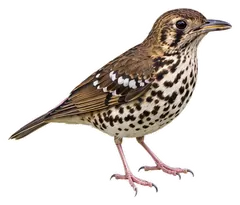 Spotted Ground ThrushGeokichla guttata
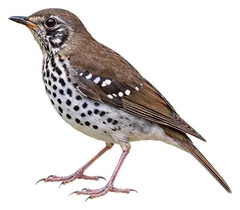 Spot-winged ThrushGeokichla spiloptera
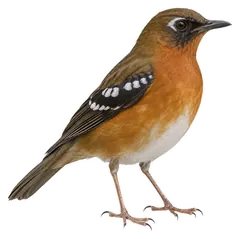 Crossley's Ground ThrushGeokichla crossleyi
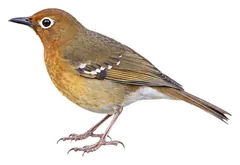 Abyssinian Ground ThrushGeokichla piaggiae
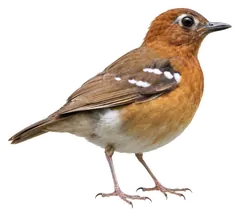 Oberländer's Ground ThrushGeokichla oberlaenderi
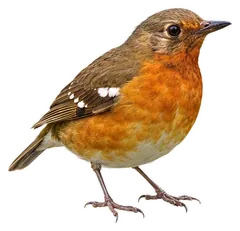 Orange Ground ThrushGeokichla gurneyi
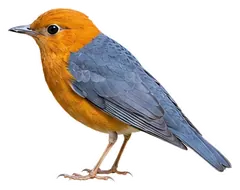 Orange-headed ThrushGeokichla citrina
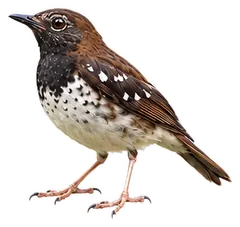 Buru ThrushGeokichla dumasi
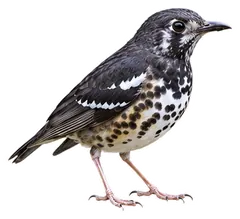
Download illustration
Free to use with credit: “Illustration: Bird Album (birdalbum.com)”. Drawn by AI from a reference photo by Carlos N. G. Bocos. ↗
Heard it but can't see it? Mingji identifies birds by sound and photo, on your phone.