 Bird Album
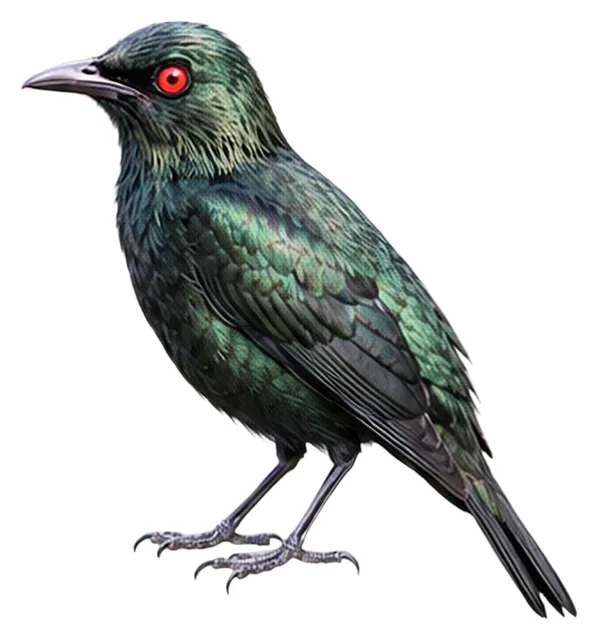
Asian Glossy Starling
Aplonis panayensis (Scopoli, 1786)
≈20 cmLength56 gWeight
Adults of this starling are glossy black and mostly red-eyed, and the species often gathers in large, noisy flocks.
Busiest months: March and October–November · Most records: Singapore, Malaysia, China
How to identify
Field marks
- Adult glossy black overall
- Adult’s iris bright red; only one subspecies has white eyes
Male, female and young
Adults of both sexes are glossy black; juveniles have blackish-brown upperparts and whitish underparts covered with dark brown streaks.
Where and when it's recorded

Asian Glossy Starling has been recorded at 354 of the 8,171 birding hotspots we track, in 9 countries and regions.
Records by month Northern Hemisphere
Where it's recorded most
- Singapore Botanic GardensSingapore2,846 records
- Dairy Farm Nature ParkSingapore2,525 records
- Sungei Buloh Wetland ReserveSingapore1,858 records
More places
- Sepilok – Rainforest Discovery CenterMalaysia1,604 records
- Taipei – National Taiwan University Main CampusTaiwan (China)1,413 records
- Taipei – Taipei Botanical GardenTaiwan (China)1,396 records
- Kranji MarshSingapore1,369 records
- Pulau UbinSingapore1,332 records
- Jurong Lake GardensSingapore1,312 records
- Pasir Ris ParkSingapore967 records
Countries and regions with the most records
eBird records via GBIF up to 2024-12-31. A record means someone listed it; more records partly mean more birders, not more birds.
About
The Asian glossy starling (Aplonis panayensis) is a species of starling in the family Sturnidae. It is found in Bangladesh, Brunei, northeastern India (Assam), Indonesia, Malaysia, Myanmar, the Philippines, Singapore, Cambodia and Thailand. Its natural habitats are subtropical or tropical moist lowland forest and subtropical or tropical mangrove forest.
Excerpt from Wikipedia, CC BY-SA 4.0 · authors · Read more on Wikipedia
Questions
How big is the Asian Glossy Starling?
The Asian Glossy Starling is about ≈20 cm long and weighs around 56 g.
Where does the Asian Glossy Starling live?
Its breeding range: Oriental, Australasia: widespread. It is most often recorded in Singapore, Malaysia and China.
When is the best time to see the Asian Glossy Starling?
At the hotspots we track, it is recorded most in March, October and November (Northern Hemisphere).
Is the Asian Glossy Starling endangered?
The IUCN Red List classifies the Asian Glossy Starling as Least Concern.
What does the Asian Glossy Starling eat?
Main food: Fruit.
What family is the Asian Glossy Starling in?
It belongs to the family Starlings, Rhabdornises (Sturnidae), order Passerines (Passeriformes).
At a glance
- Length
- ≈20 cm
- Weight
- 56 g
- Habitat
- Shrubland
- Diet
- Fruit
- Lifestyle
- Perches in trees
- Migration
- Resident (barely migrates)
- Conservation
- Least Concern
More measurements
- Wing
- 96 mm
- Tail
- 59 mm
- Bill
- 22 mm
- Tarsus
- 22 mm
Averages from the AVONET dataset; length from field guides where available.
Range
Oriental, Australasia: widespread
Breeding range, IOC World Bird List 15.2
Classification
- Order
- Passerines Passeriformes
- Family
- Starlings, Rhabdornises Sturnidae
- Genus
- Aplonis
Other birds in the genus Aplonis
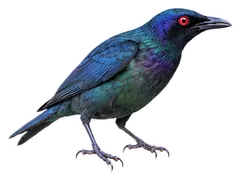 Metallic StarlingAplonis metallica
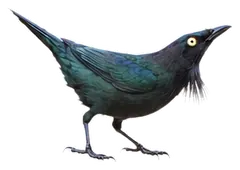 Yellow-eyed StarlingAplonis mystacea
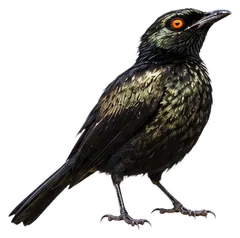 Singing StarlingAplonis cantoroides
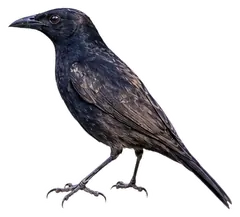 Tanimbar StarlingAplonis crassa
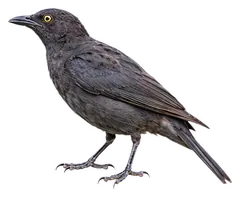 Atoll StarlingAplonis feadensis
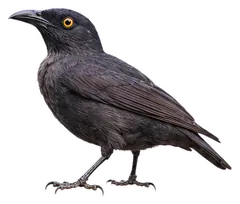 Rennell StarlingAplonis insularis
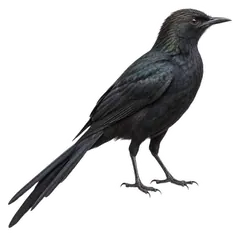 Long-tailed StarlingAplonis magna
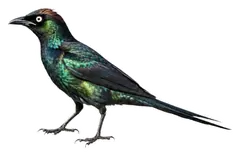 White-eyed StarlingAplonis brunneicapillus
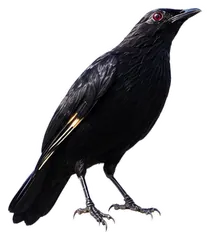 Brown-winged StarlingAplonis grandis
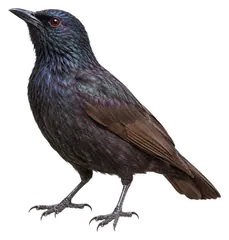 Makira StarlingAplonis dichroa
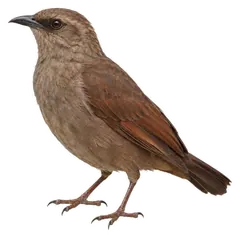 Rusty-winged StarlingAplonis zelandica
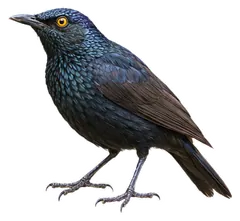 Striated StarlingAplonis striata
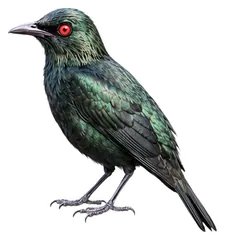
Download illustration
Free to use with credit: “Illustration: Bird Album (birdalbum.com)”. Drawn by AI from a reference photo by Shiou Ming Lee. ↗
Heard it but can't see it? Mingji identifies birds by sound and photo, on your phone.