 Bird Album
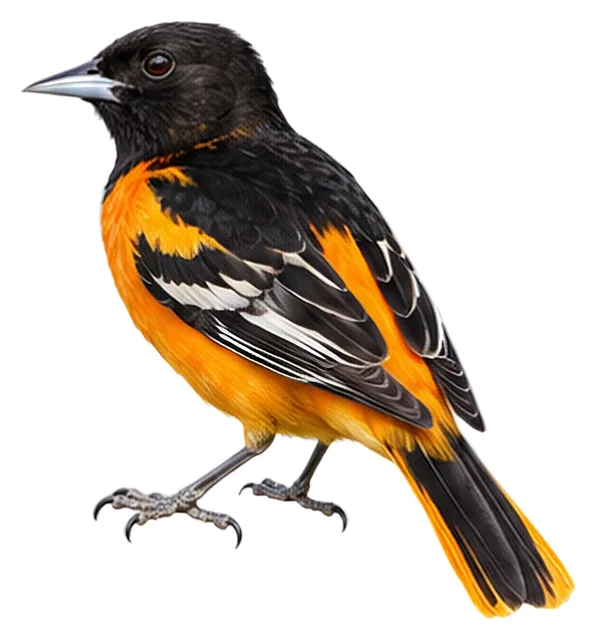
Baltimore Oriole
Icterus galbula (Linnaeus, 1758)
33 gWeight
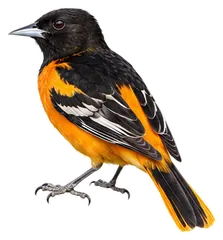
The Baltimore oriole (Icterus galbula) is a small icterid blackbird common in eastern North America as a migratory breeding bird.
Busiest months: May · Most records: United States, Canada, Costa Rica
Where and when it's recorded
Busiest months: May · Most records: United States, Canada, Costa Rica

Baltimore Oriole has been recorded at 1,072 of the 8,276 birding hotspots we track, in 33 countries and regions.
Records by month Northern Hemisphere
Where it's recorded most
- Magee Marsh – BoardwalkUnited States29,136 records
- Point Pelee National ParkCanada17,897 records
- Mount Auburn CemeteryUnited States13,141 records
More places
- Montrose Point Bird Sanctuary, Lincoln Park, ChicagoUnited States12,306 records
- Central ParkUnited States10,742 records
- Prospect ParkUnited States10,483 records
- Tawas Point SPUnited States9,842 records
- Parker River NWRUnited States8,550 records
- High Island – Smith Oaks SanctuaryUnited States6,706 records
- John Heinz NWR – impoundmentUnited States5,889 records
Countries and regions with the most records
eBird records via GBIF up to 2024-12-31. A record means someone listed it; more records partly mean more birders, not more birds.
About
The Baltimore oriole (Icterus galbula) is a small icterid blackbird common in eastern North America as a migratory breeding bird. It received its common name from the resemblance of the male's colors to those on the coat-of-arms of 17th-century Lord Baltimore.
Excerpt from Wikipedia, CC BY-SA 4.0 · authors · Read more on Wikipedia
Questions
How big is the Baltimore Oriole?
The Baltimore Oriole weighs around 33 g.
Where does the Baltimore Oriole live?
Its breeding range: North America: central, southeastern Canada to central, southeastern USA. It is most often recorded in United States, Canada and Costa Rica.
When is the best time to see the Baltimore Oriole?
At the hotspots we track, it is recorded most in May (Northern Hemisphere).
Is the Baltimore Oriole endangered?
The IUCN Red List classifies the Baltimore Oriole as Least Concern.
What does the Baltimore Oriole eat?
Main food: Insects & other invertebrates.
What family is the Baltimore Oriole in?
It belongs to the family Oropendolas, New World Orioles, Blackbirds (Icteridae), order Passerines (Passeriformes).
At a glance
- Weight
- 33 g
- Habitat
- Forest
- Diet
- Insects & other invertebrates
- Lifestyle
- Perches in trees
- Migration
- Migratory
- Conservation
- Least Concern
More measurements
- Wing
- 92 mm
- Tail
- 73 mm
- Bill
- 21 mm
- Tarsus
- 23 mm
Averages from the AVONET dataset; length from field guides where available.
Range
North America: central, southeastern Canada to central, southeastern USA
Breeding range, IOC World Bird List 15.2
Classification
- Order
- Passerines Passeriformes
- Family
- Oropendolas, New World Orioles, Blackbirds Icteridae
- Genus
- Icterus
Other birds in the genus Icterus
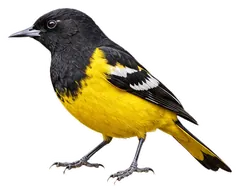 Scott's OrioleIcterus parisorum
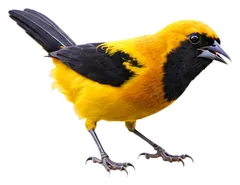 Yellow-backed OrioleIcterus chrysater
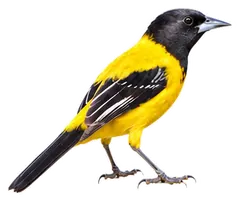 Audubon's OrioleIcterus graduacauda
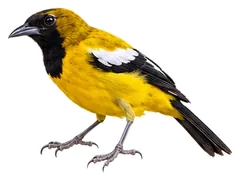 Jamaican OrioleIcterus leucopteryx
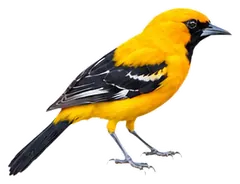 Orange OrioleIcterus auratus
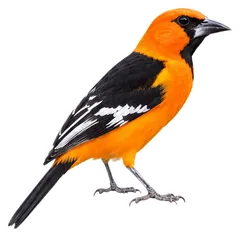 Altamira OrioleIcterus gularis
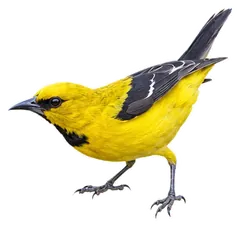 Yellow OrioleIcterus nigrogularis
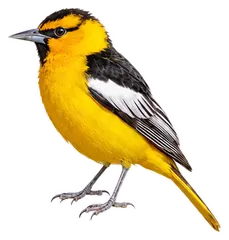 Bullock's OrioleIcterus bullockiorum
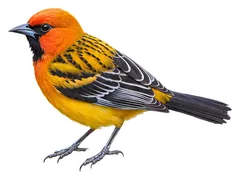 Streak-backed OrioleIcterus pustulatus
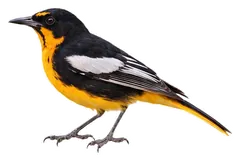 Black-backed OrioleIcterus abeillei
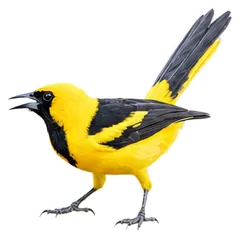 Yellow-tailed OrioleIcterus mesomelas
 Spot-breasted OrioleIcterus pectoralis
Download illustration
Free to use with credit: “Illustration: Bird Album (birdalbum.com)”. Drawn by AI from a reference photo by Chrissy McClarren and Andy Reago. ↗
Heard it but can't see it? Mingji identifies birds by sound and photo, on your phone.
In other languages
- EnglishBaltimore Oriole
- 简体中文橙腹拟鹂
- 繁體中文橙腹擬黃鸝
- 日本語ボルチモアムクドリモドキ
- DeutschBaltimoretrupial
- FrançaisOriole de Baltimore
- EspañolTurpial de Baltimore
- Portuguêscorrupião-laranja
- ItalianoIttero di Baltimora
- NederlandsBaltimoretroepiaal
- РусскийБалтиморский трупиал
- Svenskabaltimoretrupial
- DanskBaltimoretrupial
- Polskikacyk północny