 Bird Album
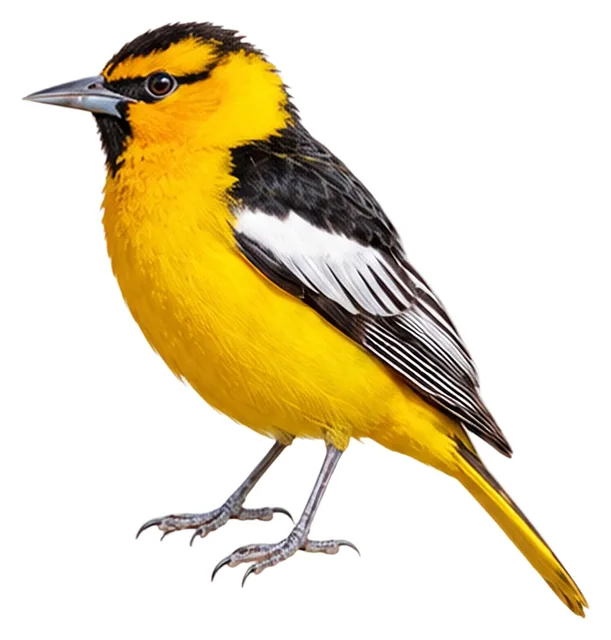
Bullock's Oriole
Icterus bullockiorum (Swainson, 1827)
38 gWeight
Busiest months: May · Most records: United States, Canada, Mexico
Where and when it's recorded

Bullock's Oriole has been recorded at 330 of the 8,171 birding hotspots we track, in 7 countries and regions.
Records by month Northern Hemisphere
Where it's recorded most
- Ash Canyon Bird SanctuaryUnited States4,356 records
- Malheur NWR – HeadquartersUnited States3,498 records
- Big Morongo Canyon Preserve & Covington ParkUnited States2,948 records
More places
- Sepulveda Basin – East of Woodley AveUnited States2,551 records
- Putah Creek Riparian ReserveUnited States2,327 records
- Frank G. Bonelli RP/Puddingstone Reservoir and vicinityUnited States2,187 records
- Walden Ponds Wildlife Habitat – Walden & Sawhill Ponds all togetherUnited States2,087 records
- Desert NWR – Corn CreekUnited States2,041 records
- Rocky Mountain Arsenal NWRUnited States1,808 records
- Mile Square Regional Park, Fountain ValleyUnited States1,737 records
Countries and regions with the most records
eBird records via GBIF up to 2024-12-31. A record means someone listed it; more records partly mean more birders, not more birds.
Questions
How big is the Bullock's Oriole?
The Bullock's Oriole weighs around 38 g.
Where does the Bullock's Oriole live?
Its breeding range: North America: southwestern Canada through western USA to northern Mexico. It is most often recorded in United States, Canada and Mexico.
When is the best time to see the Bullock's Oriole?
At the hotspots we track, it is recorded most in May (Northern Hemisphere).
Is the Bullock's Oriole endangered?
The IUCN Red List classifies the Bullock's Oriole as Least Concern.
What does the Bullock's Oriole eat?
Main food: Insects & other invertebrates.
What family is the Bullock's Oriole in?
It belongs to the family Oropendolas, New World Orioles, Blackbirds (Icteridae), order Passerines (Passeriformes).
At a glance
- Weight
- 38 g
- Habitat
- Forest
- Diet
- Insects & other invertebrates
- Lifestyle
- Perches in trees
- Migration
- Migratory
- Conservation
- Least Concern
More measurements
- Wing
- 97 mm
- Tail
- 78 mm
- Bill
- 20 mm
- Tarsus
- 24 mm
Averages from the AVONET dataset; length from field guides where available.
Range
North America: southwestern Canada through western USA to northern Mexico
Breeding range, IOC World Bird List 15.2
Classification
- Order
- Passerines Passeriformes
- Family
- Oropendolas, New World Orioles, Blackbirds Icteridae
- Genus
- Icterus
Other birds in the genus Icterus
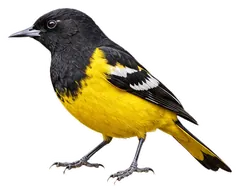 Scott's OrioleIcterus parisorum
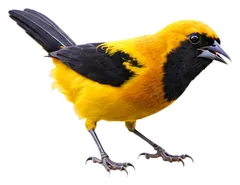 Yellow-backed OrioleIcterus chrysater
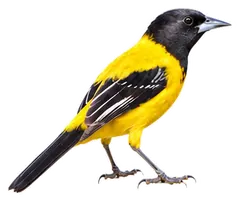 Audubon's OrioleIcterus graduacauda
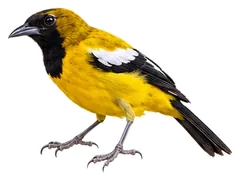 Jamaican OrioleIcterus leucopteryx
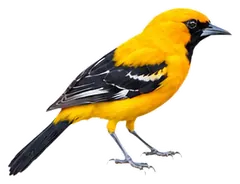 Orange OrioleIcterus auratus
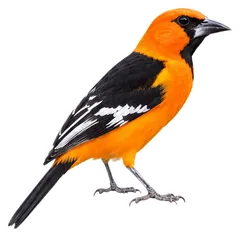 Altamira OrioleIcterus gularis
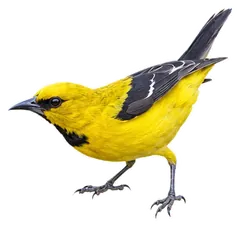 Yellow OrioleIcterus nigrogularis
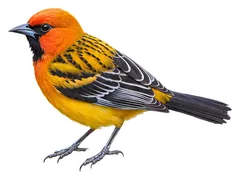 Streak-backed OrioleIcterus pustulatus
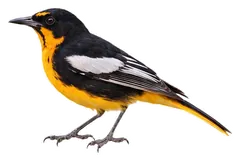 Black-backed OrioleIcterus abeillei
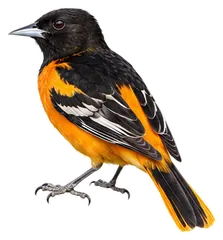 Baltimore OrioleIcterus galbula
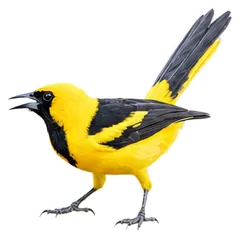 Yellow-tailed OrioleIcterus mesomelas
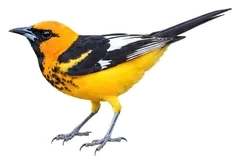 Spot-breasted OrioleIcterus pectoralis
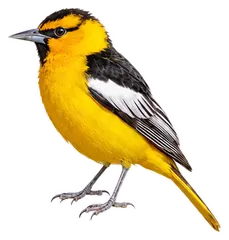
Download illustration
Free to use with credit: “Illustration: Bird Album (birdalbum.com)”. Drawn by AI from a reference photo by Nancy Christensen. ↗
Heard it but can't see it? Mingji identifies birds by sound and photo, on your phone.
In other languages
- EnglishBullock's Oriole
- 简体中文布氏拟鹂
- 繁體中文布洛克氏擬黃鸝
- 日本語ビュラックムクドリモドキ
- DeutschBullocktrupial
- FrançaisOriole de Bullock
- EspañolTurpial de Bullock
- Portuguêscorrupião-de-asa-branca
- ItalianoOriolo di Bullock
- NederlandsBullocks Troepiaal
- РусскийБелокрылый трупиал
- Svenskaorangebrynad trupial
- DanskOrangebrynet Trupial
- Polskikacyk złotobrewy