 Bird Album
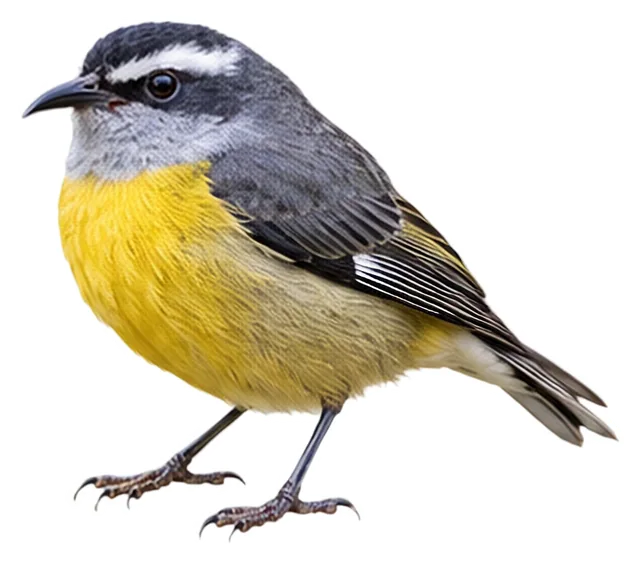
Bananaquit
Coereba flaveola (Linnaeus, 1758)
10–13 cmLength10 gWeight
The bananaquit (Coereba flaveola) is a species of passerine bird in the tanager family Thraupidae.
Busiest months: January–March · Most records: Costa Rica, Brazil, Colombia
Where and when it's recorded
Busiest months: January–March · Most records: Costa Rica, Brazil, Colombia

Bananaquit has been recorded at 1,119 of the 8,276 birding hotspots we track, in 48 countries and regions.
Records by month Northern Hemisphere
Where it's recorded most
- Arenal Observatory LodgeCosta Rica11,996 records
- Asa Wright Nature CenterTrinidad & Tobago6,791 records
- Estación Biológica La Selva-OTSCosta Rica6,493 records
More places
- Rancho NaturalistaCosta Rica5,765 records
- Carapicuíba – Condomínio Palos VerdesBrazil3,745 records
- Tranquilo Bay Eco-Adventure LodgePanama3,426 records
- WildSumaco LodgeEcuador3,165 records
- Wilson Botanical GardenCosta Rica2,890 records
- Galeria de Colibrí y Soda Cinchona - Mirador San FernandoCosta Rica2,817 records
- Bubali Bird SanctuaryAruba2,789 records
Countries and regions with the most records
eBird records via GBIF up to 2024-12-31. A record means someone listed it; more records partly mean more birders, not more birds.
About
The bananaquit (Coereba flaveola) is a species of passerine bird in the tanager family Thraupidae. Before the development of molecular genetics in the 21st century, its relationship to other species was uncertain, and it was placed with the buntings and New World sparrows in the family Emberizidae, with New World warblers in the family Parulidae, or its own monotypic family, Coerebidae. This small, active nectarivore is found in warmer parts of the Americas and is generally common.
Excerpt from Wikipedia, CC BY-SA 4.0 · authors · Read more on Wikipedia
Questions
How big is the Bananaquit?
The Bananaquit is about 10–13 cm long and weighs around 10 g.
Where does the Bananaquit live?
Its breeding range: Middle America, South America: widespread, also West Indies. It is most often recorded in Costa Rica, Brazil and Colombia.
When is the best time to see the Bananaquit?
At the hotspots we track, it is recorded most in January, February and March (Northern Hemisphere).
Is the Bananaquit endangered?
The IUCN Red List classifies the Bananaquit as Least Concern.
What does the Bananaquit eat?
Main food: Nectar.
What family is the Bananaquit in?
It belongs to the family Tanagers & Allies (Thraupidae), order Passerines (Passeriformes).
At a glance
- Length
- 10–13 cm
- Weight
- 10 g
- Habitat
- Shrubland
- Diet
- Nectar
- Lifestyle
- Perches in trees
- Migration
- Resident (barely migrates)
- Conservation
- Least Concern
More measurements
- Wing
- 55 mm
- Tail
- 34 mm
- Bill
- 13 mm
- Tarsus
- 17 mm
Averages from the AVONET dataset; length from field guides where available.
Range
Middle America, South America: widespread, also West Indies
Breeding range, IOC World Bird List 15.2
Classification
- Order
- Passerines Passeriformes
- Family
- Tanagers & Allies Thraupidae
- Genus
- Coereba
More from the family Tanagers & Allies
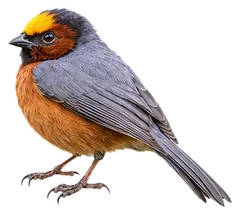 PlushcapCatamblyrhynchus diadema
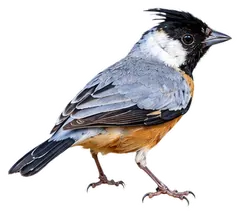 Coal-crested FinchCharitospiza eucosma
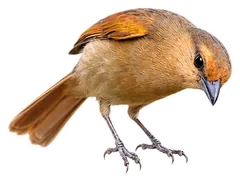 Brown TanagerOrchesticus abeillei
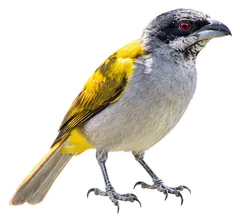 Yellow-shouldered GrosbeakParkerthraustes humeralis
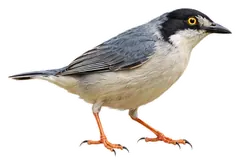 Hooded TanagerNemosia pileata
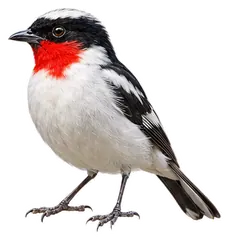 Cherry-throated TanagerNemosia rourei
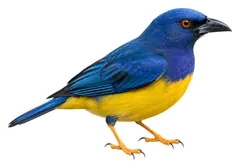 Blue-backed TanagerCyanicterus cyanicterus
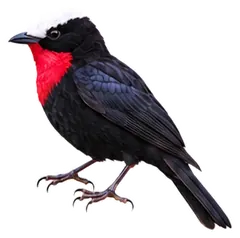 White-capped TanagerSericossypha albocristata
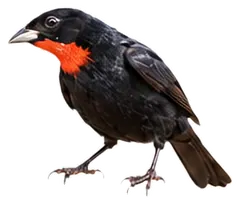 Scarlet-throated TanagerCompsothraupis loricata
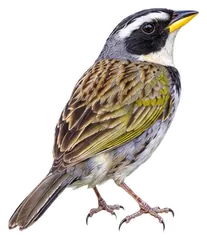 Black-masked FinchCoryphaspiza melanotis
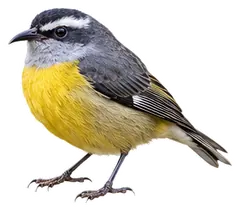
Download illustration
Free to use with credit: “Illustration: Bird Album (birdalbum.com)”. Drawn by AI from a reference photo by Mason Maron. ↗
Heard it but can't see it? Mingji identifies birds by sound and photo, on your phone.