 Bird Album
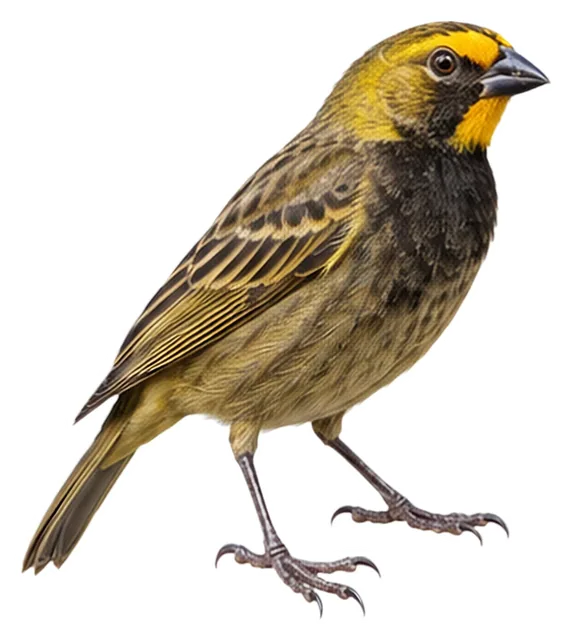
Yellow-faced Grassquit
Tiaris olivaceus (Linnaeus, 1766)
10–11 cmLength8.5 gWeight
The yellow-faced grassquit (Tiaris olivaceus) is a passerine bird in the tanager family Thraupidae and is the only member of the genus Tiaris.
Busiest months: February–March · Most records: Costa Rica, Colombia, Belize
Where and when it's recorded

Yellow-faced Grassquit has been recorded at 475 of the 8,171 birding hotspots we track, in 17 countries and regions.
Records by month Northern Hemisphere
Where it's recorded most
- Curi-Cancha Refugio de Vida SilvestreCosta Rica4,892 records
- Rancho NaturalistaCosta Rica4,060 records
- Arenal Observatory LodgeCosta Rica3,568 records
More places
- Black Rock LodgeBelize2,870 records
- RNP ChajbaocGuatemala1,574 records
- Hotel QuelitalesCosta Rica1,465 records
- Reserva El CopalCosta Rica1,389 records
- Wilson Botanical GardenCosta Rica1,124 records
- Bajo La Paz, San RamónCosta Rica1,112 records
- Savegre HotelCosta Rica1,071 records
Countries and regions with the most records
eBird records via GBIF up to 2024-12-31. A record means someone listed it; more records partly mean more birders, not more birds.
About
The yellow-faced grassquit (Tiaris olivaceus) is a passerine bird in the tanager family Thraupidae and is the only member of the genus Tiaris. It is native to Central America, South America, and the Caribbean.
Excerpt from Wikipedia, CC BY-SA 4.0 · authors · Read more on Wikipedia
Questions
How big is the Yellow-faced Grassquit?
The Yellow-faced Grassquit is about 10–11 cm long and weighs around 8.5 g.
Where does the Yellow-faced Grassquit live?
Its breeding range: North America, Middle America, South America: Greater Antilles, eastern Mexico to northwestern South America. It is most often recorded in Costa Rica, Colombia and Belize.
When is the best time to see the Yellow-faced Grassquit?
At the hotspots we track, it is recorded most in February and March (Northern Hemisphere).
Is the Yellow-faced Grassquit endangered?
The IUCN Red List classifies the Yellow-faced Grassquit as Least Concern.
What does the Yellow-faced Grassquit eat?
Main food: Seeds.
What family is the Yellow-faced Grassquit in?
It belongs to the family Tanagers & Allies (Thraupidae), order Passerines (Passeriformes).
At a glance
- Length
- 10–11 cm
- Weight
- 8.5 g
- Habitat
- Towns & farmland
- Diet
- Seeds
- Lifestyle
- Perches in trees
- Migration
- Partial migrant
- Conservation
- Least Concern
More measurements
- Wing
- 50 mm
- Tail
- 41 mm
- Bill
- 9 mm
- Tarsus
- 17 mm
Averages from the AVONET dataset; length from field guides where available.
Range
North America, Middle America, South America: Greater Antilles, eastern Mexico to northwestern South America
Breeding range, IOC World Bird List 15.2
Classification
- Order
- Passerines Passeriformes
- Family
- Tanagers & Allies Thraupidae
- Genus
- Tiaris
More from the family Tanagers & Allies
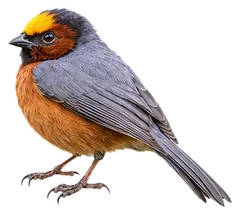 PlushcapCatamblyrhynchus diadema
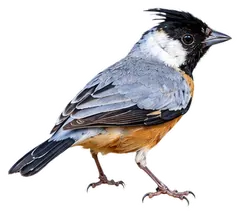 Coal-crested FinchCharitospiza eucosma
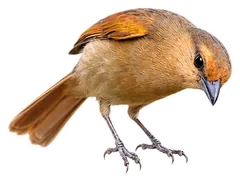 Brown TanagerOrchesticus abeillei
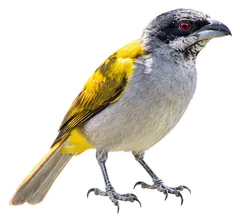 Yellow-shouldered GrosbeakParkerthraustes humeralis
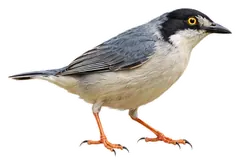 Hooded TanagerNemosia pileata
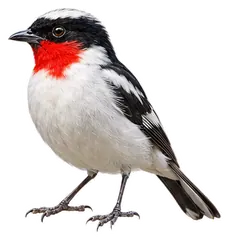 Cherry-throated TanagerNemosia rourei
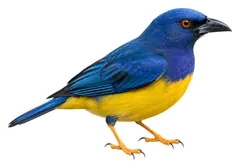 Blue-backed TanagerCyanicterus cyanicterus
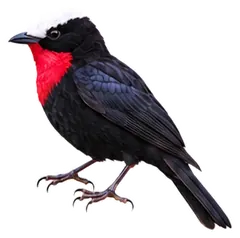 White-capped TanagerSericossypha albocristata
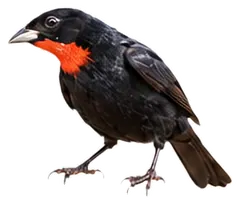 Scarlet-throated TanagerCompsothraupis loricata
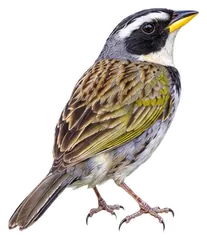 Black-masked FinchCoryphaspiza melanotis
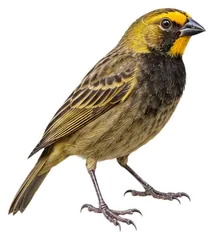
Download illustration
Free to use with credit: “Illustration: Bird Album (birdalbum.com)”. Drawn by AI from a reference photo by Luis Enrique Girón Mejía. ↗
Heard it but can't see it? Mingji identifies birds by sound and photo, on your phone.
In other languages
- EnglishYellow-faced Grassquit
- 简体中文黄脸草雀
- 繁體中文黃臉離草雀
- 日本語キマユクビワスズメ
- DeutschGoldbrauen-Gimpeltangare
- FrançaisTiaris grand-chanteur
- EspañolSemillero tomeguín
- Portuguêspapa-capim-de-cara-amarela
- ItalianoErbero facciagialla
- NederlandsGrote Cubavink
- РусскийЖелтолицый семилеро
- Svenskatiaratangara
- DanskStor Cubafinke
- Polskikubanik