 Bird Album
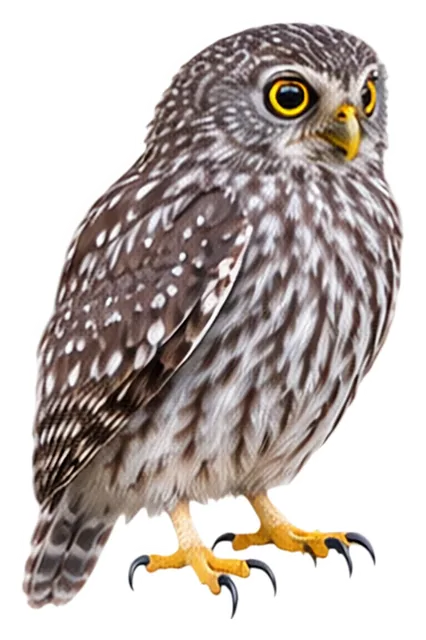
Barking Owl
Ninox connivens (Latham, 1801)
578 gWeight
The barking owl (Ninox connivens) or barking boobook, also known as the winking owl, is a nocturnal bird species native to mainland Australia and parts of New Guinea and the Moluccas.
Busiest months: August and October · Most records: Australia, Papua New Guinea, Indonesia
Where and when it's recorded
Busiest months: August and October · Most records: Australia, Papua New Guinea, Indonesia

Barking Owl has been recorded at 59 of the 8,276 birding hotspots we track, in 3 countries and regions.
Records by month Southern Hemisphere
Where it's recorded most
- Townsville Town Common Conservation ParkAustralia399 records
- Fogg Dam Conservation ReserveAustralia321 records
- Varirata National ParkPapua New Guinea298 records
More places
- George Brown Darwin Botanic GardensAustralia270 records
- Kingfisher Park Birdwatchers LodgeAustralia213 records
- Kakadu National Park – Yellow WaterAustralia127 records
- Carlyle Gardens Retirement Resort, TownsvilleAustralia74 records
- Bendigo Sewage PondsAustralia44 records
- East PointAustralia36 records
- Holmes Jungle Nature ReserveAustralia27 records
Countries and regions with the most records
eBird records via GBIF up to 2024-12-31. A record means someone listed it; more records partly mean more birders, not more birds.
About
The barking owl (Ninox connivens) or barking boobook, also known as the winking owl, is a nocturnal bird species native to mainland Australia and parts of New Guinea and the Moluccas. They are medium-sized brown owls and have a characteristic voice with calls ranging from a barking dog noise to an intense human-like howl.
Excerpt from Wikipedia, CC BY-SA 4.0 · authors · Read more on Wikipedia
Questions
How big is the Barking Owl?
The Barking Owl weighs around 578 g.
Where does the Barking Owl live?
Its breeding range: Australasia: northern Moluccas, eastern New Guinea and Australia. It is most often recorded in Australia, Papua New Guinea and Indonesia.
When is the best time to see the Barking Owl?
At the hotspots we track, it is recorded most in August and October (Southern Hemisphere).
Is the Barking Owl endangered?
The IUCN Red List classifies the Barking Owl as Least Concern.
What does the Barking Owl eat?
Main food: Vertebrate prey.
What family is the Barking Owl in?
It belongs to the family Owls (Strigidae), order Strigiformes.
At a glance
- Weight
- 578 g
- Habitat
- Forest
- Diet
- Vertebrate prey
- Lifestyle
- Perches in trees
- Migration
- Resident (barely migrates)
- Conservation
- Least Concern
More measurements
- Wing
- 299 mm
- Tail
- 179 mm
- Bill
- 34 mm
- Tarsus
- 49 mm
Averages from the AVONET dataset; length from field guides where available.
Range
Australasia: northern Moluccas, eastern New Guinea and Australia
Breeding range, IOC World Bird List 15.2
Classification
- Order
- Strigiformes
- Family
- Owls Strigidae
- Genus
- Ninox
Other birds in the genus Ninox
 Rufous OwlNinox rufa
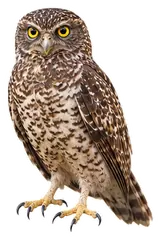 Powerful OwlNinox strenua
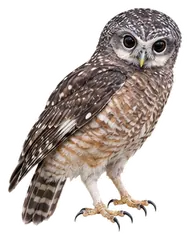 Sumba BoobookNinox rudolfi
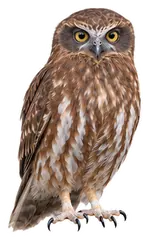 Australian BoobookNinox boobook
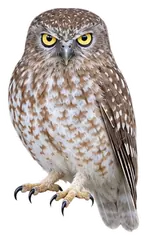 Rote BoobookNinox rotiensis
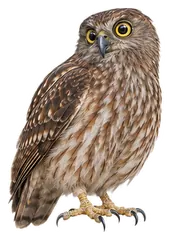 Timor BoobookNinox fusca
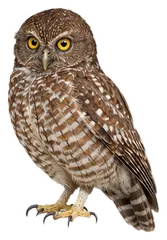 Alor BoobookNinox plesseni
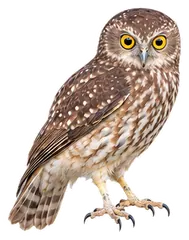 Tasmanian BoobookNinox leucopsis
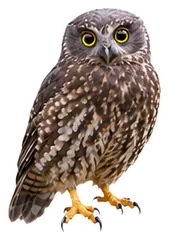 MoreporkNinox novaeseelandiae
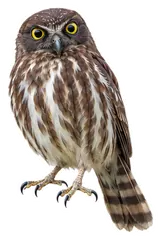 Northern BoobookNinox japonica
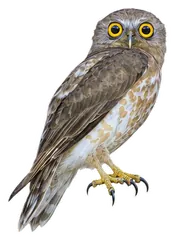 Brown BoobookNinox scutulata
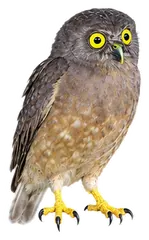 Hume's BoobookNinox obscura
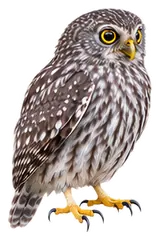
Download illustration
Free to use with credit: “Illustration: Bird Album (birdalbum.com)”. Drawn by AI from a reference photo by Indra Bone. ↗
Heard it but can't see it? Mingji identifies birds by sound and photo, on your phone.