 Bird Album
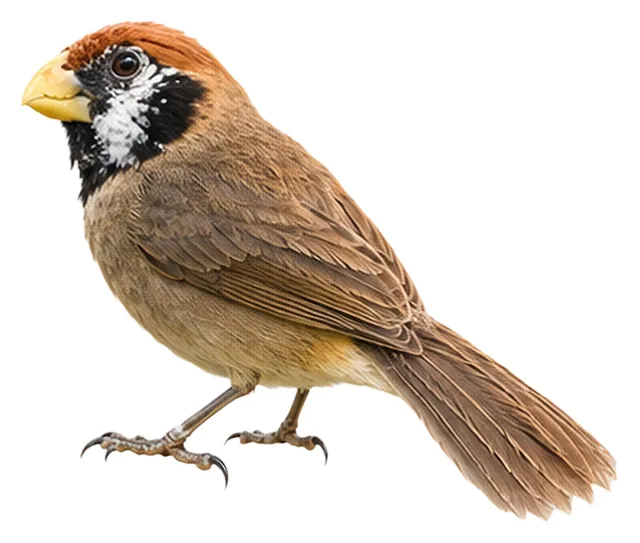
Black-breasted Parrotbill
Paradoxornis flavirostris Gould, 1836
26 gWeight
The black-breasted parrotbill (Paradoxornis flavirostris) is a 19 cm (7.5 in) long, large, thick-billed parrotbill with black patches on the head-sides and throat.
Busiest months: March · Most records: India
Where and when it's recorded

Black-breasted Parrotbill has been recorded at 8 of the 8,171 birding hotspots we track, in 1 country or region.
Records by month Northern Hemisphere
Where it's recorded most
- Maguri BeelIndia52 records
- Manas NP – BanasbariIndia14 records
- Kaziranga NP & SurroundingsIndia5 records
More places
- Dihing Patkai NP – SoraipungIndia4 records
- Kaziranga NP & Surroundings – Eastern RangeIndia4 records
- Kaziranga NP & Surroundings – Central RangeIndia2 records
- Dihing Patkai NP – SoraipungIndia1 record
- Kaziranga NP & Surroundings – Western RangeIndia1 record
Countries and regions with the most records
eBird records via GBIF up to 2024-12-31. A record means someone listed it; more records partly mean more birders, not more birds.
About
The black-breasted parrotbill (Paradoxornis flavirostris) is a 19 cm (7.5 in) long, large, thick-billed parrotbill with black patches on the head-sides and throat. Formerly placed in the family Sylviidae, the parrotbills are now considered a distinct family, the Paradoxornithidae, following Cai et al. (2019).
Excerpt from Wikipedia, CC BY-SA 4.0 · authors · Read more on Wikipedia
Questions
How big is the Black-breasted Parrotbill?
The Black-breasted Parrotbill weighs around 26 g.
Where does the Black-breasted Parrotbill live?
Its breeding range: Oriental: Himalayas, northeastern India. It is most often recorded in India.
When is the best time to see the Black-breasted Parrotbill?
At the hotspots we track, it is recorded most in March (Northern Hemisphere).
Is the Black-breasted Parrotbill endangered?
The IUCN Red List classifies the Black-breasted Parrotbill as Vulnerable.
What does the Black-breasted Parrotbill eat?
Main food: Omnivore.
What family is the Black-breasted Parrotbill in?
It belongs to the family Parrotbills & Allies (Paradoxornithidae), order Passerines (Passeriformes).
At a glance
- Weight
- 26 g
- Habitat
- Grassland
- Diet
- Omnivore
- Lifestyle
- Perches in trees
- Migration
- Resident (barely migrates)
- Conservation
- Vulnerable
More measurements
- Wing
- 88 mm
- Tail
- 107 mm
- Bill
- 20 mm
- Tarsus
- 29 mm
Averages from the AVONET dataset; length from field guides where available.
Range
Oriental: Himalayas, northeastern India
Breeding range, IOC World Bird List 15.2
Classification
- Order
- Passerines Passeriformes
- Family
- Parrotbills & Allies Paradoxornithidae
- Genus
- Paradoxornis
Other birds in the genus Paradoxornis
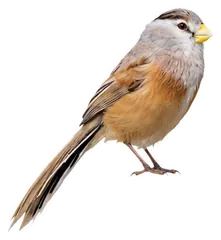 Reed ParrotbillParadoxornis heudei
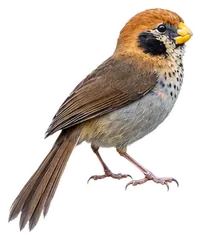 Spot-breasted ParrotbillParadoxornis guttaticollis
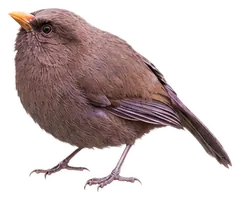 Great ParrotbillParadoxornis aemodius
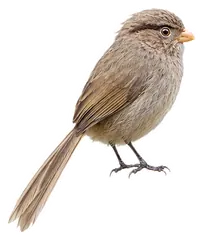 Brown ParrotbillParadoxornis unicolor
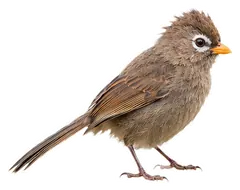 Three-toed ParrotbillParadoxornis paradoxus
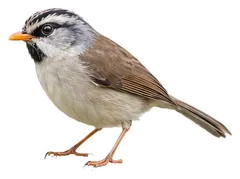 Grey-headed ParrotbillParadoxornis gularis
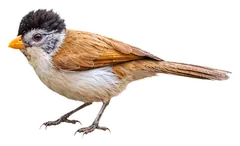 Black-headed ParrotbillParadoxornis margaritae
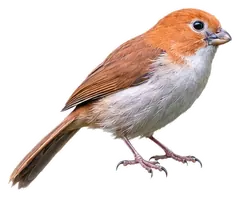 White-breasted ParrotbillParadoxornis ruficeps
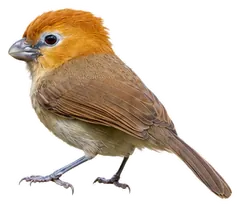 Rufous-headed ParrotbillParadoxornis bakeri
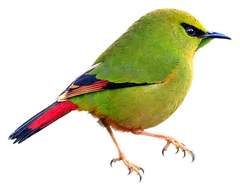 Fire-tailed MyzornisMyzornis pyrrhoura
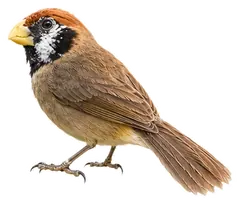
Download illustration
Free to use with credit: “Illustration: Bird Album (birdalbum.com)”. Drawn by AI from a reference photo by Ben Schweinhart. ↗
Heard it but can't see it? Mingji identifies birds by sound and photo, on your phone.
In other languages
- EnglishBlack-breasted Parrotbill
- 简体中文斑胸鸦雀
- 繁體中文黃嘴鴉雀
- 日本語ムナグロダルマエナガ
- DeutschSchwarzkehl-Papageimeise
- FrançaisParadoxornis de Gould
- EspañolPicoloro pechinegro
- Portuguêsbico-adunco-de-peito-negro
- ItalianoPsittorinco pettonero
- NederlandsZwartkeeldiksnavelmees
- РусскийЖелтоклювая сутора
- Svenskasvartbröstad papegojnäbb
- DanskSortøret Papegøjenæb
- Polskiogoniatka czarnowstęga