 Bird Album
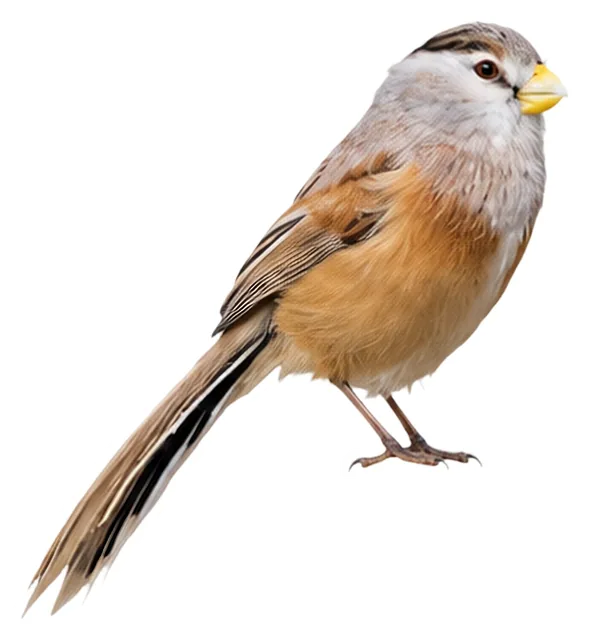
Reed Parrotbill
Paradoxornis heudei (David, A, 1872)
≈18 cmLength32 gWeight
This small bird of reeds has a short, thick bill and is nicknamed the “panda of birds”.
Busiest months: May · Most records: China, Mongolia
How to identify
Field marks
- Bill short, broad and thick
- Whitish supercilium extends from base of the bill above the eye
- Forehead and neck pinkish-cream tinged gray in winter
- Crown to upper back blue-gray in breeding season
Where and when it's recorded

Reed Parrotbill has been recorded at 137 of the 8,171 birding hotspots we track, in 2 countries and regions.
Records by month Northern Hemisphere
Where it's recorded most
- Nanhui DongtanChina1,013 records
- Nanpu MudflatChina482 records
- Chongming Dongtan NNRChina207 records
More places
- Olympic Forest Park SouthChina204 records
- Biancun WetlandsChina189 records
- Beidagang ReservoirChina128 records
- Shuixi ParkChina121 records
- Nanpu Salt Ponds Grove [Restricted access]China121 records
- Yancheng Wetland NNRChina111 records
- Green Bank ParkChina110 records
Countries and regions with the most records
eBird records via GBIF up to 2024-12-31. A record means someone listed it; more records partly mean more birders, not more birds.
About
The reed parrotbill (Paradoxornis heudei) is a species of bird in the family Paradoxornithidae. It is found in Manchuria and eastern China and the Russian Far East. It is threatened by habitat loss.
Excerpt from Wikipedia, CC BY-SA 4.0 · authors · Read more on Wikipedia
Questions
How big is the Reed Parrotbill?
The Reed Parrotbill is about ≈18 cm long and weighs around 32 g.
Where does the Reed Parrotbill live?
Its breeding range: Palearctic: eastern Mongolia to eastern, northeastern China and southeastern Russia. It is most often recorded in China and Mongolia.
When is the best time to see the Reed Parrotbill?
At the hotspots we track, it is recorded most in May (Northern Hemisphere).
Is the Reed Parrotbill endangered?
The IUCN Red List classifies the Reed Parrotbill as Least Concern.
What does the Reed Parrotbill eat?
Main food: Insects & other invertebrates.
What family is the Reed Parrotbill in?
It belongs to the family Parrotbills & Allies (Paradoxornithidae), order Passerines (Passeriformes).
At a glance
- Length
- ≈18 cm
- Weight
- 32 g
- Habitat
- Wetland
- Diet
- Insects & other invertebrates
- Lifestyle
- Perches in trees
- Migration
- Partial migrant
- Conservation
- Least Concern
More measurements
- Wing
- 63 mm
- Tail
- 106 mm
- Bill
- 16 mm
- Tarsus
- 25 mm
Averages from the AVONET dataset; length from field guides where available.
Range
Palearctic: eastern Mongolia to eastern, northeastern China and southeastern Russia
Breeding range, IOC World Bird List 15.2
Subspecies · 2
- Paradoxornis heudei polivanovi e Mongolia to Manchuria (ne China) and se Russia
- Paradoxornis heudei heudei e China
Classification
- Order
- Passerines Passeriformes
- Family
- Parrotbills & Allies Paradoxornithidae
- Genus
- Paradoxornis
Other birds in the genus Paradoxornis
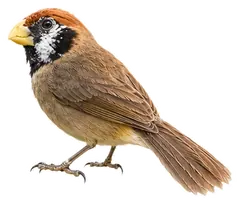 Black-breasted ParrotbillParadoxornis flavirostris
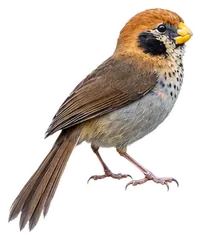 Spot-breasted ParrotbillParadoxornis guttaticollis
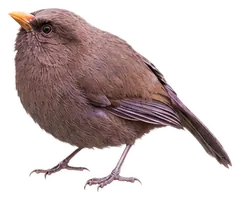 Great ParrotbillParadoxornis aemodius
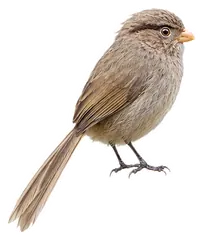 Brown ParrotbillParadoxornis unicolor
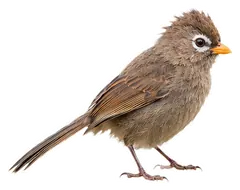 Three-toed ParrotbillParadoxornis paradoxus
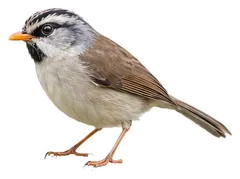 Grey-headed ParrotbillParadoxornis gularis
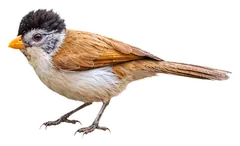 Black-headed ParrotbillParadoxornis margaritae
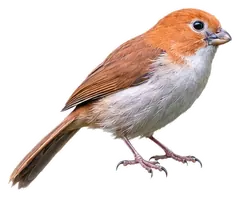 White-breasted ParrotbillParadoxornis ruficeps
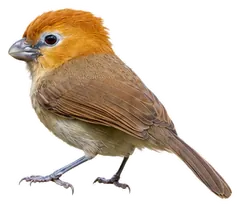 Rufous-headed ParrotbillParadoxornis bakeri
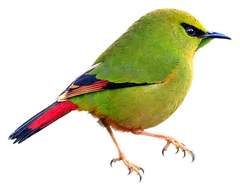 Fire-tailed MyzornisMyzornis pyrrhoura
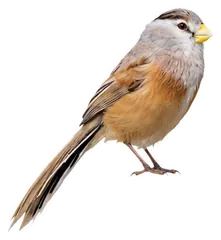
Download illustration
Free to use with credit: “Illustration: Bird Album (birdalbum.com)”. Drawn by AI from a reference photo by Sun Jiao (Interaccoonale). ↗

Heard it but can't see it? Mingji identifies birds by sound and photo, on your phone.
In other languages
- EnglishReed Parrotbill
- 简体中文震旦鸦雀
- 繁體中文震旦鴉雀
- 日本語カオジロダルマエナガ
- DeutschJangtsepapageimeise
- FrançaisParadoxornis du Yangtsé
- EspañolPicoloro del Yangtsé
- Portuguêsbico-adunco-grisalho
- ItalianoPsittorinco di palude
- NederlandsHeudes Diksnavelmees
- РусскийТростниковая сутора
- Svenskavasspapegojnäbb
- DanskGrovnæbbet Papegøjenæb
- Polskiogoniatka trzcinowa