 Bird Album
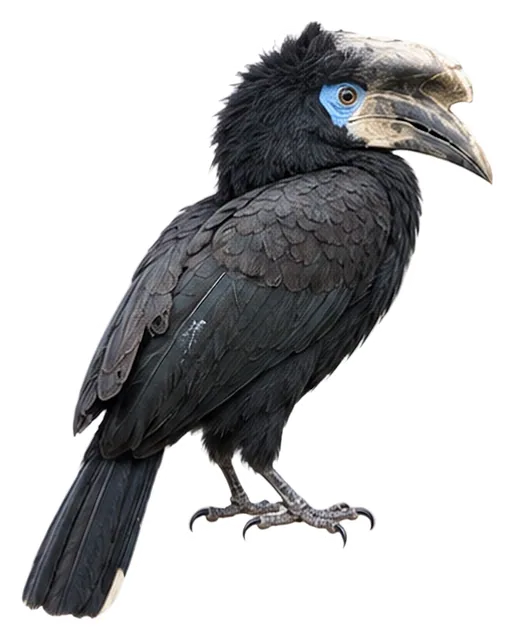
Black-casqued Hornbill
Ceratogymna atrata (Temminck, 1835)
1.2 kgWeight
The black-casqued hornbill (Ceratogymna atrata), or black-casqued wattled hornbill, is a species of hornbill in the family Bucerotidae.
Busiest months: January · Most records: Ghana, Uganda, Gabon
Where and when it's recorded

Black-casqued Hornbill has been recorded at 57 of the 8,171 birding hotspots we track, in 10 countries and regions.
Records by month Northern Hemisphere
Where it's recorded most
- Kakum NP – CanopyGhana299 records
- Semuliki NPUganda202 records
- Bosque Científica – Selva PrimariaEquatorial Guinea146 records
More places
- Semuliki NP – Kirumya TrailUganda146 records
- Kakum NP – Canopy Walkway & vicinityGhana124 records
- Kakum National ParkGhana113 records
- Parc de la LekediGabon101 records
- Ankasa NPGhana101 records
- Taï National ParkCôte d’Ivoire52 records
- PN de la LopéGabon41 records
Countries and regions with the most records
eBird records via GBIF up to 2024-12-31. A record means someone listed it; more records partly mean more birders, not more birds.
About
The black-casqued hornbill (Ceratogymna atrata), or black-casqued wattled hornbill, is a species of hornbill in the family Bucerotidae.
Excerpt from Wikipedia, CC BY-SA 4.0 · authors · Read more on Wikipedia
Questions
How big is the Black-casqued Hornbill?
The Black-casqued Hornbill weighs around 1.2 kg.
Where does the Black-casqued Hornbill live?
Its breeding range: Africa: Sierra Leone to Togo; southern Nigeria to southern South Sudan, central DR Congo and Angola. It is most often recorded in Ghana, Uganda and Gabon.
When is the best time to see the Black-casqued Hornbill?
At the hotspots we track, it is recorded most in January (Northern Hemisphere).
Is the Black-casqued Hornbill endangered?
The IUCN Red List classifies the Black-casqued Hornbill as Near Threatened.
What does the Black-casqued Hornbill eat?
Main food: Fruit.
What family is the Black-casqued Hornbill in?
It belongs to the family Hornbills (Bucerotidae), order Bucerotiformes.
At a glance
- Weight
- 1.2 kg
- Habitat
- Forest
- Diet
- Fruit
- Lifestyle
- Perches in trees
- Migration
- Resident (barely migrates)
- Conservation
- Near Threatened
More measurements
- Wing
- 373 mm
- Tail
- 256 mm
- Bill
- 156 mm
- Tarsus
- 58 mm
Averages from the AVONET dataset; length from field guides where available.
Range
Africa: Sierra Leone to Togo; southern Nigeria to southern South Sudan, central DR Congo and Angola
Breeding range, IOC World Bird List 15.2
Classification
- Order
- Bucerotiformes
- Family
- Hornbills Bucerotidae
- Genus
- Ceratogymna
Other birds in the genus Ceratogymna
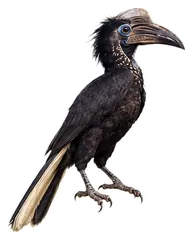 Yellow-casqued HornbillCeratogymna elata
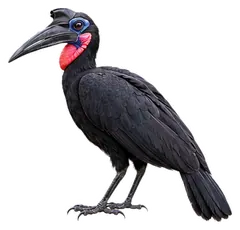 Abyssinian Ground HornbillBucorvus abyssinicus
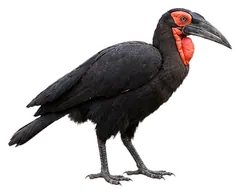 Southern Ground HornbillBucorvus leadbeateri
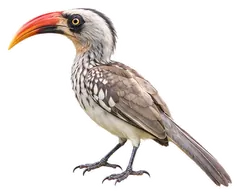 Tanzanian Red-billed HornbillTockus ruahae
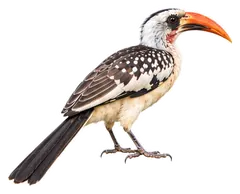 Western Red-billed HornbillTockus kempi
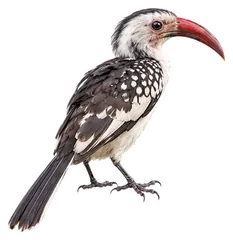 Damara Red-billed HornbillTockus damarensis
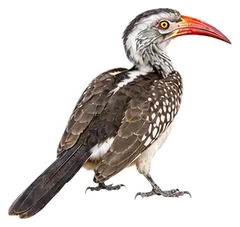 Southern Red-billed HornbillTockus rufirostris
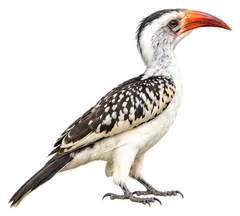 Northern Red-billed HornbillTockus erythrorhynchus
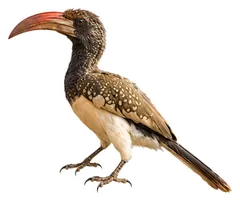 Monteiro's HornbillTockus monteiri
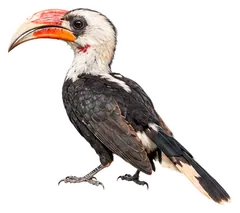 Von der Decken's HornbillTockus deckeni
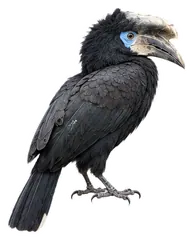
Download illustration
Free to use with credit: “Illustration: Bird Album (birdalbum.com)”. Drawn by AI from reference photos. ↗
Heard it but can't see it? Mingji identifies birds by sound and photo, on your phone.
In other languages
- EnglishBlack-casqued Hornbill
- 简体中文黑盔噪犀鸟
- 繁體中文黑盔犀鳥
- 日本語クロコブサイチョウ
- DeutschSchwarzhelm-Hornvogel
- FrançaisCalao à casque noir
- EspañolCálao casquinegro
- Portuguêscalau-de-casquete-preto
- ItalianoBucero casconero
- NederlandsBlauwkeelneushoornvogel
- РусскийЧерноклювый шлеморог
- Svenskasvartkaskad näshornsfågel
- DanskHjelmet Hornfugl
- Polskidzioborożec modrokoralowy