 Bird Album
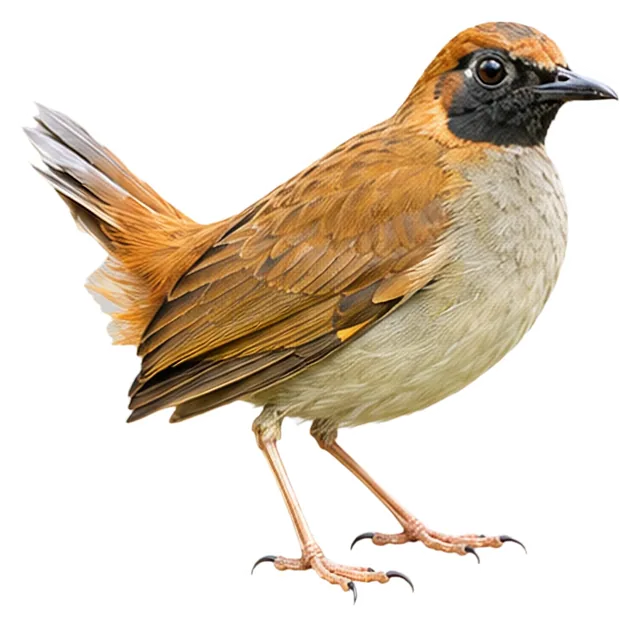
Black-faced Antthrush
Formicarius analis (d'Orbigny & Lafresnaye, 1837)
15–19 cmLength62 gWeight
The black-faced antthrush (Formicarius analis) is a species of passerine bird in the family Formicariidae.
Busiest months: March · Most records: Panama, Costa Rica, Peru
Where and when it's recorded

Black-faced Antthrush has been recorded at 223 of the 8,171 birding hotspots we track, in 13 countries and regions.
Records by month Northern Hemisphere
Where it's recorded most
- PN Carara-Entrada principal [senderos Quebrada Bonita y Universal]Costa Rica2,166 records
- Pipeline Road (Camino del Oleoducto)Panama1,930 records
- Panama Rainforest Discovery CenterPanama1,723 records
More places
- Pipeline Road – Parque Nacional SoberaníaPanama1,349 records
- Canopy TowerPanama1,154 records
- Esquinas Rainforest LodgeCosta Rica1,061 records
- Wilson Botanical GardenCosta Rica821 records
- Asa Wright Nature CenterTrinidad & Tobago803 records
- Pipeline RoadPanama786 records
- Los Amigos Biological StationPeru762 records
Countries and regions with the most records
eBird records via GBIF up to 2024-12-31. A record means someone listed it; more records partly mean more birders, not more birds.
About
The black-faced antthrush (Formicarius analis) is a species of passerine bird in the family Formicariidae. It is found in Central America from Honduras through Panama, on Trinidad, and in every mainland South American country except Argentina, Chile, Paraguay, and Uruguay.
Excerpt from Wikipedia, CC BY-SA 4.0 · authors · Read more on Wikipedia
Questions
How big is the Black-faced Antthrush?
The Black-faced Antthrush is about 15–19 cm long and weighs around 62 g.
Where does the Black-faced Antthrush live?
Its breeding range: Middle America, South America: Honduras through northern Bolivia and Amazonian Brazil. It is most often recorded in Panama, Costa Rica and Peru.
When is the best time to see the Black-faced Antthrush?
At the hotspots we track, it is recorded most in March (Northern Hemisphere).
Is the Black-faced Antthrush endangered?
The IUCN Red List classifies the Black-faced Antthrush as Least Concern.
What does the Black-faced Antthrush eat?
Main food: Insects & other invertebrates.
What family is the Black-faced Antthrush in?
It belongs to the family Antthrushes (Formicariidae), order Passerines (Passeriformes).
At a glance
- Length
- 15–19 cm
- Weight
- 62 g
- Habitat
- Forest
- Diet
- Insects & other invertebrates
- Lifestyle
- Active on the ground
- Migration
- Resident (barely migrates)
- Conservation
- Least Concern
More measurements
- Wing
- 89 mm
- Tail
- 57 mm
- Bill
- 22 mm
- Tarsus
- 32 mm
Averages from the AVONET dataset; length from field guides where available.
Range
Middle America, South America: Honduras through northern Bolivia and Amazonian Brazil
Breeding range, IOC World Bird List 15.2
Classification
- Order
- Passerines Passeriformes
- Family
- Antthrushes Formicariidae
- Genus
- Formicarius
Other birds in the genus Formicarius
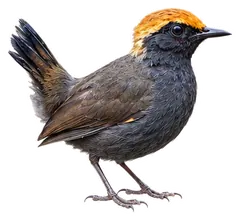 Rufous-capped AntthrushFormicarius colma
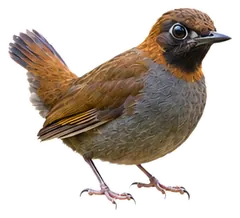 Mayan AntthrushFormicarius moniliger
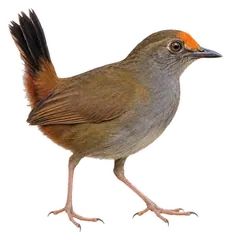 Rufous-fronted AntthrushFormicarius rufifrons
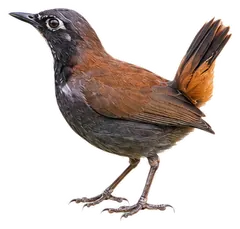 Black-headed AntthrushFormicarius nigricapillus
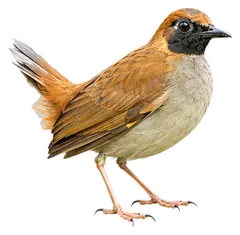
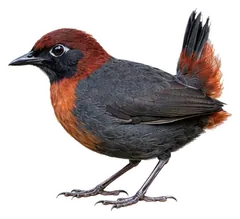 Rufous-breasted AntthrushFormicarius rufipectus
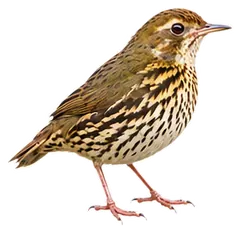 Short-tailed AntthrushChamaeza campanisona
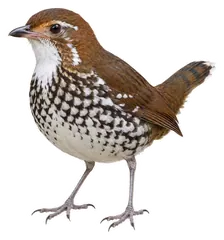 Striated AntthrushChamaeza nobilis
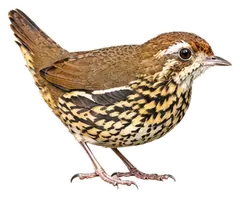 Cryptic AntthrushChamaeza meruloides
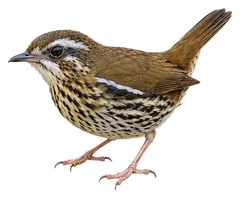 Rufous-tailed AntthrushChamaeza ruficauda
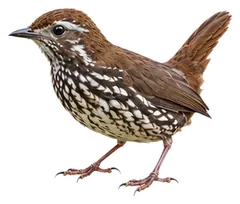 Schwartz's AntthrushChamaeza turdina
Download illustration
Free to use with credit: “Illustration: Bird Album (birdalbum.com)”. Drawn by AI from a reference photo by Andrés Paniagua. ↗
Heard it but can't see it? Mingji identifies birds by sound and photo, on your phone.
In other languages
- EnglishBlack-faced Antthrush
- 简体中文黑脸蚁鸫
- 繁體中文黑臉蟻鶇
- 日本語カオグロアリツグミ
- DeutschGraubrust-Ameisendrossel
- FrançaisTétéma coq-de-bois
- EspañolFormicario enmascarado
- Portuguêspinto-da-mata-de-cara-preta
- ItalianoTordo formichiero faccianera
- NederlandsZwartkeelmierlijster
- РусскийЧернолицая муравейница
- Svenskasvartmaskad myrtrast
- DanskSortmasket Myredrossel
- Polskimrówkowód czarnolicy